To become a Buddhist.VIETNAMESE TRANSLATE ENGLISH BY=VIETNAMESE BUDDHIST NUN=THICH CHAN TANH.
Buddhists often stem from two main reasons: One is influenced by family traditions; The other is due to the religious beliefs of Buddhism. Not everyone comes to Buddhism for the purpose of finding the way of liberation, relying on the Buddha's teachings to transform xinxing, but some for personal gain, gradually turning Buddhism into superstition and loss of practical significance of Buddhism in the world.
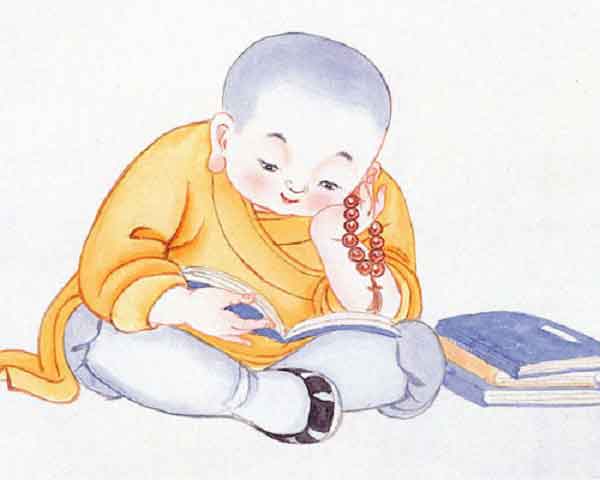
To know how to become a true Buddhist, please see the answer of the Venerable Thich Tri Thu through the following 60 very practical Dharma answers:
1) Question: What must a Buddhist understand first and do?
Answer: - First of all, to understand the basic points of the Buddha's teaching, the second is to develop righteousness of faith in the Three Jewels, and finally to practice the five commandments in one's daily life.
2) ASK: Why should it be in that order?
Answer: - Because of what we do, we must understand the purpose of it. It is true that understanding will develop long righteous faith and practice will to bring benefits for themselves, for the family and for society. Buddha taught: "Believing Me without understanding Me is blaming Me".
3) Question: What are the basic points of Buddha's teaching?
Answer: - Do not do evil. Be diligent in doing good. Keep your thoughts clean.
4) QUESTION: What is evil?
ANSWER: - Are unreasonable actions, words and thoughts that harm me and others both in the present and in the future.
5) ASKING: What is goodness?
ANSWER: - Are actions, words and thoughts that are reasonable, beneficial for themselves and benefit people both in the present and in the future.
6) ASK: What is pure thought?
Answer: - Is the right thought, no anger and arrogance, no jealousy and jealousy, do not cause painful consequences for themselves and for others. The pure thought when detecting in the action, the true action, when detecting the words, the words are gentle, making our lives and lives both peaceful and beautiful.
7) QUESTION: Do good to avoid evil and the things that regardless of religion or doctrine also teaches, not only Buddhism?
Answer: - Yes, it is. But speaking is one thing, and practicing as the word says yes or not, is another thing. That is not to mention whether that evil evasion is reasonable or not, because if the person who proposes a theory but is not an enlightened truth person, the theory is difficult to completely.
8) ASK: Where is the evidence to know the theory is correct and the practice is also true as the theory?
Answer: - Just look at the life history of the Founder of Religion and the propaganda history of that Religion.
9) Question: How is the life of the Buddha?
Answer: - The most consistent with His teachings. Completely consistent that Western archeology scholars when they first studied Buddhism thought the Buddha was a mythical figure not true in history.
10) Question: What about the missionary history of Buddhism?
Answer: - A pure history, never hurting a nation, never made war with anyone, even though it is called a Holy War. On the contrary, where Buddhism goes, peace comes.
11) Question: So, how do we conclude about Buddhism?
Answer: - The Buddha and his followers have spent nearly 26 centuries as exemplars of evil deeds.
12) Question: Why did Buddhism keep such integrity?
Answer: - Thanks to the third special point: keep your thoughts clean. Thought enlightens the way, guides action; The thought is pure, then action must be pure.
13) QUESTION: So should Buddhism pay special attention to the role of thought?
Answer: - Exactly. Thousands of books are now circulating all about teaching how to distinguish what is true thought, what is evil thought; Eighty-four thousand spiritual practices are aimed at purifying thoughts to be pure.
14) ASKING: If we want to implement the above three main points, what must be done first?
ANSWER: - Generate righteous faith in the Three Jewels, because in the Sutras, "Faith is pure motherly virtue" means: "Faith is the source of virtue, the mother of virtue".
15) Question: What is righteous faith?
Answer: - Is believing things that are righteous, reasonable, and have practical benefits, such as the belief that causes good causes to enjoy good results, and any cause like the result is like the picture with bong. Do not believe in vague, unreasonable things and do not have practical benefits such as the mess of theocracy.
16) QUESTION: What is the Three Jewels?
Answer: - The three throne: Buddha, Dharma, and Sangha.
Buddha is the abbreviation of Buddha Da in Sanskrit, only the saints have fully enlightened and thus have completely liberated from the cycle of samsara. Chinese translation is fake awareness
Dhamma is a Chinese noun that translates the Sanskrit word of Dalai Lama, indicating the Buddha's teachings, because that doctrine correctly demonstrates the universal truth of human life, serves as a golden mold and jewel in eradicating root suffering and bring eternal happiness.
The Sangha is the abbreviation of the Sangha in Sanskrit, only a group of four or more people, cultivating the Buddha's teaching and living in the spirit of harmony; Chinese translation is Harmonize them.
Buddha, Dharma, and Sangha are the goals that Buddhists must aim for.
17) ASKING: Why are Buddha, Dharma, and Sangha the three prisms?
Answer: - Usually giving gold, silver, ivory or dignity is precious, but try asking when you encounter a tragic life scene, like robbers, epidemics, etc. can we? Or cause more suffering for me more? That is not to say the rich and precious flowers have a day to dissipate. In this impermanent world, the scene of his transformation should not be rare. Only the Buddha, the Dharma, and the Sangha are permanent residents. They are usually peaceful and happy, often honest, usually pure and often save us, regardless of whether their bodies are from friends or relatives. Because the four virtues of Thuong, Lac, Self, Tinh and the great aspiration of birth should call the Buddha, Dharma, and Sangha the three throne.
18) QUESTION: What is the benefit of the Three Jewels' faith?
Answer: - The main credit of the Three Jewels cannot be exhausted and cannot be thought of.
19) ASKING: What are some of the benefits of Buddhist righteousness?
Answer: - In the sutras say: "Buddhas of the ten directions, love sentient beings as mothers love to miss you". I love you so much, so now you respond to my boundless compassion, putting all my trust in my boundless wise position, like a night walker who has a torch to light the way, through a dangerous place. Danger but someone to guide, no longer worry about fear?
20) Question: What about the main benefits of Dharma?
Answer: - The Buddha teaches that every good man creates a good effect, and when creating a bad man, he will bear a bad result. The law of cause and effect is a law of certainty. Again Buddha taught: "All sentient beings who are Buddhas will become" that is, they are capable of becoming Buddhas. So if you believe and practice according to the Buddha's teachings, you will definitely end your delusion, and you will enjoy all suffering.
21) Question: Is the Buddhist teachings only that much?
Answer: - There are many, many. But in general, it is not outside of cause and effect.
22) QUESTION: What are the benefits of Sangha's righteous faith?
ANs Having replaced Buddha, then Sangha means Buddha. In terms of causing merit, how the righteous Buddhism benefits, the Sangha's righteous faith.
23) ASKING: When I have developed righteous faith, what should I do?
Answer: - Must take refuge in the Three Jewels
24) ASK: What is refuge?
Answer: - This means returning; y means refuge. Sentient beings, due to delusion, are attracted to lust, drowning themselves forever in the sea of samsaric suffering, without any support, like a wild son engrossed in the call of wandering, rolling himself into the wind and dust. , tasting all the bitter and sour smell, now suddenly awakened, wanting to end the life of floating three peaches, returning to the homeland to find refuge, so it is called refuge.
25) Question: What is called refuge in the Buddha?
Answer: - To turn back to rely on the Buddha, to worship the Buddha as a teacher, and to swear for a lifetime not to worship gods and monsters.
26) Question: What is Dharma refuge?
Answer: - Is to turn to rely on the teachings of the Buddha, take it as a torch to light the way, swear for life not to listen to the seduction of the pagan evil spirit to spread the teaching on oblique.
27) ASKING: What is Tang Bao refuge?
ANSWER: - Is to return to relying on the Sangha, considering the Sangha as Buddha is still alive, enough to set an example worthy of imitating, swearing for a lifetime not to close friends and bad friends.
28) Question: I heard that there are countless Buddhas in the ten directions of the world, which Buddha should be worshiped more?
Answer: - Having been equally enlightened, every Buddha has the same complete wisdom and compassion for sentient beings. But depending on the feeling, sentient beings have more predestined relationships with the Buddha, they worship that Buddha, like the Pure Land cultivators worship Buddha Amitabha, the Tantric cultivators worship Dai Nhat Buddha, etc. But if worshiping the Buddha Shakyamuni Buddha is the more complete of all, because he is the lord of our Tara realm in the present.
29) ASK: Are you a real person in history or have you just heard the legend say it?
ANSWER: - He is a historical figure, born more than 2500 years ago, named Tat Dat Da, the son of King Tinh Phan and Empress Ma Da in the state of Ca La Ve in northern India (now Népal country) ). At the age of 19, about to join the throne of his father, he was ordained, at the age of 30 he became Chanh Giac under the tree of Tat Bat La, the Bodhi tree, the name of Thich Ca Mau Ni Buddha. After becoming a Buddha, he gave sermons throughout India, saving countless sentient beings from suffering, 80 years old, passing away at Sa La Long Tho forest in the territory of Cau Thi Na. How he taught the same thing in his life.
30) ASK: Is the doctrine still complete?
Answer: - Remaining intact, including all three organs of Sutra, Law, and Abhidhamma, and has been translated into many languages, China has been fully translated into Chinese for a long time, called the Chinese Tripitaka. In Vietnam we have only just started to translate a few. That doctrine, in Sanskrit called the Dalai Lama and Chinese translated as Dharma.
31) ASKING: As for the Sangha, why does China translate them as Harmony?
Answer: - Because of the word Sangha in Sanskrit, only for us disciples of the Buddha from four or more people to live in harmony with each other in the spirit of harmony:
Body in harmony: body in harmony, eat in the same way.
Harmless harmony: mouth in harmony without quarreling.
Peace of mind: harmony, agreement with each other.
Fellow initiates: together keep the precepts.
Reconciliation: just show each other's explanations.
Aggression benefits: sharing equal benefits.
32) ASKING: Is it harmful not to take refuge in the Three Jewels?
Answer: - There are many harms. The first is not to get close to the Sangha to be shown, to give the method of spiritual practice according to the main path; the second is not to be close to the Dharma to learn and distinguish righteousness and false truth; after all, it is impossible to create good conditions with Buddha to hope for the Buddha's salvation. In the Sutras: If you do not take refuge in the Buddha, you will fall to hell; if you do not take refuge in the Dharma, you will fall down to pretas; if you do not take refuge in the Sangha, you will fall down.
33) ASKING: Why?
Answer: - Because the source of samsaric suffering is greed, hatred, and delusion. Without taking refuge in the Buddha, not imitating the compassion of Buddha, anger increases each day, but anger is the cause of hell. Without taking refuge in the Dharma, not learning the Dharma, to distinguish righteousness, attachment is easy to become, but attachment is the cause of hungry ghosts. Without taking refuge in the Sangha, without a gentle pure example for us to imitate and people who show the way to avoid evil to do good, ignorance becomes more and more dense, but ignorance is the cause of animals.
34) Question: How to take refuge in the Three Jewels?
ANSWER: - Find a solemn, learned and learned monk. On behalf of them, the Sangha Buddha celebrate the transmission of the three refugees in front of the Buddha Temple. While listening to the three legal refugees, I sincerely turn my heart towards the Three Jewels and earnestly, taking a vow to keep those three dharma s for the rest of my life, no matter what circumstances do not change. Thus the new refuge ceremony is accomplished.
35) ASKING: Believing in Buddhism without taking refuge is called a Buddhist?
Answer: - Only from the moment of one-pointedly observing the three refugees in front of the Buddha temple, which are transmitted by pure practitioners, can be officially a Buddhist, or rather, an Udumbara Ms. Di.
36) ASK: What are Uu Ba Tac and Uu Ba Di?
AP: - Uu Ba Tac, Uu Ba Di are Sanskrit; Chinese translation is near the male, female or close to the male, female believers. Are the men or women who are close to the Three Jewels, serve the Three Jewels and are always protected by the Triple Gem.
37) ASKING: Having maintained the Tam Quy, do Buddhists need to do anything else?
ANSWER: - On the way towards the target of the Three Jewels; The three rules are like two eyes, the Five Precepts are like two feet. Eyes raised to the goal, but at the same time, the right foot took a step to hope to achieve that goal. The Five Precepts are the first step of the status of a sage.
38) ASK: What are the Five Precepts?
Answer: - 1. Do not kill.
2. Do not steal.
3. No adultery.
4. Don't lie.
5. Do not drink alcohol.
39) Question: What is not killing?
Answer: - Do not mind or kill life, even if it is an animal, because they also know suffering as we do. On the contrary, we must always respect and save the lives of all species. Great crime is nothing like killing; Great merit is nothing like saving lives.
40) QUESTION: What is non-theft?
ANSWER: - Not directly or indirectly deceiving to get from people. Great calamity is nothing more than greed, merit is nothing more than alms.
41) ASKING: What is not adultery?
Answer: - Do not hang out with your wife, your husband, or someone other than your wife or husband. On the contrary, it is necessary to be dignified and chaste with all of the opposite sex.
42) ASKING: What is not lying?
Answer: - Do not speak cruel words, do not speak embellishments, do not speak double-edged, do not say lies, such as say no, do not say yes. On the contrary, it is necessary to speak honestly and upright, gentle, beneficial for people
43) ASK: What is not drinking alcohol?
Answer: - Alcohol is a psychotic and intellectual loss thing. In the present, alcohol is the cause of many diseases; in the future, alcohol is the cause of obscurity. In the Sutras, wine is more ferocious than poison. The purpose Buddhists are to practice wisdom, promote wisdom to find out the truth, absolutely do not drink alcohol. In addition, do not use other stimulants such as opium and spices such as shallots, compresses, garlic, etc.
44) Question: What are the practical uses of the five precepts?
Answer: - Create dignified, dignified and respected people. In the family, being a gentle father, a daughter, going to the country is a good people. If the whole humanity keeps the five precepts, then society will be peaceful and the world will be peaceful.
45) ASKING: Is it difficult to keep it once all five
Answer: - The person who holds the five precepts is called the whole Uu Ba Tac (if it is a man) or the whole Uu Ba Di (if the woman). Those who keep only two precepts are called the Uu Ba Tac or the Uu Ba Di minority. Those who keep the three precepts are called selling the Uu Ba Tac or selling the Uu Ba Di part. The people who keep the four precepts are called the majority of Uu Ba Tac or the majority of Uu Ba Di. If you are not strong enough to keep all the five precepts, then choose two precepts that you can keep to take the vow of life. Later, getting used to it will gradually take the vow of more life for the full five precepts.
46) Question: What if I cannot maintain any precepts?
Answer: - Is it possible that a Buddhist has taken refuge and still has many wickednesses!
47) Question: How to take a vow to keep the precepts, reluctantly or accidentally committed?
Answer: - Repent before the Three Jewels and vow not to repeat the offense. It is crucial that during repentance, if one's heart is ashamed and genuinely repentant, will sin dissipate and the world becomes as pure as it had not been.
48) Question: Is it okay to keep only the five precepts without taking refuge in the Three Jewels?
Answer: - Taking refuge in the Three Jewels is the right view, maintaining the five precepts is the right precept. The sutras teach right view more important than right precepts; if you only keep the five precepts but do not take refuge in the Three Jewels, the future will still enjoy the richness of wealth in heaven or the human realm, but because it is not guided by the Three Jewels, the higher the noble, the higher the happiness.
49) Question: Taking refuge in the Three Jewels and maintaining the five precepts, should I advise others to do the same?
Answer: - It is a great merit. To encourage more a person to take refuge, to keep the precepts means to reduce an evil and suffering to society. The sutras teach: "In all the offerings, making offerings to the Dharma is the first thing". To make offerings to the Dharma means living in accordance with the Dharma and advising people to live according to the Dharma.
50) Question: As above said that righteous faith is belief, cause and effect, what is cause and effect? And has anything to do with the five precepts?
Answer: - Very related to each other. But first let's find out what cause and effect is.
Cause is the cause, like a seed in the seed; results are results, like fruits on a tree. Fruit is born of a seed and whichever seed produces fruit, there is no confusion. Sweet sprouts bear sweet fruits, bitter sprouts bear bitter fruit. The law of cause and effect is not caused by one or more causes, but already has a cause, of course must have a result. The law of cause and effect governs all of life and covers the whole universe. Nothing can escape the law of cause and effect. Even the great teachings of the Buddha just explain the cause and effect.
51) Question: Is there any relation between the law of cause and effect and the five precepts?
ANSWER: - Not killing, on the contrary, giving birth, that is the cause of the long-lived fruit without disease. Not stealing, on the contrary, almsgiving, that is the cause of the enduring rich fruit. No adultery, that is the cause of the reunion and warmth in the family. Not lying, that is the cause of the result of love, not being deceived. Do not drink alcohol, which is the cause of wisdom fruit. These are just a few of the common results.
52) ASKING: Why are people from small to big, working hard, not stealing from anyone, but still struggling for a lifetime?
Answer: - It is the result of the cause in the past life. The law of cause and effect is very complex, not as simple as it is commonly perceived by ordinary people. There is cause and effect at the same time, there is temporary cause and effect, there is change of cause and effect, etc. At the same time cause and effect are like knocking, the ears immediately hear; Temporary cause and effect is like cultivating rice today, not eating it three months later, or as a reckless act from the previous year, the cause and effect change as a good crop grown in bad soil and Without fertilizer, the fruit will turn out bad.
53) Question: if everything in this world is right according to the law of cause and effect, the father will enjoy it, the children will enjoy, what do the two sides have to do with each other?
Answer: - Ly of course. But in life, all encounters come true. A person suddenly falls into a certain house, of course it must depend on the same kind of spirit with that house. There are many families with many children, but the child is gentle and gentle, and the other is stupid and evil, it is due to the nature and behavior of the parents at the time of conception. If conceived during the time when parents do many good and good things, the child who takes birth must be a good child. On the contrary, we all encounter bad children. Therefore, parents who eat in merit will give birth to an intelligent filial child.
54) ASK: The law of cause and effect, who made it?
Answer: - It is a natural law like the laws of science, no one sets it. Through enlightenment that law invented that law, enlightened us. It is already a law that good artificial results in good results, bad artificial beings bear bad results, no god or devil will resist or intervene to reward and punish them.
55) Question: Then what is the purpose of worshiping the Buddha and worshiping Buddha?
Answer: - To show gratitude to the Buddha and to contemplate the Buddha every day and to follow the Buddha's Compassion and Blissful example, so we gradually practice these bright virtues, making us closer to the Buddha each day. In addition, bowing to the Buddha is also a cultivation way to purify the three karmas of body, speech, and mind. When bowing to the Buddha, the body stood contemplating the Buddha, the pure body; mouth recite the name of the Buddha, do not speak obscene words, ie pure speech, thoughts of the four Compassionate Joys and immeasurable merits of the Buddha said in the sutras, no disturbing thoughts, or pure thoughts . Because sin is born of three karma, now three pure karma, ie death, blessed birth.
56) Question: What is the benefit of reciting Buddha's name?
Answer: - Reciting Buddha's name means remembering to think about Buddha. Having remembered to think of Buddha, of course, did not remember to think of another, helping to be as pure as mentioned above. The method of reciting Buddha's name or the Pure Land method is the most magical and easiest to cultivate.
57) ASKING: What are the benefits of chanting?
Answer: - Chanting as well as reciting Buddha's name, the benefits cannot be thought of. When we recite the Buddha's teachings, our minds train in the Buddha's clear purity, spontaneously one step closer to the Buddha each day, chant chants until there is no distance between us and the Buddha, our mind ie the Buddha's mind, the Buddha's mind is our mind. That is the end of the recitation of the Buddhist Sutras.
58) ASKING: Then why do we need to be vegetarian?
Answer: - All creatures have the same sentiment as us, all know suffering as we do, that is, the same greed to live and fear death. I wouldn't have mercilessly inflicted suffering on other creatures, while I was also coping with suffering!
Therefore, the Buddha taught to eat vegetables to show compassion for animals. The person who has taken refuge must eat at least two vegetarian days a month, on the full moon and the first.
59) ASKING: Does Buddhism admit to ghosts?
Answer: - Besides cause and effect, Buddhism does not admit anything. But everyone who wants something (cause) has that (result). If my heart always remembers thinking ghosts, ghosts appear. In the Sutras, there is a ghost story as follows: There is a woman raped by a devil and used hundreds of thousands of methods to eliminate but to no avail. Later, thanks to meeting a Bhikkhu who gave the three refugees, she sincerely recited the three teachings day and night, naturally no longer saw demons and returned to live happily as before.
60) QUESTION: When reciting the Buddhist Sutras, if I want to pray to the Buddha for help, is this Dharma right and is it okay?
Answer: - If we bring all of our loyalty to our hearts like the Buddha's heart, to cause good causes, then naturally the Buddha and I will sympathize. There is a good fruit. In order for the merit to be fully accomplished, it is still essential to keep your thoughts pure, not to do evil things, to diligently cultivate the good things, as the Buddha's poem teaches in the Gioi Sutta
“The evil spirits work
They are good to practice
Self-intentional
Buddhist town ”.
Mean:
“Avoid doing evil deeds
Diligently do good deeds
Keep your mind clean
That is the Buddha's teaching ”.
And
“May I bring this merit
Towards all over
Disciple and sentient beings
All become Buddhist ” .END=NAM MO SHAKYAMUNI BUDDHA.( 3 TIMES ).GOLDEN AMITABHA MONASTERY=VIETNAMESE BUDDHIST NUN=THICH CHAN TANH.AUSTRALIA,SYDNEY.25/10/2020.

No comments:
Post a Comment