SAMANNAPALASUTTANANTA.
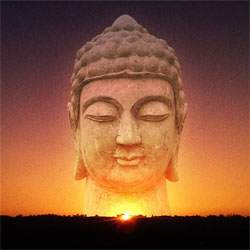 This Sa-nature, although the Buddha was taught over twenty five centuries ago, but it kept the price intact. The contents of all the methods presented in this sutra are deeply rooted in the three vipassana that are precepts.
A. INTRODUCTION
Buddhism has no purpose other than to set forth the motto of action which, if practiced by individuals and societies, achieves ultimate happiness. The motto is also the specific method applied to daily life. Since each individual is a rational being but physiologically and psychologically different, therefore, the Buddha has taught a wide variety of disciplines to suit the individual. But whatever method is to lead people to happiness happily. And of course, the individual exists in a specific space and time, so Buddhism is also directed at this individual, with specific methods to improve the individual's integration with society.
After the Buddha entered Nirvana, his teachings were recapitulated with the form of recitation and preservation with the transcendental memory of the elders of the season. When it is written, it is presented in text form. And the Pāli language was used to record the original teachings of the Buddha. It has become one of the oldest types of humanity still preserved to this day. But it is a special literature - the literature of transcendental wisdom, of methods leading to the cessation of suffering. It is thanks to these sutras that the spirit and purpose of monks and novices continue to be unbroken. That is the way of the saint. The result of the practitioner is the liberation of suffering, from the sorrows of the defilements of unhappiness in each person's heart.
B. CONTENT
1. Historical History of the Pāli Classics
1.1. Formation and development
Pāli is a language used daily by the cultured people in the north of India from the 7th century BC It continues to be used throughout India and is extended to use as a language. literary language for about a thousand years and subsequent periods it still exists but its influence and decaying role. It also appears in the literary language of Burma, Thailand, and Ceylon. The two factors combined to make the Pāli language important as one of the world's major literary languages, are politics and religion. Political factors have prevailed during the 7th century BC in Kośāla state politics.
Before the Aristocrats along the three paths of entry into India, this place was as an independent territory and there were isolated small communities. Their language is related to the Vedic language. With the unity of the great Kośāla kingdom, a country that has conquered small states and led minority peoples with underdeveloped culture, can not afford to set up a common language standard, and the language used to communicate among communities is the language of Savatthi in Nepal and the capital Kośāla.
When Buddha Shakyamuni, a person born in Kakiwa (his Kapilavatthu country, which is a small country, like an autonomous country belonging to Kośāla), is determined to use the Pāli language to propagate the thought of myself. He and his disciples made the Pāli language more abundant and more widely used in the places where he arrived. After the Buddha's Nibbana, his disciples faithfully edited his teachings and the texts quickly spread and influenced everywhere. But local languages still exist in parallel.
The Pāli word is "text" or "holy text" or "Buddhist holy". It is in contrast to the form of memorization and word of mouth, and gradually becomes the name for the language of the Tipiṭāka of Theravada Buddhism and the League of Nations. However, the traditional (conservative) Theravada states that language like Magadhi is the actual voice of the Buddha. Pāli's main field of application is religion and philosophy - the two most important themes of the Theravada Tipiṭāka. Tipiṭāka contains the original teachings of Buddhavachana and Burmese and Thai Buddhists always believe that. However,
The history of the Pāli canon has not been fully studied. It is maintained by all the traditional Buddhists and Tipitika is edited through several different writings. The Old Testament is fixed last and written on the fourth edition of the Vattagamani summon. [1]
1.2. Classical Summaries
So far, there are six different Pali canvassings:
1.2.1. First Set
Three months after the Buddha's passing away (Mahāparinibbāna), a congregation of monks (Bhikkhu) was organized, now called the Sangha I, in the hilly area of Rājagaha with the patronage of King Ajātasattu (544B.C). The purpose is to combine the suttas and the rules into a more rigorous system. The master of this gathering is Mahākassapa, the law is bhikkhu Upāli, and the head of the sutta is bhikkhunīn Ānanda, who is close to the Buddha and thus many It is the most opportune time to hear and memorize His teachings. The congress consists of about 500 monks. The monks and the sermons are revisited, organized into two main groups: the Vinaya and the Pitaka. Through the collections at that time, the Sutra Pitaka was divided into four main departments: the School, the Middle, the Synch, and the Sangha.
1.2.2. Second episode
About 100 years after the first gathering, in 383 BC, a classic assembly was held at Vāḷukārāma in Vesāli with the participation of 700 monks, under the patronage of King Kāḷasoka, At the request of the Sangha they become Vesali and Vajji. After this gathering, the Vinaya was expanded with the precepts that the delegates said were not convened during the Congress, and some of the other suttas have not been assembled, forming a set of sutras 5 of the Pitaka (Sub-Ministry). After this gathering, the Vinaya and the Vinaya are considered to have taken shape, and the sermons are probably the same as the sermon we have in the present Tripitaka.
1.2.3. Third episode
One hundred and thirty years later, in 253 BC, King Asokārāma (India) convened the Third Congress at Pāṭaliputta with the participation of 1000 persons, presided over by Lord Moggaliputta Tissa, taking place in 9 months. The ministry of the Sutta is expanded and composed more suttas. Most importantly, the Congress concluded the lectures on the psychology, the physical and the general of all phenomena, creating the Abhidhamma, the Abhidhamma, the Abhidhamma, the Abhidhamma.
1.2.4. The fourth episode
Around the year 20 BC, 500 years after the day of the Buddha's entry, Sri Vaṭṭagāminī of Sri Lanka convened the Fourth Sangha at Aluhivihara, near present-day Kandy, chaired by Mahā Thera Rakkhita, Reassign the Sutras, Laws, and Summarize the Dharma Elements. In order to preserve the Buddha's teachings, even though they have been assembled, but only in the past 500 years, the three suttas have been rewritten on a dry paper. Since the Pā Tami Tripitaka was formed, there was no change.
1.2.5. The fifth episode
This gathering was held in Mandalay in Myanmar in 1871, under the auspices of King Min Don Min, presided over by Mahā Thera Jāgarābhivaṃsa, Mahā Thera Narindabhidhaja and Mahā Thera Sumaṅgala Sāmi, with the participation of 2,400 khao
1.2.6. Episode Sixth
This sixth gathering took place in May 1954, in Yangon (Rangoon) in Myanmar, by the initiation of Prime Minister U Nu. The congress has been attended by over 2500 monks from Myanmar, Sri Lanka, Thailand, Kampuchea, India.
These summaries 5 and 6 are only to clarify the main points of the Sutra, but do not change the Tripitaka. [2]
1.3. Overview of the Pali Tripitaka
1.3.1. Vinaya Piṭaka
This includes rules and rituals for monks (Bhikkhu, Bhikkhuni) and nuns (Bhikkhuni, bhikkhuni), how to join the Sangha, in cases of violating the precepts, etc. This is usually divided into five sets:
1. Pārājika,
2. Pācittiya,
3. Mahāvagga,
4. Cūavavga and
5. Parivāra .
2. Pācittiya,
3. Mahāvagga,
4. Cūavavga and
5. Parivāra .
1.3.2. Sutta Piṭaka
There are five main sets (Nikāya): the Dīgha Nikāya, the Majjhima Nikāya, the Saṃyutta Nikāya, the Aṅguttara Nikāya, and the Khuddaka Nikāya. In the Sanskrit (Sanskrit) system, these are called the Agamas. However, the Primitive Acts were lost and only discrete Sanskrit records were found, but only Chinese translations of sutras from various sectarian sources and through different generations. [6] .
The Ministry is composed of 34 long suttas, translated into Vietnamese, including the two most popular books, the Maha Parinibanna Sutta and the Maha Satipattana Sutta. ). In addition to the sermons of the Buddha, this ministry also contains the teachings of Sariputta, the leading disciple of the eloquence of the time, and other famous disciples.
The Central consists of 152 sutras arranged in 15 items, according to each theme. Important suttas often involve the practice of mindfulness (Satipattana Sutta), samaditthi (mindfulness), meditation (Kakacupama), the life of the Buddha (Ariyaparyesana), the four noble truths (Mahahatthipadopama) (Culasunnata), mindfulness of breathing (Anapanasati), etc. It can be said that this is the most important one, including the essential sermon on the path of practice, the practice of the Buddha's teachings.
The Contemplation consists of 2,889 short texts, divided into 5 chapters and 56 articles. This is a collection of texts with the same theme of a discussion point, or of a certain character in the Buddha's time. There are important lectures on 12 karmic conditions and about 37 parts of bodhi (37 counterparts).
Chi Chi is a set of rules based on arithmetic sorting, from topics related to 1 element, 1 element, gradually up to the topic of 11 elements or elements. Thus, the sutra is divided into 11 chapters, including 2,308 suttas.
The Ministry is actually not a small book, but a set of 15 small books:
1. Sub (Khuddaka Pāṭha)
2. Dhammapada
3. Self-Concept (Udāna)
4. Nhu Ngu (Itivuttaka)
5. Sutta Nipāta
6. Heavenly Palace (Vimāna Vatthu)
7. The Devil (Peta Vatthu)
8. Theravada (Theragāthā)
9. TheriGa thā
10. Birth (Jātaka)
11. Meanings (Mahāniddesa)
12. Involuntary Emancipation (Paṭisambhidāmagga)
13. The Apadana
14. The Buddhas (Buddhavaṃsa)
15. Delightfulness (Cariyā Piṭaka)
1.3.3. Abhidhamma Piṭaka
Also known as Abhidhamma or Abhidharma, this is a collection of lectures by the Buddha on the nature and the general of all things, the resolution of philosophy and psychology. Dhamma consists of seven books:
1. Dhammasaṅgaṇi
2. Distinguished (Vibhaṅga)
3. Dhātukathā
4. Puggala Paññatti
5. Kathāvathu
6. Songaka
7. Cause and effect Paṭṭhāna).
2. Distinguished (Vibhaṅga)
3. Dhātukathā
4. Puggala Paññatti
5. Kathāvathu
6. Songaka
7. Cause and effect Paṭṭhāna).
1.3.4. Other key sacred scriptures
In addition to the Tripitaka, there are also commentaries and commentaries, and a number of other important Pali works have also been studied and handed down to this day:
(Dipavamsa)
Mahavamsa
Culavamsa
Milindapañha
Visuddhi Magga
Abhidhammattha Saṅghaha [3]
Mahavamsa
Culavamsa
Milindapañha
Visuddhi Magga
Abhidhammattha Saṅghaha [3]
2. Learn the Sa-fruit (Sāmajjaphalasuttaṃ)
2.1. Dependent Origination of business
When the theory of a business, there must be a predestined relationship, or someone to ask or from the internal emotions that the Buddha said. This one is asked.
On a full moon night in Komudi, King Ajātasattu (Azazet) is sitting on a high moon overlooking the emotion, he asked the courtiers to visit the monk, brahman? The gods in turn advised the king to go to some of the famous Brahmins, Brahmins, but the king refused. After that, he decided to go to the shrine to worship. This business comes from this condition.
Here we should talk a little bit about Ajātasattu. He was the ruler of Magadha, who reigned for the last eight years of the Buddha of Shakyamuni and the next 24 years (c. 494-462 BC). He was the killer of King Bimbisāra and Devadatta to attempt to destroy the Buddha, but failed. Finally, he awakened to the Buddha and served the Buddha.
A-bar-meaning "resurrection" - with the intention of prenatal results - is predicted to kill father. Ah-so-want to win the rights too early, along with Ms. Dat Dat multi-plot plot to kill the Buddha and killed his father. This plot is revealed, the father forgive his son and the throne. Ah-so-still not happy because the father was alive, in prison and starved both father and mother. Later A-bar-world asked the Buddha should invade the country Vajjī (Vajjī) which is a democracy. The Buddha said that the batsman never lose because the people are very solid. Since then, A-bar-de-importance democracy, attach importance to Sangha and people here are awakened. After the Buddha entered Nirvana, A-bar-set a Tower of the relics of the Buddha. He was also the creator of a great theory in the first set.
2.2. Contents of business
Every single person in the early society does some work, but each one has a result for themselves or their relatives, friends ... Then a living monk has achieved What benefits? This is the king's question.
After listening to the Buddha after listening to the king of A-bar-the story of not satisfied before the show about the practice of no clear results of the six chief professors, he presented full Details on the stages of cultivation of a monk, along with practical benefits, are present, at each stage of development.
2.3. Analysis of business content
2.3.1. Six theories of paganism
After coming to the place of Tathāgata, King Ajātasattu recounted six theories of the heathen he had consulted:
- The theory of no karma (Akiriya):
When Ajātasattu arrived at Pūraṇaka Kassapa and asked: "Kassapa, as well as the technology, this career ... His Majesty, can you tell us the practical result of the Sa-ad?" ]
The content of this question is that the king described some of the most popular occupations in India at the time, such as monks, novitans, etc. Each occupation yielded a certain result. Trained people can help themselves, parents, wife and children, friends ... living comfortably comfortable, happy. These are the results are very practical, specific clear, but the subjects in the sex life, no wife, children, homes ... what practical results?
Pūraṇa Kassapa replied as follows: "Behold, the king himself makes or kills or kills or kills, burns or burns the burners ... so there is no blessing." [5]
The content of this answer can be said to revolve around two basic actions of human beings that are good and evil. In the act of evil, Kassapa raised such actions as killing, burning, causing sorrow, brainstorming, fear, killing, taking away, destroying, looting ... for others. Through the implementation of such self-made, false do other people do is not evil. On the contrary, a person walking on the Ganges, a place where people are very confident that there are angels living there, doing things like giving, sacrifice ... also no blessings. So, whatever the time, whatever action, to affect others is not useful.
Pūraṇa Kassapa is a skeptical theorist. According to him, good and evil do not have a certain standard, not so much because of social customs that call it. Society is called good or evil, it is not necessarily good or evil. So he advocates whether good or evil do not have karma.
We find that in this business the Buddha did not comment on this answer. However, all volitional actions have the capacity to produce karma, whether good or bad. In the Lord Buddha's teachings, the Buddha taught: "O Bhikkhus, the Tathagata asserts that it is the Kamma. Because of the will to act, through body, speech or mind. "[6] In the A Book also similar narrative:
"Sowed seed,
Will reap.
Will gather good results.
Evil actions will reap evil results.
Sow good seed,
I will enjoy good fruit. "[7]
Will gather good results.
Evil actions will reap evil results.
Sow good seed,
I will enjoy good fruit. "[7]
This makes the beings different in nature, fruit and species. The Qur'an says the following: "What is born by kamma? All living beings do good, evil, good, bad. Good deeds, evil, good and bad, are called karma, creating the power of bringing beings into the present moment to receive the fruits of good, evil, good and bad. "[8] Thus, Pārṇa Kassapa's inscrutable theory is completely wrong. Thus, King Ajatasattu told the Buddha, "As the Dalai Lama, as well as the left, answer the fruit, or ask about the fruit and the fruit." [9]
We can understand why Ajatasattu thought so, because he killed his father. It is the action that people curse, but he himself also feel great remorse and suffering. If there is no karma, why do people hated him? So, he thought, "How can a man like you be a monk or a Brahman in your country?" [10] That is why he goes to other people. to question.
- The theory of reincarnation (Saṃsārasuddhi):
After not being satisfied with the answer of Pūraṇa Kassapa, King Ajātasattu went to Makkhali Gosāla and repeated the problem that he asked Pūraṇa Kassapa. Makkhali Gosāla responds as follows: "O king, no gnat, no charm ... fool and gentle person after the flow of samsara will remove suffering." [11]
Makkhali Gosāla's answer can be summed up in the following matters: He says that there is no cause nor gravity, the defilements of samsara (satta) or purity are not due to causation. All beings are governed by fate and they enjoy unpleasant or pleasant according to their kind. This verse we can understand is a buffalo because it is a buffalo, a dog because it is a dog. And he is a fool and a gentleman after the rotation of samsara will exonerate suffering. It means that after being reincarnated into the cycle of samsara, one will enjoy suffering according to the type of life that he died until he had paid off debts. Because of the unadulterated view, he did not think that when he received the karmic retribution he would suffer forever when he created karma. Therefore,
Makkhali Gosāla advocates "radical determinism," meaning that man's destiny is governed by natural law, not by human beings. When human destiny has been freed, it is automatically liberated.
According to the Buddha, all are the causes of it, nothing is inhuman and afflicted by the sentient beings are due to karma: "Eyes, ears, nose, tongue, body and mind are old kamma. . The actions of the body, speech and mind in the present are new kamma. "[12]
- Homosexuality (Uccheda):
Disagreement with the response of Makkhali Gosāla King Ajātasattu went to Ajita Kesakambala and asked the same question as the two. Ajita Kesakambala replied as follows: "Great King! There is no sacrifice, no sacrifice, no sacrifice ... no longer exists after death. "[13]
This answer includes the following: According to him, all phenomena ... are all non-human, after death, the four elements returned to the four elements, no longer exist after death. Only fools can praise alms, so their words are empty words, false when they accept life. After death, it will disappear, disappear, no longer exist. This passage is not only contrary to Buddhism, but also to Brahmanism, because Brahmanism believes that there is reincarnation, the person after death does not lose it.
Ajita Kesakambala advocates "radical determination of the network," said that human beings by four: geography, water, fire, fit, out of material out of life. According to him, death is an end, so the purpose of life is to enjoy the present pleasures. He is committed to moral all moral, but in his view it is only rational rigor.
- The seven-body theory of indestructible
Not disagreeing with Ajita Kesakambala's argument, Ajātasattu went to Pakudha Kaccāyana and asked the same question, "Here is the king, seven bodies not made, not made ... tongue. The sword falls on seven bodies only. "[14]
The content of his answer shows the following: seven bodies are not created by anything, they are like mountains, standing straight like rocks. They are not affected by any feelings. For this novel, there is no element of personality and agent. No one can use the blade to kill me, only the sword cuts to seven bodies.
Pakudha Kaccanyan advocates "extremists often argue" against the extremists of Ajita Kesakambala's commentary. He defines immortal bhikkhu, which states that man is made up of seven factors: earth, water, fire, leprosy, suffering, life and death. The essence of these seven factors is not living death that birth and death. For example, the person who cuts, according to him, through the blade temporarily makes the location, water, fire, room ... dispersed, not related to the existence of life.
- The theory of four-can ban
Unable to find a satisfactory answer from Pakudha Kaccayana, King Ajātasattu went to Nigaṇṭha Nāapapta and asked the same question, "Here is the king, a Nigantha who is overwhelmed by four kinds of ban. he is called Gatatto, Yatatto and Ṭhitatto. "[15]
In his reply to the four types of bodhicitta, which is to preserve all kinds of water preserving all evil, living the cleansing of all evil and living with the will to guard against all both evil. We see that the human body is always a combination of physiological and psychological bodies. Psychology is based on the physiological body that operates, therefore, if the physiological body is overdone, then how can psychology work normally? In contrast, it makes psychology become suggestive when the body is exhausted. The Buddha himself, in the process of seeking the path to practice austerities, but the results he received only tired of the body and mental despair.
Nigaṇṭha Nātaputta is a very famous founder of Jainis and he took an important place in the development of Indian philosophy and religion. When the Buddha was in the world, followers of this religion often contact with the Buddhists. In the Buddhist scriptures also copy the debate of the two sides. Their doctrine is built on two binary basiss that are jiva and non-existent (ajiva). On the practical side, they advocate the body of work, all karma derived from the body and the karmic also from the body so they advocate extreme asceticism.
- The theory of sophistry
Disappointed with these answers, King Ajātasattu went to Sañcaya Belaṭṭaputta and asked, "If you ask: Is there another world? ... I do not say no. "[16]
The content of his answer can be said to be a theory around me, winding like the "eel", this sophistry does not lead to a practical value that is only used for reasoning, not useful. Benefit both the speaker and the listener. Thus, he has no certain doctrine. The Sāriputta and the Mahāmoggallāna before being ordained by the Buddha are also his disciples.
2.3.2. The benefits of sa-subject (Sāmanohala)
The benefits of sa-subject Buddha presented from low to high, from the world to the world:
- Honored by:
Indian society is a society in which the problem of class distinction is profound, it comes from the Law of Manu in the Vedas. In this business has very clever use this problem for example to lead to the most accurate answer to the king understand.
The image of the Buddha is typical of the king's servants - of the Sudda class. He had to work hard at the king's request. When this person thinks that the king is king thanks to the merit, so let's go into religious and do the merit. After leaving home, this person practicing Brahma, now the king can not treat him as he was not ordained. Thus, the Buddha concludes: "This is the first practical result of the Sa-san that I have presented." [17]
After listening to the first benefit, the king asked the Buddha to show the practical results of the next Guru, this time he took a third class member Vessel (Vessa) and if this person The family is also respected as the person above.
- Hold full virtue:
+ Sub (Cūḷasīlaṃ)
The king again asked the Buddha to find another concrete result of the dhamma, the Buddha gave an example. For example, there is a person of the lower class, after the Dharma of the enlightened being left home. After his ordination, he applied the rules Pātimokkha to control the body, full of dread ... Buddha meticulous for the king to understand the sub-world that a monk must hold.
You can summarize the sub-world as follows: no killing, no stealing, no misconduct, no lie, no double tongue, no evil, no meaningless, no time, no dancing , no bed, no gold, no slaves, no farm, no garden, no broker, no bribes, no fraud. Thus, the sub-world is the object of the body control and speech. The scope of this gender is for the species of consciousness.
+ Middle (Majjhimasīlaṃ)
After saying the Sub-world, the Buddha spoke about the Middle Kingdom to the king. This gender is applied to inadvertent species such as plants ... and the degenerative dignity of the monk.
It is possible to summarize the Middle Ages as follows: they do not harm the seeds, they do not store food and utensils, they do not take pleasure, entertainment, woolen blankets, cotton mattresses, no jewelry. , not talk about the news, not argue, disputes, not give the news or say flattery to benefit.
The Aesi are meant to control the greed of the mind and the impure dhamma can cause the mind to move. Bhikkhu does not do the work of secular secularity in order to seek benefits.
+ Mahāsīlaṃ
It is possible to summarize the world as follows: keep away from the misconduct, such as watching generals, guessing, using charms, away from evil as predicted news, astrology, weather, good day, bad the magic, cure disease, to feed, despite the receipt of credit.
We can see that this part of the Great World is very important. The fact is that monks today do things that the Buddha has banned so much. Their purpose is to take advantage of the superstition of believers for the pursuit of profit, this is probably the evil of the life of Dharma.
If a monk holds Pātimokkha, the benefits are so great that the Buddha concludes: "Also, this monarch! He is full of precepts should not be afraid of fear of a place in respect of the precepts. He is full of this noble precepts, should enjoy pleasure, inner non-lucid. Thus, this monk, monk full of precepts. "[18]
- Always mindfully aware:
+ Tame the roots (indriyasaṃvaro)
Mindfulness is that in any time, space is always aware of its existence in that moment without reminiscing about the past or the illusion of the future. At the same time, do not fall into the prime of the ranks. The Buddha said: "The great king, how are monks holding the bases? When the king sees good, the monk does not hold the general general, he does not hold the general. "[19]
General general means the general impermanence, non-self of all dhammas. Private inheritance is the specific characteristics of each generative. For example, earth, water, wind, fire ... have the general impermanent, but the soil is hard, water is wet, fire is hot, the wind is dynamic, the individual of each is different. colorful color like. If a general or private practitioner of a certain law is wrong, it causes the mind to oscillate and lead to mental dissonance, the moment of peace has been lost. The interesting statement of HHng said to the two monks, "artificial intelligence" [20] also speaks of the spirit that the Buddha taught above.
Likewise, when the ear, nose, tongue, body and mind come into contact with the dhammas, neither do they hold the general and their own. If they hold their generals and the emotions brought by them, craving, compassion, suffering and unwholesome will arise. When a monk practices mindfulness he will attain the present bliss. The Buddha concludes: "He, thanks to the noble blessing of these grounds, should enjoy inner peace, not cloudiness. Thus, this monarch, rate-pretentious maintenance of the grounds. "[21]
+ Mindfulness awareness and satirical (satisampajañña santoso ca)
Mindfulness of mindfulness is the four monks suspected to be aware of their actions, always maintain the sense and sense of each movement, when speaking or silence are aware. All human activities, though many, can include three types: body, word and mind. The activities of the body, words and thoughts of ordinary people are noisy and lead to suffering because a non-cultivating person may have activities of killing, stealing, mischief, tripping, double tongue , say weave, say rough (evil), greed, brutal, misunderstand. On the contrary, the activities of the body, the words and the mind of the monk, the Taoist, are quiet and bring about happiness because a person towards enlightenment always respects life, wealth and happiness. the family of others. The devotees are good (the body), say the truth, say reconciliation, say the right, say good words, help, fun,
Subsistence is always enough for the offerings. Always be content with what you have. Just enough to cover yourself and perform the Buddha, eat only enough to feed the body of the four elements are not exhausted to interfere with the practice and practice. Sleep just enough to be mentally alert without getting much sleep.
+ Discharge of the hindrances (Nīvaraṇappahānaṃ)
Meditation is binding, the meaning is to cover. There are five things that tie the mind and body of the afflicted person to the birth and the prevention of the wisdom that human beings are ignorant not be enlightened.
One is greed (kāmarāga), which means that beings are attracted to male and female generals, beauty, good sound, aroma, taste of food, soft feelings of the body when touching, objects precious like gold, silver ... never know enough. This greedy mind obscures the mind of beings, the good as meditation ... can not arise so the reincarnation in the third world can not get out. Second is the anger (kodha), ie the mind is angry at the circumstances, the people do wrong intention of their own. The third is mundane (mundane) and middhadhī (middhadhī) means that the being is sleepy so the consciousness is dark, uncontrollable mind and mental state so it is impossible to meditate. Four is the performance (uddhacca), that is in the mind is always wavering, oscillating, thinking out of this one attempted another. Five is doubtful (vicikicchā),
If beings are suffering this year, life must always face suffering, not peace, so a monk needs to eliminate them to achieve Nip-tables in the present as well as liberation tomorrow. .
So, what method to remove the five slips? The Buddha said, "Thus, this monk, monk himself, in the hindrances of the unending, as debt, like sickness, as prison, like slavery, like a desert road." ] When such a shop, the monk achieved peace and achieved the meditation class. The Buddha analyzes the stages of meditation as follows:
Meditation (Paṭhamajjhānaṃ): "When the shop itself has ripped off the slipper, he was happy; by joyfulness should be happy; by the joy of joy, the body is despised; due to body contempt, the birth of life; by the calm, the mind is static. Para-liberation, evil glass, evidence and meditation first, a state of joy of separation, with the range, with four. Taste-impregnated, soaked wet, fullness, full of body with blissful separation of education, not a single place on the body not be blessed due to sexual instability. "[23]
The result of this first meditation is that the first one is the desire and the evil that is achieved. This is the result of the benefit of the worldly output. Thus, the Buddha affirmed that: "The great king, it is the practical effect of the Sa-nature, and the more magical victory over the current implementation of the previous Sa-nature." [24]
Dutiyajjhāna:: "Again, this monk, bhikkhandha out of range and four, witness and meditation Monday, a state of ecstasy by birth, no range, It is permeable, soaked wet, full of body with blissfulness due to birth, no place on the body can not be blissful due to the delivery of the birth. "[25]
Thus, bhikkhu eliminated the range and four mental states should achieve the samadhi. This second meditation is more victorious than meditation.
Meditation (Tatiyajjhānaṃ): "Again, this Grand Monk, rate-happy hybrid glasses, mindfulness of mindfulness, friendly feeling that the holy people called 'Leave the concept of staying,' and evidence of meditation. Tuesday. Taste penetrated, soaked wet, fullness filled with his body with pleasure without pleasure, no place on the body, not to be blissful without being absorbed. "[26]
Fourth Meditation (Catutthajjhānaṃ): "Again, this great monks, rate-relief, discharge, suffering, destroy the feeling of feeling before, witness and stay in the fourth meditation, not suffering, not lost, . He is immersed in his pure body with pure mind, no place in the whole body is not pure mind in the light that is imbued. "[27]
Thus, we find that the essence of Zen that the Buddha above is mindfulness (sammāsati). When we are doing, we have a complete sense of what we are doing, when we are conscious, have control and calmness, we are mindful, have self-control. On the other hand, when we do not know what we are doing, when we go without knowing that we are walking etc. ... we are in a state of forgetfulness because the mind is not present fully with the moment. is. Mindfulness is a very bright and precious energy source; If we do not know how to practice and do not know how to live fully with that energy for the present moment, we will not be able to create a source of peace, solidarity and true happiness. Mindfulness is a jade meditation in Buddhism, the ability that anyone can get, just the method and effort, It is an indispensable source of energy for a meditator. Mindfulness practice leads to concentration and insight. Achievement is concentrated, we will achieve insight, and by wisdom we see the truth of things and of life. We can build a happy and happy life for ourselves and others around us.
+ Orientation to the mind (vipassananana)
After presenting the path to the fourth jhana, the Buddha continues to teach the method to go to higher levels of meditation. That is, after attaining the state of the four meditations, one must direct the mind to right understanding. This is the method to remove the basic ego that the Buddha taught: "With calm mind, pure, uninfested, not afflictive, novice, easy to use, firm, calm, Not to mention, direction to the right mind, right view. He knows: This body of material is the four, by the parents born, thanks to porridge rice nourishing, impermanent, mutilated, chalk, break, tied and tethered ". [28]
This is the way of the body, when the body is due to parental blood, due to four, it is always impermanent, so in this body there is no fall, no longer accept it. No longer self-self is the key is to overcome the most important gate leading to the birth, because just a thought of self-acceptance is still life to reincarnate.
+ Test the powers and achieve liberation
Manomayiddhiñamam: When the mind is tamed, the monk can freely reveal another body. The body with these body-like characteristics is no different. These depending on the basis, the coast of the living beings that appear other body to the chemistry. This is also the body that Avalokiteshvara represented in the thirty-two correspondences in Mahayana Buddhism.
Many divine powers (iddhividhañāam): With a tame mind, a bhikkhu can attain various kinds of divine powers, such as the appearance of many bodies, many appearances of one body; the transformation, passing through the wall, through the wall, through the mountains as if nowhere; Descending through the land, as in the water; travel on water not sink as on land; sitting cross-legged on the sky like a bird; with the hands, touching and touching the moon and the sun, the things of great power, so great pride; Can fly to the Brahma plane itself.
Divine-mindedness (dibbasotañāṇaṃ): It is the ability to hear the two types of dharma and man, far and near clearly.
Consciousness (cetopariyañāṇaṃ): is the ability to know all the thoughts of oneself and beings. For example, Tam has greed, knowing that the mind is greedy. There is no greed, knowing that the mind is not greedy. Tam has a yard, know the mind has a yard. The mind has no yard, knowing that the mind has no yard. Mind si, know that the mind has si. The mind does not have si, know that the mind is not si. The mind is conscious, the mind is dedicated. Mind scattered, know the mind scattered. Great mind, known as the great mind. Not great mind, know is not great mind. The mind is not infinite, know that the mind is not the highest, the supreme mind, the ultimate mind. Mind meditation, know the mind meditation. The mind does not meditate, knowing that the mind does not meditate. Mind liberation, know the mind freed. The mind is not free, the mind is not free.
The media network (pubbenivāsānussatiñāṇaṃ): The ability to remember his life and previous activities. For example, remembering past lives, like a lifetime, two generations, three generations, four generations, five generations, ten generations, twenty generations, thirty generations, forty generations, fifty generations, two hundred thousand, a thousand generations, a hundred thousand generations, many life, many lives, many lives and lives. I was born in this place, I have this name, family line like this, class like this, feeling distressed like this, so long life like this. After death in that place, I was born in that place. In this place, we have names like this, family like this, class like this, feeling distressed like this, so long life like this. After death in that place, I was born here. Remember many past lives along with outlines and details.
Dibbacakkhuñāṇa:: It is possible to see the whole process of the transmission of sentient beings through the reincarnation realms. He knows that low-level beings who are high, beautiful people bad people, lucky people misfortune, are due to the business of beings.
Passing through (āsavakkhayañāṇaṃ): is known as the truth of the Four Noble Truths, known as "this is suffering", know as "this is the cause of suffering", know as "this is suffering", know as real "This is the path leading to suffering," said the truth, "these are illegal or", know the truth "this is the cause of gonorrhea or", know the truth "this is the eradication of gonorrhea" "This is the path leading to the elimination of gonorrhea." Through such knowledge, such awareness, the Bhikkhu's mind escaped from sexual desire, escaped from possession, escaped from illicit ignorance.
Knowing that the truth so he should know that he has: "Birth has been, has done good things, what to do; In the present life, there is no other life. "[29]
In short, the ultimate result of the practitioner who needs to be directed towards the non-being is the Supreme Being. The Buddha asserted in concluding with Ajātasattu that, "The great emperor, it is the effective result of the Sa-subject, and the magic than the results of the current performance of Sa-subject. "There is no practical consequence of samatha that is more marvelous and more fulfilling than the actual effect of this samathara." [30]
After the king heard the Buddha taught so, has developed the refuge of the Three Jewels and repentance of his sin.
C. CONCLUSIONS
This Sa-nature, although the Buddha was taught over twenty five centuries ago, but it kept the price intact. The contents of all the methods presented in this sutra are deeply rooted in the three vipassana that are precepts.
Understanding the Sarcophagus in particular and the scriptures in general we are inheriting the most rigorous methodology, but also the treasure of insight. The Buddha established a foundation from which to build a world of peace and morals. Human beings, however, with limited knowledge can not attain perfection but have the right to hope for it. Each individual should set his own maxim, and act to make it a popular practice. This is not the responsibility of an individual but the whole of society. Science can bring material comforts to life but it is not enough for people to live happily. Only and only virtue can do that.
Today, in spite of the rapid development of science in all its aspects, matter has almost met the needs of mankind. On the contrary, traditional ethical values have been shattered, pushing people toward the abyss of the destruction of "humanity." War, famine ... when it comes to its profound cause, we will see that it is we, not the gods, who have separated themselves from happiness and seek to suffer. Let's find out the values of liberating thought that the Buddha has left and achieve that value in the right place that it must be. In this way we not only save ourselves from the process of "animalization" but also find ourselves happy for ourselves. It is a prerequisite before we turn to the Nibbana-birthless table. And of course, We must always remember that we are happy only when the whole society has been happy or otherwise than we must have enough blessings - solemn decorations to be true to the wishes of the Buddhas. Let us insist on this path as the Buddha encouraged: We believe in a bright future of Buddhism, while recognizing the important duty of Dharma, is to clearly define what is the Buddha's teachings. Where are the cults, where are the five deep pitfalls you need to stay away. Overcoming all obstacles, let us strive to cultivate and perform the Buddha's vow: It is clear what is the Buddhist doctrine, where is the cunning, where deep pit five you need to stay away. Overcoming all obstacles, let us strive to cultivate and perform the Buddha's vow: It is clear what is the Buddhist doctrine, where is the cunning, where deep pit five you need to stay away. Overcoming all obstacles, let us strive to cultivate and perform the Buddha's vow:
"O bhikkhus, you need to travel, for the happiness of the many, for the happiness of the many, for the love of life, for the happiness of the gods and the human race. You should preach the Dharma in the first place, wonderful in the middle, wonderful in the end, full in meaning and language. You should promote Pham Hanh life completely and pure. (Mahavagga.END=NAM MO SAKYAMUNI BUDDHA.( 3 TIMES ).VIETNAMESE TRANSLATE ENGLISH BY=THICH CHAN TANH.THE MIND OF ENLIGHTENMENT.VIETNAMESE BUDDHIST NUN=GOLDEN LOTUS MONASTERY=AUSTRALIA,SYDNEY.23/3/2018.

No comments:
Post a Comment