THE STORY OF A STREET ..VIETNAMESE TRANSLATE ENGLISH BY=THICH CHAN TANH.

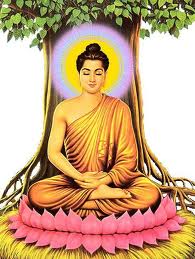 Shakyamuni is a historical Buddha and, for a long time, discovered a very unique Path, which is the Path that helps us eliminate all suffering and find a destination freedom. real. After discovering that Path, the Buddha, then very young, sacrificed the remainder of his last human life to show us the Path with his own finger. Today we are practicing by following His finger and following His footsteps still imprinted on that Path.
We are no different than a group of people walking on the Road, a complex group of people: different in all aspects, from age, health, culture to the level of knowledge ... Yes serene and silent people advance; there are people who are busy going up and down to encourage and guide others, even to give their backs to carry the weak; There are also people who just like to stand at the bus station and wait for the procession. Not to mention the scenes of jostling and pickpocketing, or deceiving and taking advantage of each other ... Moreover, there are also many who do not look in the direction of their fingers to advance, but just search for other people's possessions. dropped or discarded, and then hugged, carried, and teamed up to go and stumble. Not only that, On the way there are also groups of people going in the opposite direction and we must crouch to the side to avoid crashing into them. Looking to the sides of the road, we will also see many bustling scenes: public markets, shops, theaters, casinos, including scenes of deceit, stabbing, shooting, killing, exploding bombs, burning houses. , the bridge collapsed ..., and there were also some people who stopped to gaze at it and still wanted to come in to join.
This short article sketches with a few simple strokes the image of that Path with the troubled people walking, so that each of us can see ourselves on that Road to choose for us a the best step forward. In fact, when Buddha was alive, he taught the Path to people on different levels of knowledge. He explained it to the simple peasants, but he also used to bring up a petal and not say a word to preach the Road to others. That fact shows that although the Road is always the same, always the same, there are many different nuances. Therefore, the Teacher also had to use many different teaching methods. After His passing, the Path replaced Him as His Teacher to guide us, and the disciples gathered to try to keep the Road always covered and clear. They sweep away the rubbish, clear the barricades and expand, each time it is called a Dharma Meeting. In order to adapt to the ideological currents and local cultural characteristics of each era and also due to the different temperament of the later disciples, the Path was slightly deformed and also worn. Add a few new decorations to make the scene a bit different. In addition to those dressed in turmeric, one can also see on the Road, there are people dressed in black, blue, dark red, brown ...
Indeed, right from the beginning of the Concentration held in the 3rd century BC, people also saw the appearance of two different sects. Then came the Episodes in the 1 st century AD, these two schools doubled, and each sect consisted of many schools, a total of 18 schools of all. But most of these sects have disappeared and only one sect has survived to date in a new form called Theravada Buddhism or Theravada. At the same time, around the first century, people also appeared on the Path a new trend called Mahayana . The Mahayana then divided into many different sects, sects and tribes, advocating many different practices.
In summary, there are two main trends or two main directions on the Path, Theravada Theravada Buddhism and Mahayana Mahayana Buddhism. The difference between these two trends is more in the field of "practice", while " salvation " is always the same.
Theravada Buddhism is also known as "Theravada Buddhism" or "Hinayana". The reason is called Theravada because the basic teachings are completely based on the original scriptures, the texts with ancient content and are considered orthodox, that is the Tripitaka. However, it is difficult to know which of the Theravada texts and the Mahayana scriptures are older, because all the scriptures in writing appear very closely together around the first century BC.
Theravada is also called "Theravada Buddhism" because it was later developed in countries belonging to the east and south of the Indian subcontinent, including countries like Sri Lanka, Burma, and Thailand. Lan and Cambodia. But in reality, that term is not very accurate , because in the past most of these countries like Burma (Myanmar), Thailand and Cambodia followed Mahayana Buddhism and only then moved on. Theravada Buddhism was decided by the monarch at that time.
If Theravada Buddhism is called "Hinayana", it is even more incorrect because the word "Hinayana" is mentioned in Mahayana texts in order to distinguish it from the new practice of this school. , because according to the Mahayana practice, it is not necessarily just to seek enlightenment for oneself but to help all other beings to find liberation. In short, if called Theravada Buddhism as "Theravada" or "Lesser Vehicle" is not quite right, and if not called Theravada, it can also call of Buddhism is Theravada, known Pa-li theravâda means the old path or the old teaching. So, what are the basic differences between the Theravada and Mahayana tendencies? The first difference is in the field of scripture, the second difference is that the practice of the Mahayana is wider and more immersive .
The basic teachings of Theravada Buddhism are regulated by the ancient or orthodox scriptures called the Tripitaka, while the Mahayana scriptures consist of both the Tripitaka and the "appearing late" texts. ", that is, writings written from the first century BC to the fifth and sixth centuries, including the texts that appeared much later in the eighth to the eighth centuries. X. However, all sects claim that their sectarian texts originated in the period of the historical Buddha, by citing that the Buddha preached on different levels to target the opposites. different effects, các kinh sách liên hệ được cất dấu để tránh khỏi bị mất mát vì chiến tranh và cướp phá và chỉ được tìm thấy khi cơ duyên hội đủ. Thật thế việc khám phá kinh sách dấu kín thường xảy ra trong quá khứ ở Tây Tạng.
In short, Theravada Buddhism and Mahayana Buddhism are not two different "sects" or "sects", but rather two different attitudes or practices , and moving forward on the same General Road. In terms of application, Theravada Buddhism requires a practitioner to separate his activities from the secular life, to strictly abide by the precepts, to remind himself to always let go and to focus on the body. liberated form of an A-la-Han . Meanwhile, Mahayana Buddhism presents the ideal image of a Bodhisattva certain to deny his ultimate enlightenment to remain in the Ta-baa world in order to continue helping all sentient beings .
If you want to enter the Mahayana steadily and easily, there should also be some minimal equipment on Theravada Buddhism. Saying that does not mean Theravada Buddhism is only a phase, but in fact it is also a complete and complete sect. Mahayana Buddhism, on the contrary, has some profound aspects and forms, but the methods of practice are too diverse. Anyway, if starting out on the Path with the baggage of Theravada Buddhism, at some point another requirement may also naturally arise, prompting the practitioner to choose for themselves the way to practice. treatment of Mahayana. In fact, that is not the way to eliminate Theravada Buddhism when you have entered Mahayana, because The accuracy and purity of Theravada Buddhism is always what is necessary for practitioners . In short, Theravada Buddhism and Mahayana both complement each other.
At first glance, Mahayana Buddhism is so complex that some practitioners of Theravada Buddhism may think that Mahayana Buddhism deviates from the Path. But in reality, these "transformations" are just an evolution that helps the Road to expand into this diverse world of ours and bring Buddhism in general new and deep aspects. sharper. Theravada Buddhism claims to be true to the teachings preached by the Buddha, but in fact has evolved quite a bit over time, in order to adapt to different local contexts and trends. . In a general way, Theravada Buddhism can be considered more or less "quite orthodox" and always interested in keeping in accordance with what was written in the ancient scriptures,to enter the world "more. So what is Mahayana Buddhism really?
If Theravada Buddhism advocates the pure image of an Arahant, Mahayana Buddhism upholds the responsibility of a Bodhisattva. On the Path, if practicing according to Theravada Buddhism, just look at the Arahant in front of you and follow, if practicing according to the Mahayana, you will join the Bodhisattva to act like a person Bodhisattva. Moreover, in addition to the ideal image of the Bodhisattva, Mahayana Buddhism also admits all the local and peaceful gods that are also fierce, and countless Buddhas also appear. show more. Therefore, the Road to Mahayana also becomes more crowded and more fun. Mahayana Buddhism consists of three major sects or schools, and mainly the Pure Land, Zen, and Vajrayana.
Once upon a time in India, there was a wealthy and very intelligent monk who took the Dharma name, Dharmakara, and prayed that if he became a Buddha, if there were any sentient beings who prayed sincerely, he would lead into the ultimate bliss realm. . After many lifetimes of practice, he attained complete liberation and became a Buddha named Amitabha, able to lead sentient beings as he had previously wished. If sentient beings want to be led to the ultimate bliss realm after death, they must sincerely call upon His kindness. These are the Pure Land "disciplines." But it is also necessary to understand that Buddha Amitabha also wished that "Until there is still one being who has not been liberated, we have not yet entered the ultimate bliss realm", and that is what shows a the higher rank of Pure Land,
The basis of the Pure Land teachings is based on the three volumes of sutras , the Amitabha Sutta , the Amitabha Sutta, and the Amitabha Sutta . The Pure Land practice only focuses on faith and invocation, so it is often considered a relatively "easy" practice. In any case, this practice shows that some obstacles are not very favorable for deep understanding of the teachings of the historical Buddha, Shakyamuni.
Zen or Zen School is also called Zen or T'chan. Zen Buddhism was codified by an Indian teacher, Bodhidharma in China in the sixth century. But people tend to see Zen Buddhism deriving from an anecdote called "micro-flower seals" (holding flowers smiling) from the time of the Buddha Shakyamuni still alive. During a lecture, Buddha picked up a spike of flowers but did not say a word, the public bewildered, only a disciple, Ma-ha Ca-lettuce suddenly brightened and smiled. The silence of the Buddha and the smile of Ma-lettuce symbolize the consensus of reality directly, beyond the conventional and dualistic nature of words. Therefore, Ma-ha Ca lettuce is considered to be the first Patriarch of Zen Buddhism in India and Bodhidharma is the 28th Patriarch to bring Zen Buddhism into China.
Zen Buddhism can be considered a "shortcut" practice, and if it were called a "shortcut" then of course it also means a "short" and "difficult" path, and of course that's what The opposite of the Pure Land's path up here. The unique scriptures of Zen are almost nothing but a series of Mahayana teachings in general very close to the Zen Zong view, the Lankavatara Sutta, and some other volumes that record "koans". A koan is statements or short stories that are "unexpected", "irrational" or may be "silly" or "off-topic" answers intended to help the practitioner break down. the nooks and crannies of thought, transcending all reasoning based on knowledge by conventions and concepts, in order to give meditators direct access to the true nature of all phenomena. The actual visualization of reality is Enlightenment.
The third school of Mahayana is Vajrayana Buddhism, also known as Tan-tau Buddhism, a very complete Buddhist vehicle, covering the entire doctrinal basis of Buddhism in general from the Tripitaka to the scriptures The Mahayana and the most important are the scriptures. People often misunderstand and claim that Vajrayana is Buddhism of Tibet. In fact, it was a very large sect, formally formed and closely systematized in India around the eighth century, and later introduced into countries in northern India such as Tibet, Mongolia, China, Japan ..., and at the same time expand to other countries in the south such as Burma, Thailand, Cambodia, Indonesia (Indonesia) ..., before the countries This family switched to Theravada Buddhism.
Tan-tra means "what protects the mind" means keeping the mind stable from distractions and bewilderment that distracts it. What is different between Tantric and other schools is the unique practice of this school: it is the way of taking advantage of all the power of the impulses in the mind to turn them into powers. practice towards enlightenment. For example, if a tree produces bitter and poisonous fruits, it must be uprooted for other schools of Buddhism, rooted off, so that it will not grow back, but for Tan- Excessive investigation, the practitioner must "swallow" those poisons to turn them into a quintessential and powerful source of energy to help him navigate the practice path. In short, that means transferring all the power of all emotions, including the most disturbing emotions, into the power of enthusiasm and intelligence. In addition, the practice of tan-tra also relies on many complicated symbols and rituals (mandala, man-sentences, etc.) so practicing the practice of Satan or Vajrayana requires guidance and assistance of qualified teachers.
Above are a few outlines of the Road. Theravada Buddhism represents the steps that are essential and firm, thus very pure. The Pure Land advocates "light" steps, so it may take a long time to see the arrival at the end of the Road. Zen Buddhism is a reverse policy and is considered to be quite "difficult", to be active in the operation of the mind and the contemplation directly realized, and therefore may also require the practitioner to have Some particular aspects are consistent with this practice. After all, Vajrayana is more complete and more active, but it is very complex and diverse, requiring an extraordinary determination and guidance from a qualified teacher.
On that Road, there were always practitioners walking and turning around, or still enjoying watching various scenes on either side of the road. There are those who limp to rely on each other to go, there are people who sit down to bandage wounds for those who stumble, and there are those who walk very fast. After all, everyone on the Road can enter the final stage someday. So what will the last phase look like?
The more he walked, the Path seemed to become wider and wider and full of light. Then at some point, suddenly the traveler will feel that the Road has completely changed, all of the benchmarks for orientation seem to vanish no longer determine where is the front, the back, on the right, on the left, on the top, on the bottom ..., so even if he wanted to, the traveler could not take one more step, and he could not back down. He feels like space, time, the Road, and himself become one.
Even if he uses his mind to "look back", he will not see the "Road" anywhere. the traveler is taking his last step on the Road. After that step, there was nothing to be born of and nothing to destroy, all stopped and stopped. The story of an adventure also ends there.END=NAM MO SHAKYAMUNI BUDDHA.( 3 TIMES ).WORLD VIETNAMESE BUDDHIST ORDER=GOLDEN AMITABHA MONASTERY=VIETNAMESE BUDDHIST NUN=THICH CHAN TANH.AUSTRALIA,SYDNEY.23/1/2020.


No comments:
Post a Comment