The truth about impermanence.END=VIETNAMESE TRANSLATE ENGLISH BY=THICH CHAN TANH.


Impermanence, depending on transformation, is the property of compounded elements. Be diligent. ” That is the last reminder of the Buddha-conquering Buddha to his disciples.
And when the Buddha entered Nirvana, God Likes Coal that:
"The action is impermanent, There is birth and death. Having been born, they must die, They are peaceful ".
Until today, at every funeral of Buddhists in the lands of Theravada Buddhism, the same verse is still recited in Pali by the monks at the ceremony, to remind the community of the village. ephemeral nature of life. In Buddhist lands, people often see Buddhists offering flowers and oil lamps in front of the Buddha image. It is not that they are praying to the Buddha or any "religious person". The flower will die and the lamp will disappear, reminding them of the impermanence of everything that is inherently conditioned.
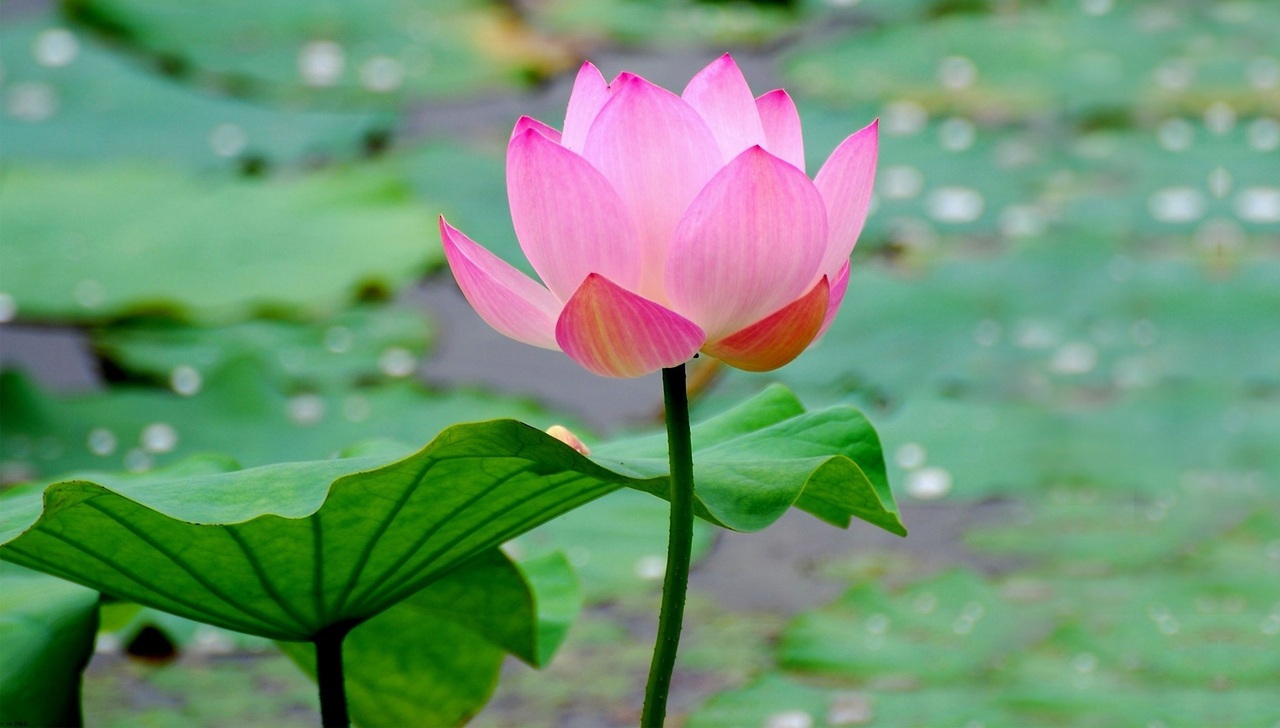
This simple and simple impermanence is the core of Buddha's teachings, and is also the basis for the other two characteristics of existence, namely suffering and non-self.
The truth about impermanence means that reality is never static but always dynamic; and that has been perceived by scientists as the nature of the world, without exception. In the teaching of that dynamic reality, the Buddha gives us a master key to open any door we want. The modern world is also using the same master key, but only for material achievements, and is opening this door to another door with miraculous success.
Change or impermanence is the essential characteristic of all phenomenal existence. We cannot talk about anything, charming or inadvertent, organic or inorganic, that "this is a long-term existence", because as soon as we say that, it is undergoing transformation. Everything is disappearing; the beauty of the flowers, the melody of the birds, the hum of the bees, and the glow of the evening.
"Suppose you are watching the beautiful sunset. The whole moment in the West is glowing with dark pink colors; but you also realize that within half an hour, all those splendid shades will fade and become gray. You see them right when they are dissolving before your eyes, although your eyes cannot put before you the conclusion your reason has just drawn. And what is that conclusion? The conclusion is that even in the shortest possible moment of being named or identified, you never see any color that exists completely, any color as it is. Within a millionth of a second, the whole splendor of the colored sky was subjected to a series of transformations. A chromatogram is replaced by another chromaticity with a quick challenge of all measurements; but because it is a process there is no measurable application ... the mind refuses to hold a hold of any stage of the scene that passes by, or declares that it is so; because right in that existence, it did not exist; it gave way to something else. It is a series of colors that pass by without any color in that chain exists, because each color in that sequence in turn eliminates each other. ”
All things constitute - that is, all things that arise as a consequence of causes, then in turn give rise to other consequences - can be summed up in one word, that word is impermanence (anicca). Because impermanence should cause suffering and because suffering should be non-self.
Disguised, these three characteristics of life spread throughout the world until an Enlightenment attained their essence. It is to make a statement about these three characteristics - and how through a thorough understanding of them, a human being attains liberation of the mind - that a Buddha was born. That is the most essential, the most general content of the Buddha's teachings.
Although impermanent applies to all compound beings, all things that are conditioned by birth, the Buddha is more interested in what is called sentient beings; because the problem is for people, not for static things. Like an anatomist separating an arm into tissues, then separating the tissues into cells, the Buddha, the Earthly beings, analyzed the so-called beings, sankhāra puñja, a messy set of advances. submit, forming five ever-changing aggregates that the Buddha called five aggregates, and made it clear that nothing exists forever, nothing is preserved forever, in the flow of aggregates. They are rupa (physical form or body), feeling (or feeling), thought (or awareness), action (psychological factors have the ability to motivate, like will), and consciousness (or discrimination awareness).
Enlightenment Germany explained:
“The monks and five aggregates are impermanent; whatever is impermanent, that is suffering, (unsatisfactory); whatever is misery, that is no self. What does not have self, that is not mine, that is not me, that is not my self. What is non-self, needs to be true to the right mind (sammappaññāya). Those who see with righteous mind, see such truth, the mind of that person is no longer attached, liberated from defilement; he is liberated ”
Bo-slapped Long Life (Nāgarjuna), repeating the above meaning of the Buddha, said, "When the concept of falling (ātman) is no longer, the concept of 'my' also disappears and the person frees from the mind. mindful of me and mine ".
The Buddha gave five impressive metaphors to illustrate the ephemeral nature of the five aggregates. He compared with the foam, with water balloons, thought to try the sun, acted with banana stalks (no bowels, wood cores), and awakened to magic tricks; and asked, bhikkhus, what core could be in the foam, in the water bubbles, in the sun, in a banana tree, in a magic trick? ”.
The Buddha continued to teach:
"Also, this is the monks, which have the past, the future, the present, or the internal or external, or the raw or the noble, or the paralysis or the victory, or far or near; The Male-stilts see sharp, professional notes, as the sharp observations. Because the Male-stilts look at the uncle, such as the rational observer, the color is clearly empty, it is clearly empty, it is clear that there is no hard core. How, the Male-stilts, have the hard core in the colors? ".
The Buddha taught the same way about the remaining aggregates and asked:
"How, the Male-stilts, there are hard cores in life, in thought, in action, in consciousness?" -
With such an analysis of the five aggregates, a more advanced range of thought appears. It is at this stage that true understanding known as insight or insight (vipassaana) starts to work. Through insight by this insight, the true nature of the five aggregates is captured and seen in the light of the Three Dharmas (tilakkhana): impermanence, suffering and non-self.
Not only the five aggregates are impermanent, suffering and non-self, but causes and conditions form the five aggregates, which are impermanent, suffering and non-self. This point the Buddha clearly said:
Sac, life, thought, action and consciousness, these monks, are impermanent. What is a cause, what is the condition for the five aggregates to arise; that is also impermanent. The skandha has been made by impermanence, this is the monks, how can it be?
Sac, life, thought, action and consciousness, these monks, are suffering. What is a cause, what is the condition for the five aggregates to arise; it is also miserable. The five khandhas have been created by suffering, this is the monks, how can it be fun or satisfying?
Color, feeling, thought, action and consciousness, the monks, are non-self. What is a cause, what is the condition for the five aggregates to arise; that is also selfless. The five aggregates have been made by the non-self, which gives birth, this monks, how can there be self?
Seeing this, the Male-stilts, the Holy Master, the disciples, respect the cup for the rupa, the cup for the life, the cup for the idea, the cup for the action, the cup for the consciousness. Because of the cup, he took part. Due to greed, he freed. In liberation, the mind arises: "We are liberated". He knows: "Being born, the offense has become, what we should have done, no longer return to this state".
When mistakes in seeing the true nature of dhammas, our knowledge is always obscured; with the perceptions that are perceived by seers, because of greed, because of hate, we cannot see the sensory organs and sensory objects in their respective and objective nature, so we chase follow illusions and lies. The body of feeling that deceives and distracts us so that we cannot see all things in their true light, so much so that our way of knowing things becomes crazy.
The Buddha taught about the three types of crazy thoughts still clinging to the human mind; It is crazy idea, crazy mind and crazy island. When beset by these delusions, people perceive, think, and know mistakes. He thinks that impermanence is normal, suffering is joy, selflessness is self, evil is beautiful. He also thinks and sees the wrong way. Thus, each of these delusions acts in four ways1 (the Passion in the Noble Truths 4.49), leads people to go astray, obscure his vision, and embarrass him. It is the fault of unclean thinking, of non-systematic observation. Only Chief Justice (or Vipassana wisdom) eradicates these distractions and helps people realize the true nature under all phenomena.
The aggregates that create the mind and body of beings, forever depend on humanity and conditions as we have seen above, experiencing the quick and unknowable moments of the process of arising, being, and turning lost, like the constant waves of the sea or like a river in a flood that culminated and then withdrew. Indeed, human life is likened to a stream that originates from a mountain that flows, constantly changing, like a stream.
Heraclitus, the famous Greek philosopher, was the first Westerner to talk about the changing nature of things. He preached the theory that "everything is smooth" (Panta Rhei) in Athens, and people still doubt whether the theory has come to him from India.
Heraclitus said, "There is no static nature, no unchanging foundation. Transformation, movement, is the lord of the universe. Everything is in a state of becoming, of continuous flow.
He continued, “One cannot step twice into the same river; because the new water always flows under my feet. However, a person who understood the origins of the Fa went further than that and said, "The same man cannot walk twice into the same river; because the so-called person is just a flow of body and mind, never keeping the same resemblance for two consecutive moments. ”
Now, we should know clearly, the entity, but because of practical goals that we call men, women, or individuals, is not a static, but dynamic, is in a state of constant and constant transformation. Now, when a person sees life and all that is related to life under this light of truth, and understands thoroughly that what is called that being is just a series of psychological and physical qualities aggregates, they see everything as they are. He no longer holds the wrong view of "personality beliefs", a belief in a soul or an ego; because through mindfulness one knows that all phenomenal existences are conditioned, that every thing depends on another thing, and that the existence of that thing is related to that condition. . Result, he knows that there is no "I", no spiritual entity exists forever, no principles of self, no self or anything related to an ego in the course of this life. . Thus, he is liberated from the idea of a self or a great self.
Through insight meditation, practitioners see things as they are, not as they seem to be. Considering things as they are, as we discussed before, includes seeing the impermanent nature , suffering and non-self of all enlightened and conditioned dharmas. For such a meditation disciple of the Buddha, this "world" is not the external world or the world is known by experience, but it is the human body and its consciousness. That is the world of the skandha about clinging. It is the world in which the practitioner tries to understand with his impermanence, suffering, and no self or soul. The Buddha spoke of the very world of this body and mind when he told Mogharaaja, "Hey Mogharaaja, stay alert, watch this world as empty; renouncing the notion of self, one can overcome death.
The general content of the declared paradoxical philosophy in Buddhism says that all compounded dharmas that exist because of causality are just a process and not a group of existent entities, but the transformation happens in succession that is so fast that people think that body and mind are static entities. People do not see their arising and disintegration, but only seeing them as a unified mass, seeing them as a whole or whole.
Of course, it is very difficult for people, with the projections of the mind, to constantly think about their own body and mind and of the external world as a whole, as inseparable units. , shake off the false appearance of that "wholeness". As long as people have not seen all things as processes, like movements, people will never understand the Buddha's non-selfless theory. That's why people are insolent and impulsive to ask, "If there is no fixed entity, no unchanging rule, such as a fall or a soul, then what experiences the results? of behavior in this life and after life? "
This burning question was mentioned by two different scriptures, one in Central Vietnam 109 and the other in Concentration of 22.82. As soon as the Buddha explained it to his disciples thoroughly about the impermanent nature of the five aggregates, how did the five aggregates have no self, and how could these arrogant attitudes " I am "and" of mine, ending the existence, which arises in the mind of a bhikkhu who is present among the congregation, saying, "This body is not self, feeling is not self, thought is not self, action is not self, consciousness is not self. So which self influences selfless acts? ”.
Reading the mind in the mind of the Bhikkhu-monk, the Buddha said, "This question does not address the problem", and further explains that the monk understands the impermanence, suffering and non-self of the five aggregates. .
“It is a mistake to say that the person who committed the act is in agreement with the one who experiences the result of that behavior. It is also a mistake to say that those who perform acts with those who experience the results of behavior are two different people, ”for one simple reason, what we call life is actually just one line. flow of mind process - physical or energy, arising and dying continuously; It is impossible to say that it is the person who committed the act who is experiencing the result, because he himself is transforming in every moment of his life; but at the same time, we must not forget the fact that the continuation of life is the continuation of feeling. The process of events does not go away; it serial has no distance. The unequal child is like a young man, the same young man is an adult, they are not the same person but they are not different people. There is only one flow of mental and physical processes.
There are three teachers, the first teaches that the true self or self has both present and future (this life and the next life); the second level teaches that the true self falls in this life, but not in the next life; The third step teaches that the concept of self is a virtual illusion: the true self is not even in this life and in the next life.
The first step is the normal attachment (sassatavādi); the second is the passage (ucchedavādi); and the third is the Buddha; He taught the way of the middle way to alienate the two extremists and passages. (Here, the middle way is the doctrine of dependent origination or predestined theory - Paticca Samuppāda).
All theistic religions teach that after death, in one way or another, the self still exists and does not lose. Materialism says that it falls away when it dies. The Buddha thinks that there is no self or any certainty or eternity, that everything is conditioned, dependent on transformation, they change and cannot keep the same in two consecutive moments. ; they are only continuous and not uniform.
As long as people are absorbed in the notion of an eternal self or self, people will not be aware that all things are impermanent; that in reality, there is the arising and falling away of all things. Understanding the doctrine of impermanence, the specific theory of Buddhism, is indispensable in understanding the teachings of the Four Noble Truths and other basic teachings of Buddhism.
Humanity in the world today sees the transformation of life. However, they cannot keep it in mind to act with unbiased insight. Although the mulberry pool this time told them and caused them to suffer, they pursued their crazy careers in the wheel of reincarnation, entangled in painful spokes. . They cherish the belief that it is possible to discover a happy path within that transformation, find a safe center in the cycle of impermanence. They imagine that although the world is uncertain, they can make that world solid and give it a fixed foundation, and thus a constant struggle for improving life. the world continues to progress with vain and enthusiastic efforts.
History has proven many times and will continue to prove that nothing in this world is eternal. Everything is clinging to failure. Countries and civilizations appear, flourish, then fade like waves on the ocean; make room for new things; and so on, the scrolls of time record the history of passing, the unmistakable vision, and the faint flow, the history of mankind. END=NAM MO SAKYAMUNI BUDDHA.( 3 TIMES ).VIETNAMESE BUDDHIST NUN=THICH CHAN TANH.GOLDEN AMITABHA MONASTERY=AUSTRALIA,SYDNEY.29/5/2019.


No comments:
Post a Comment