THE BUDDHA 'S FIRST LEGAL LESSON .VIETNAMESE TRANSLATE ENGLISH BY=THICH CHAN TANH.AUSTRALIA,SYDNEY.

PART 1: TURN ON THE BUDDHIST HISTORY .
PART 1: TURN ON THE BUDDHIST HISTORY .
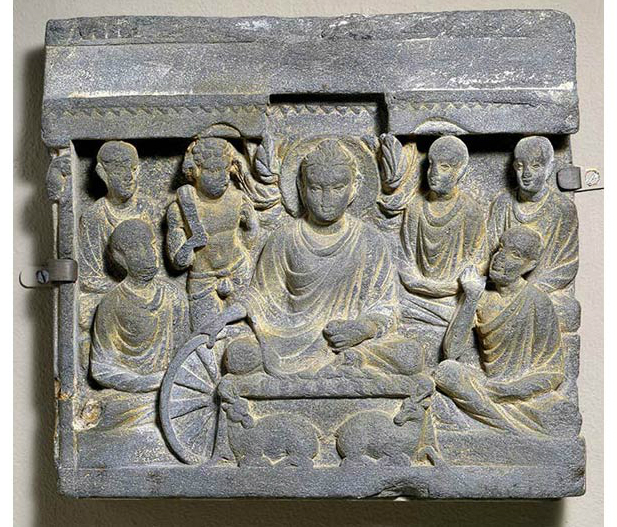
The first sermon of the Buddha in Deer Park
(the swordsman on the right of the Buddha is
Vajra Bodhisattva ), the 12th century Gandhara - Pakistan
( Metropolitan Museum , New York)
(the swordsman on the right of the Buddha is
Vajra Bodhisattva ), the 12th century Gandhara - Pakistan
( Metropolitan Museum , New York)
After achieving the results in Gaya, Last sermon 's first Buddha Shakyamuni is all preaching his 5 position venerable , ie he Kaundinya group ( ascetics ) in Sarnath ( Deer Park). Although brief, this sermon is considered one of his most important catecheses . The basicdoctrines of Buddhism , such as the Five Precepts , the Noble Eightfold Path , the Six-Happiness Three-la Secret , Four Noble Truths , Pratyekabuddha ; as well as economic Zhuan Falun (dhamma-chakra-Pavattan Sutta), non-self (anattā-lakkhana- suttra), etc. are originating from all preach this brief.
Excerpts 'Last Lecture first Buddha ' is derived from the historical English 'Buddha and Dhamma His' (The Buddha and His Dhamma) by the Buddhist Association of India (Buddhist Society of India) , the Mahabodhi (Mahabodhi Society) of Calcutta (now Kolkata) and publisher University Siddhartha(Siddharth College Publications) published in Bombay (now Mumbai), India , in 1957. Particularly paragraph 'article The Buddha's First Sermon 'was reprinted in 1992 by the Ministry of Education of Maharashtra State.
In 1951 the Indian Buddhist Church entrusted Dr. Bhimrao Ramji Ambedkar (1892-1956) and his colleagues throughout India to study ancient documents , in order to record the true history of life and activities. dynamic of Buddha Shakyamuni when he was on earth . Mr. Ambedkar's group began to study and write this volume from 1951. And they completed the task in 1956, the year Dr Ambedkar died .
Former Dr. Ambedkar belongs to a Hindu family. But because of dissatisfaction with the system of discriminatory caste society harshness of religion , he had converted to Buddhism . At the time , Dr. Ambedkar helped millions of lowly people of Hinduism to convert to Buddhism . He also wrote and lectured a lot about Buddhism throughout India and around the world . After Dr. Ambedkar died, Indian Buddhists worshiped him as a Bodhisattva .

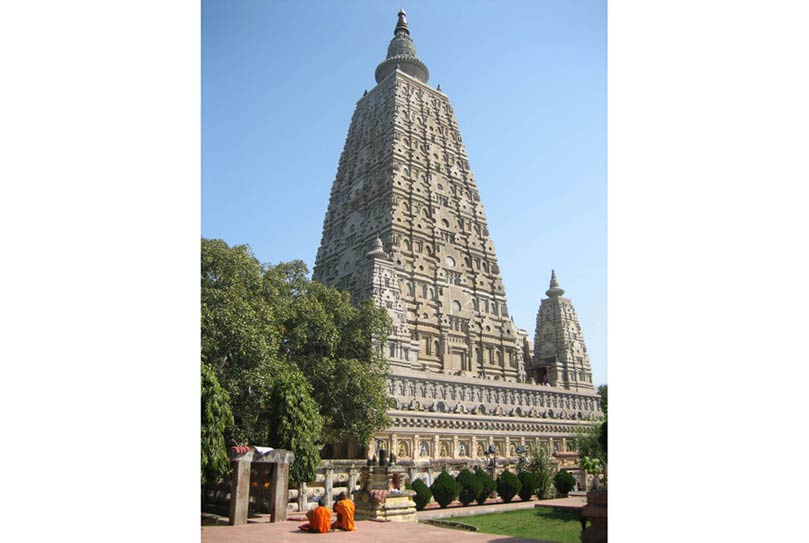
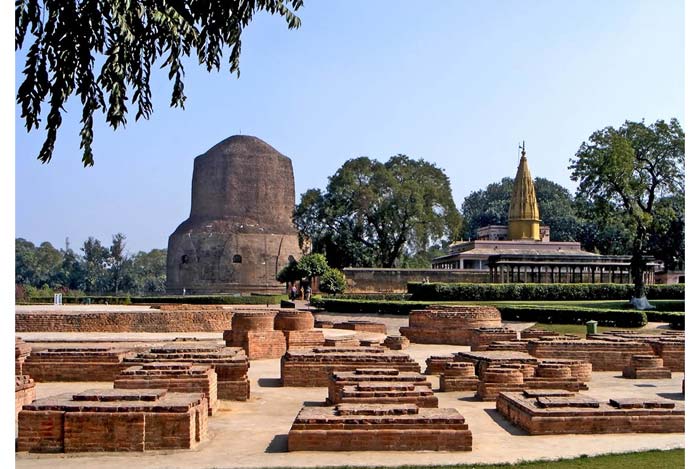
Dhamekh Tower at Sarnath, commemorating the Buddha's sermon for the first time
BRIEF OF THE BUDDHIST HISTORY
1. Congresses to increase strains
Shortly after the Buddha attained Nirvana in Kusinara ( Kusinara ) in 438 BC , disciples rest of him is mahakashyap ( Mahakasyapa ) convene congress monk first in a Rajgriha ( Rajgir ), with 500 bhikkhus, to try to preserve the Buddha's commandments in the most honest and original way. This conference is also to reinforce the unity of the denomination . Another reason for this festival is because even when Buddha was still there had many monks do not comply with the rules seriously. At that time the disciples of Buddha as Sariputta ( Sariputra ), Muggallana ( Maudgalyayana ) or group Five monk Kaundinya ( ascetics ) are already deceased , but all things that are yet to be recorded . Therefore, in this first congress , Mr. Upali (Prosecutor Ly Ly ) had to reread the Vinaya Law , and Mr. Ananda ( A nan ) reread the Sutra Sutras to memorizemonks . This may indicate that the sutras and organs at that time remain simple .
Nearly a hundred years later Any congress Second bhikkhu of sect Primitive is Yesa (Da-amnesty) convened , and by growth Sabbhakami abbot , at Vesali ( Vaishali ), for the Executive lax discipline was intrusion into denominations . Group Sangha tribe which served ( any ) here have modified the lifestyle of their by adding ten reforms ventilation in the teaching mainstream . They began to bring salt according to the person in the horn tube; pass the second meal in another village after the first meal; dine and milk butter in the evening; drinking palm wine; receive alms gold ; group meetings near evening and make decisions , even if there is not enough council ; etc. All this is contrary to the canon law.
There are about seven hundred monks in this second conference . They unanimously rejected the ten reforms of the Vajji Sangha . To respond , after that the Sangha which served to convene a conference Mahasangika ( Mass sets ), with a thousand monks radical . The first rupture of Buddhism was only because of these ten open reforms , but the original doctrine until then remained intact. This division gradually created new schools, and finally, the appearance of Mahayana sect ( Mahayana ) later.

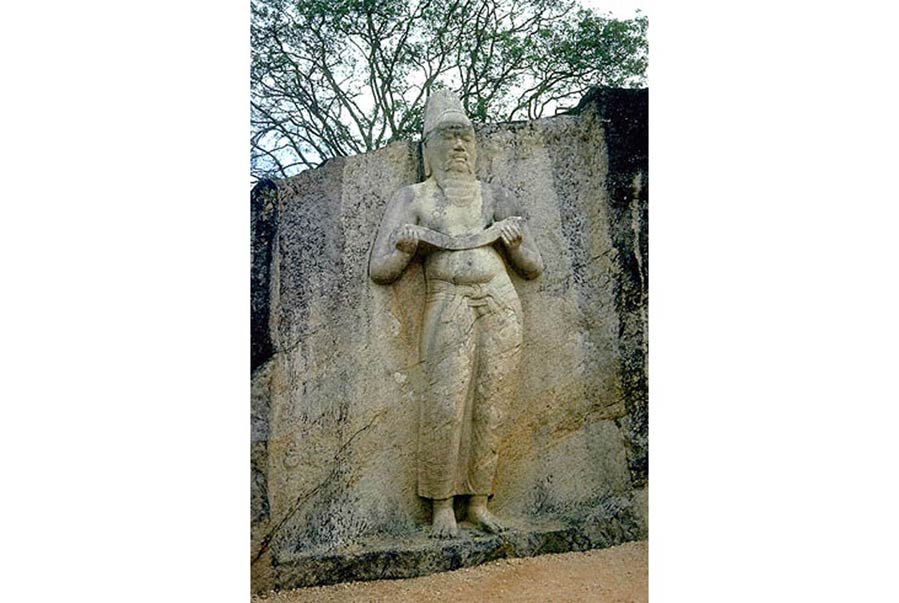
King Ashoka (Asoka), 12th century
(Polonaru wa, Sri Lanka)
(Polonaru wa, Sri Lanka)
Congress Sangha third time, by Bhikkhu Moggali Putta ( Section Contact disciple ) convened in Pataliputra ( US Market - now Patna) in 250 BC , under the patronage of kings Buddhist Asoka (A Education. States Congress this own denomination orthodox Theravada ( Theravadin ). Thanks to this conference , Theravada Buddhism was not only spread throughout India , but also to Ceylon ( Ceylon , now Sri Lanka). And gradually passed from there to Burma and East-south Asia.
States Assembly Wednesday, also own Theravada, this time was called sect Hinayana ( Theravada ), was convened in Ceylon ( Sri Lanka ) in 106 BC . Previously, writing has become popular . So this congress began to copy all the Pali sutras into the leaves (Karatalamh - patra - palm leaf) for storage. Ministry of Tripitaka ( Tripitaka ) including Vinaya Pitaka. ( Vinaya - the law practice of cults ), Sutta Pitaka (The Sutra Sutra - contains the sutras ( teachings ) of the Buddha and the disciples ) and Abhidhamma Pitaka ( Abhidharma - explaining and analyzing sutras and articles), recorded for the first time from this conference .
Actually then longer a congress again, are people of India called congress Buddhist Wednesday, in 78 BC, in Kashmir ( Kashmir ). Congress not due Mahasanghikas ( Mass sets ), but by the monk of the division of a more open sex, sex Sarvastivada (Note Best Friends ministries ) summoned . Congress was abbot by Bhikkhu Vasumitra ( The Friends ), under the auspices of King Kaniska ( Ca Sac Ca Ni ) under the reign of the Kushan (Kushan). So sect Theravada originally did not recognize the Kasmir Congress , while it was praised by theMahayana schools .
King Kaniska was a Buddhist , but had a tendency to be a Brahmin , so from this conference Brahmin thoughts were integrated into Buddhism , especially in North India. It is important to start from here the Mahayana sect was formally formed. And almost all of the recording material , scriptures from that used Sanskrit ( Sanskrit ) rather that the language Pali period Theravada Buddhist. This conference is considered a congress own Mahayana Buddhism .
2. The ups and downs of Buddhism
Period Buddhist preliminary , as all the teachings are still being upheld, extends from the year 450 to the year 100 BC . After this period, the Hinayana sect began to integrate with more open schools. Meanwhile, the Mahayana school , which only started to develop after 100 BC , also started creating myths in the Eastern style (purvanusmritis), to attract the majority.
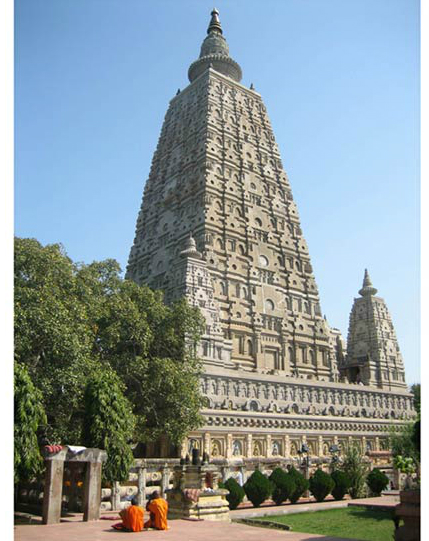
When Buddhism begins to develop, with humans and not the right god is the focal point, the confrontation between Buddhism and Brahmin must of coursehappen. The development of Buddhism went smoothly until the end of the first century AD. Even when the Greeks invaded the north-eastern region of India after the time of King Ashoka, a Hindu Indian king Milinda ( Di Lan Da ) was preached and converted by the Bhikkhu Nagasena ( Na Tien ) Buddha .
Before kingdom Kushan ( ammonites ) captured the shrine Buddhist Magadha ( Magadha ) from the hands of the Indo-Greek in the first century, they were understanding of Buddhism , and several kings their converted to Buddhism .
Buddhism began to officially decline when the Kushan dynasty collapsed, and the Brahmin Gupta occupied Magadha at the beginning of the fourth century. Many persecution of Buddhists began. City and Nalanda University ( Na Lan Da) were persecuted . The Brahmin murdered Aryadeva (A Li Da De Ba ), the great disciple of Narajuna ( Bodhisattva Bodhisattva ), because they lost to him in the debate about religion . Then King Sasanka pursue all monks Buddhist off passed away: (The verse Thi Na ), is the place where the Buddha Shakyamuni entered Nirvana . He also uprooted and burned the Bodhi Tree in Bodhi Gaya ( Bodhgaya ) of ash, then replaced by a statue of Shiva.
The Chinese master Dharma Master Hien came to Tay Truc from 399 to 414 to see that Buddhism was flourishing in some places such as Kapilavasu ( Ca Bhikkhu La ) and Gaya ( Old skin ). But in general, Buddhism in India at that time was much degenerated .
Then the Hungarians poured into Gandhara (Kabul - Da Nang ) at the end of the fifth century. The monasteries and monuments sacred of Buddhist in north-eastern India were destroyed . Increasing them , scholars , scriptures and architecture were massacred and incinerated . Both Taksasila University here is also permanently silent. The sacred bowl of Buddha also disappeared from Gandhara and was transmitted to Persia at that time.
The Hung invasion made the Gupta Empire dispersed into many states. Buddhism to continue the dispute in a weakly with Brahmins of Bengal, western and southern India . Only around the end of the seventh century, when King Harsha ( Kingdom of Japan ) unified vast territory of North and North India , and settled in Kanauj, Buddhism was temporarily fortified for a short time even though it is always being trumpeted by the Brahmin . This period is when the monk Huyen Trang visits China to West Truc scriptures. He was revered by King Harsha , and helped this Buddhist monk preach . He Faxian see only two temples in Kanauj in the fifth century, but he Xuanzang mention hundreds of temples with over 10,000 taste Bhikshu there. When King Harsha died in 647, Buddhism was overwhelmed by the Brahmins .
During the period , the party directed Brahmin change the thinking big, historians today are called "Pauranik Hinduism" (Tan Hindus). Featured is the system divides social classes are system turned more strict. But at the same time that reincarnation is popular widely among the faithful Hindus. In Purana ( sacred ), directed old Brahmin , Buddha Shakyamuni was considered the enticement people enter the path of destruction. But the new Puranas from this period, like Garuda, claim that Buddha is the reincarnation of Vishnu. And Buddhist India also has more influence of ideology Brahmin from here.
Buddhism had another short-lived period during the Pala dynasty in Magadha in the tenth century. But since the end of the century, when the reign of the Islamic domination of India , Buddhism again return to position minority until now.
LECTURE NOTES FRANCE FIRST OF BUDDHA
PART 2: THE CONTENT teachings in Sarnath ( Deer Park )
PART 2: THE CONTENT teachings in Sarnath ( Deer Park )
Group of Dr. Ambedkar spread everywhere in the country of India and the neighboring nations to collect back the legend neck, and the texts , stories originally preserved since ancient times, to set together into the Church This history. Because the material is collected from various sources, the nouns are kept in their original form by both Sanskrit and Pali, interwoven in the articles ...
After attaining Righteousness and lowering, the Buddha came to Sarnath ( Deer Park ) to teach his doctrine to be enlightened. Before that he Alara Kalam to find who you are educated , wise, smart and slightly undignified his old days . But people told him that Alara Kalam died. Then he thought of Uddaka Ram-putta, but he was no longer.
Come Buddha remembered years old convent of his friends when he was pursuing legal ascetic in Niranjana, ie he Kaundinya group ( ascetics ). Five people in front were angry and leave him, because he abandon practices of mortification that. The Buddha inquired and learned that they were living in the forest of Loc Da (Mrgadava), the Sarnath region in Isipatana. He went right there to find them.
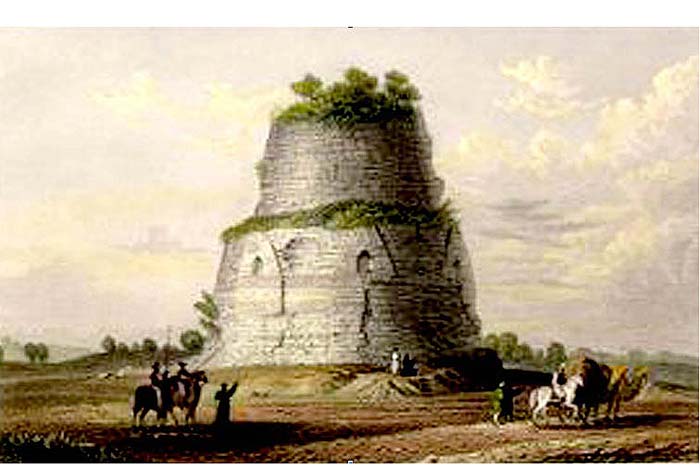
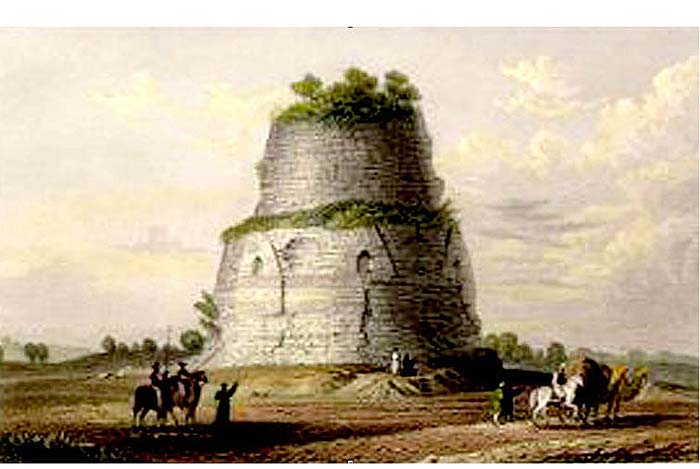
Dhamekh tower in Sarnath, mark where the Buddha
preached the first time (painting, 1850)
preached the first time (painting, 1850)
When he heard that he had come to see him, these five false monks (parivrajaka) were talking to each other and decided not to welcome him. One of them said, "The monks and nuns of Co Dam(Gautama) are coming here. He gave up the ascetic practice to live luxuriously , well , and was caught in sin . So we do n't need to welcome him. There was no need to stand up and say hello, and there was no need to support his bowl and shirt. We Just give him a seat. If he likes it, just sit ". And we agreed .
But when the Buddha arrived, all five false religious men were overwhelmed by his demeanor, so they forgot what they had planned and stood up to receive him. The one who helps the bowl, the man who holds the clothes, and one who goes to get water to wash his feet.
After exchanging words of courtesy , the five religious monks asked whether Buddha still kept the practice of asceticism or not. He answered that no. Then he let them know that there are two lifestyle extremes : one is living in pleasures and one's lifestyle self determination. One said, let go of the door , eat and drink . One says must destroy all demands because they create reincarnation . He rejected both ways of living , because they were not good for people .
Buddha said he believed in the Middle Way theory (the Madhyama Marga - the middle path ), ie not the path of pleasure, but not the path of self- mortification.
"Please answer me," he asked the false religions , "Show yourself you remain active and continue to crave pleasure, both earthly and heavenly , are affordable the practice mortification of them are They all answered , "Yes, as you say."
"How you can extricate himself from the flesh down by lifestyle self determination miserable, if lifestyle does not extinguish fire lust?" And they answered , "Just as you say."
"Only when the Self in them are tame to escape floating desire , then will they all desire pleasure philistine . And this, the response to natural needs will not make anyone unclean. Make eating full body what they need.
"Types of sensuality both make people weak. Humans who love lust become slaves of their passion . All seeking pleasure is mean and vulgar . But I would like to tell you that meeting the needs of life is not evil . Keeping your body healthy is a duty, because otherwise you cannot have a healthy mind that is clear , and the intellectual lamp cannot light.
"Monks, you should know that there are two extremes that people should not follow. One is a relaxed habit to be attracted to the charming passions , especially sensuality. That is the way to find satisfaction in a barbaric, lowly , unfavorable way . The second way, on the contrary, is austerity or self- mortification, which is a painful , inferior , disadvantageous way of life . There is a middle way to avoid both extremes that you should know. That is the Middle Path that I preached. ”
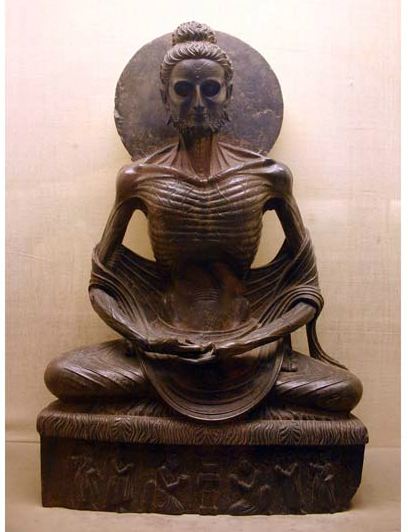
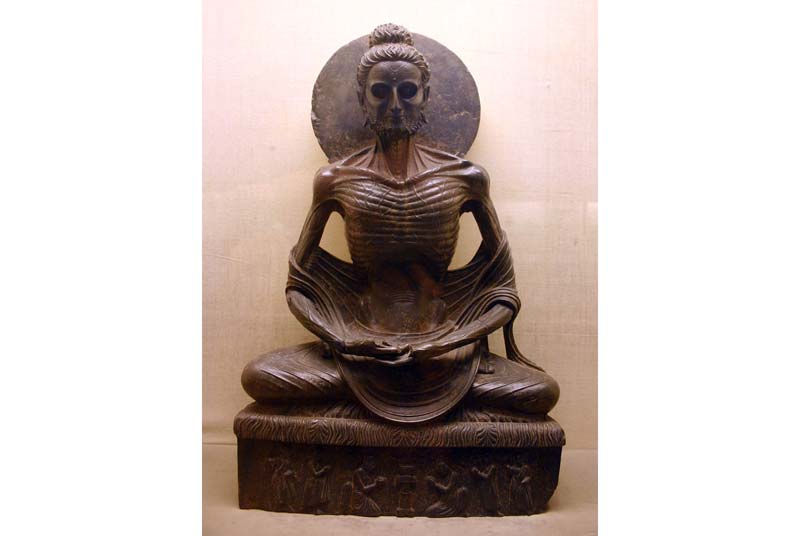
Buddha Shakyamuni austerity 2nd century Gandhara
( Qian Da ) Museum Lahore Pakistan
( Qian Da ) Museum Lahore Pakistan
Five false religions attentive listen to him preach. Not knowing what to say about the Middle Way that Buddha just said, they turned to ask him about everything that happened to him after they left him before. The Buddha told them the story of his departure to Gaya ( Old skin ). His story sitting in samadhi under the Bodhi tree . Then after four weeks of meditation there he attained Enlightenment , and thus he found a new direction.
Heard that the false religions feel very anxious to know the path new what it was, and they ask Buddha explained . The Buddha wished them.
He will start by saying that the method does, ie Dharma of him, not interested to God (Brahman) or soul . His religion does not concern to life after death . His religion is also not interested to the ritual and sacrifice. The focus of his Religion is man , and the relationship between human with human beings in life existing on earth . He said it was a judgment The first thing he enlightened.
His second judgment is that everyone lives in sorrow , suffering and inadequacy . This whole world is full of suffering. And finding a way to get rid of suffering for the world is the sole purpose of his religion .
The realization of the existence of defilements , and teaches the method of eliminating negativity is the foundation and basis of the Tao. That is the foundation and the unique argument of Dao. Religion that is not aware of this is not a religion .
"Really, monks." Any layman or monk who does not understand that the suffering of life and how to get rid of them is the main purpose of the Tao, then in my opinion they are not lay people or monks. And all the life of those "noble men" will probably not understand what the true meaning of Tao is.
The venerable asked him, "If the foundation of the Taoist religion is to recognize the existence of defilements and how to eliminate it, please tell us how the Tao destroys suffering ."
Buddha answered them that according to the Act of him, if people are pursuing About religion ( road Thanh pure - veramani Marga - Path of Purity), the director ( road Straight - Ashtanga Marga - Path of Righteousness) and Action ( path Directed happy - Paramita Marga - path of Virtue), any negativity will terminate . And he reiterated that it was the Tao that he had just realized.
The false religions immediately asked Buddha to explain more about his religion to them, Buddha happily agreed . And first he preached about the Path .
He said, "The religion teaches that whoever desires to become a good person to get some living principles fundamental as the principle of his life. According to my precepts , those principles are:
- Do not hurt or kill ;
- Do not steal or cheat the possessions of others;
- Do not lie ;
- Do not immerse yourself in desire ;
- Do not steal or cheat the possessions of others;
- Do not lie ;
- Do not immerse yourself in desire ;
- Do not abuse the drink addictive.
“I want to emphasize that following these principles is essential for everyone . Because everyone has to rely on these principles to control all their behaviors . And in my opinion, these principles must become the standard of life for everyone . "
“Everywhere there are fallen people (Patit - fallen people ). But there are two types of patit. One is the type that has a standard of living, and one without. A person without a standard of life is one who does not know that he has fallen . And as a result, he will always remain a fallen man . And the one who has the standard of life is the one who will try to stand up after every fall . Why? Because he knows that he has fallen . That is the difference of whether or not there is a standard of living in the cultivation of your life. The problem is not the problem fallen , but the absence of a living standard . "
"Hey begging Degree, you may wonder why those principles have enough value to be regarded as standard to live?" Please feel free to find the words to answer for themselves. If one of you asks, 'Who do these principles benefit?' Or you might ask, 'Do they help increase the benefits of society ?' If the question answered your position is confirmed, voila ie accept that principle in About religion I should be regarded as constituent elements of the standards life really. "
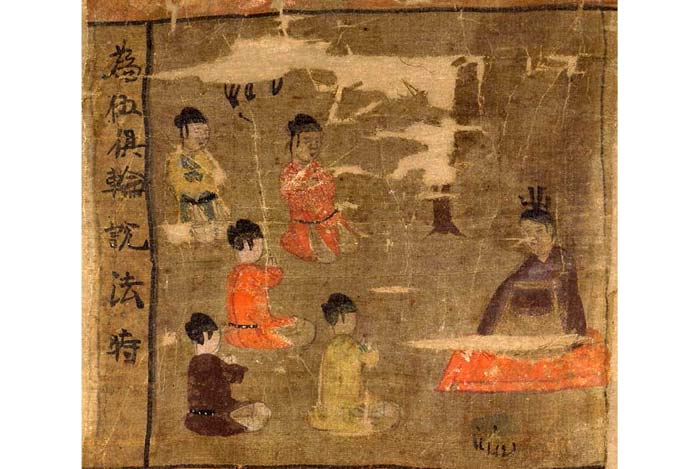
The first sermon of the Buddha
(10th century painting, China )
(10th century painting, China )
Then the Buddha preached to the false religious people about the Path . He said that the Path consists of eight things. He began by explaining about the reviews (Samyag-dristi - Right Views - Thinking right), which is the first and most important of the religion .
"In order to realize the importance of righteous thoughts ," Buddha told the false religion , "you must see that life is a dungeon, and that man is a prisoner in that dungeon. This dungeon is really dark. It was so dark that inmates could hardly see anything. Prisoners are also not aware that they are in prison. "
"Indeed, it not only became blind because was living in u intelligent dark too long, but people do not believe that there may be a strange thing called light ever. Wisdom is the unique tool through which light can reach people . But this dungeon's wisdom is not enough to be a complete tool for that purpose . It only gives a little light. Just enough to prove to those who have little bit of visual perception is that indeed there are so-called u intelligent darkness there. But only knowing that morning and evening is so crude . ”
"But do you understand that here begging Graduate plight of the prisoners that are not so hopeless as it seems . Because in people there is the so-called will . When there is an appropriate motivation , the will can be awakened and started. Just needing enough light to realize a certain direction to guide the will of the will , people can lead us to freedom . ”
"So even though people were tied , but he can achieve is liberation . At any time, he can take the first step to finally bring himself to liberation . That's because the mind can be trained to go any way you want. It is the mind that turns us into prisoners in life . It is the mind that makes us like that. But what the mind makes, the mind can cancel. If it brought people to life, slavery , it itself can also lead people to freedom by identifying the right direction. And that is the thing Politics can do it. ”
The writers asked, "What is the success of the Right View ?"
Buddha replied, "It is the elimination of ignorance (darkness - Avijja). It is against Ta Kien (Mrishaa-Dristi - Wrong Views). And Ignorance means not understanding the noble truths , meaning not understanding the existence of Suffering and how to eliminate Suffering . Politics can do that. ”
- It is the rejection of belief in the performance of ritual and sacrifice.
- Right view is to reject the divine power of the scriptures .
- Right view is to give up superstition and superstition .
- The idea is to give up all the doctrines that only discuss arguments, but not based on facts or practical experiences .
- The right opinion requires the mind and mind to be open.
- Right view is to reject the divine power of the scriptures .
- Right view is to give up superstition and superstition .
- The idea is to give up all the doctrines that only discuss arguments, but not based on facts or practical experiences .
- The right opinion requires the mind and mind to be open.
“Everyone has goals , aspirations and ambitions . The Mind of Mind (Samyag-Samkalpa) teaches that those goals , aspirations and ambitions must be noble and admirable, not low and worthless .
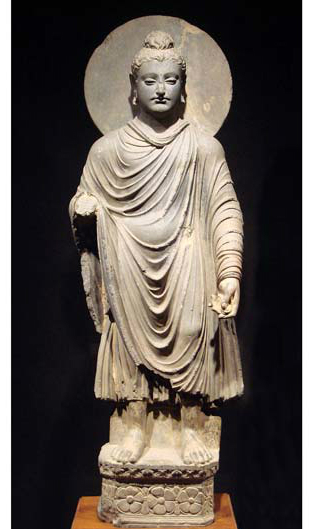
“Next is the Official Language (Samyag-vacca - Right Speech). The main language teaches that:
- Only tell the truth ,
- Do not fabricate ,
- Do not speak ill of others,
- Must refrain from slander,
- Do not let go of angry and slanderous words to others,
- Should speak well and be courteous with people ,
- It should not be immersed in the chat idly , foolishly , which should only say what a reasonable and correct to the problem .
- Do not fabricate ,
- Do not speak ill of others,
- Must refrain from slander,
- Do not let go of angry and slanderous words to others,
- Should speak well and be courteous with people ,
- It should not be immersed in the chat idly , foolishly , which should only say what a reasonable and correct to the problem .
“As I explained , I adhere to theFa-rectification because of fear or happiness. It should not be concerned at all about the god above assess how the behavior of her, or to any of the losses that the language can cause yourself. The principle is that Politicaladherence is not caused by fear of violating prohibitions from above, or because of personal gain ; but all must be self-centered. ”
" The government (Samyag-karmanta - Right Conduct) shows us good manners . It teaches that all acts must be based on the respect the feelings and rights of others. What is the principle of Government ? It is user activity most harmonious with the principles of life fundamentally . Everything we do will be in harmony with the Government when they agree with these principles. ”
“And everyone has to earn a living. But there are many ways to start a business , good and bad. Bad occupation is a kind of injury and injustice for others. A good lifestyle is to find jobs that do not cause injury and injustice to anyone. This is called the destiny (Samyag-ajiva - Right Livelihood). ”
" The diligent (Samyag-vyayama - Right Efforts) is the direction of all efforts of yourself to destroy ignorance of darkness, to come and open the door leading out of the dungeon suffering other. It is diligence that has four purposes :
- One is to prevent the state of mind that go against the religion .
- Two is to suppress those bad mind states if they have risen. - Three is to create mind states that can help us meet the demands of the Path . - Four is to promote the increase and further develop the state of mind is good , if they exist . "
- Two is to suppress those bad mind states if they have risen. - Three is to create mind states that can help us meet the demands of the Path . - Four is to promote the increase and further develop the state of mind is good , if they exist . "
" Righteous thoughts (Samyak-smriti - Right Mindfulness) require attention and caution . It is the vigilance of the mind . Another definition of righteous thoughts is the watchfulness and protection of the mind against the evil passions . ”
"Hey you begging Degree, with five shackles , or obstacles , always the way of those who want to achieve the is , the thinking , the language , the now , the destiny , the diligent , righteous ."
"They are greed , prejudice , lazily lazy, skeptical and did not result decided. So must overcome obstacles, but actually shackles, that. And how to overcome them is thanks to the Righteousness . But you should know that begging Graduate Government regulations (Samyak-Samadhi - Correct Concentration) actually differs Dinh (Samadhi - Concentration). That's a lot. ”
“Concentration is just a concentration of thought . Surely it also helps achieve moments of state of meditation , but the kind of breakthrough, though also temporarily stopped five hindrances there. "
“But these Zen moments are only temporary. So the prevention of Dinh's other obstacles is only temporary. Thing necessary is to achieve the redirect permanently of mind .
"Only Dinh is still negative , because many of Dinh only block these obstacles in a short and temporary manner. And it did not work out for the mind to be doing so. In the meantime, the new Decree is positive . It trains the mind to focus and thinking on behavior , thought good (Kusala Karma) during meditation . And thereby eliminating the tendency to lean toward bad behaviors and thoughts (Akusala Karma) created by the other five obstacles . Exactly giving the mind the habit of thinking about the good , and always thinking about the good . Key to create mind the dynamic force necessary to doing good . "
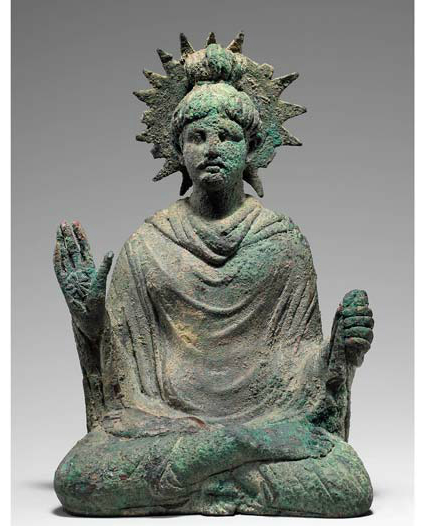
Buddha Shakyamuni dynasty Milinda ( Milinda ),
the Indo Greece. First Century AD
(Museum of Metropolitan, New York)
the Indo Greece. First Century AD
(Museum of Metropolitan, New York)
Then Buddha preached to the false religious people about the Way of Happiness (Paramita Marga). He explained to them that Hanh religion means to follow the virtues named: Morality (Sila), generosity (Dana), Conditioner (Pali: Uppekha - Sanskrit: Upeksha), Ly (Nekkhama), Diligent ( Virya), Patience (Khanti - Ksanti), True (Sacca - Satya), Resolute (Adhithana - Pranidhana), compassion (Karuna), generosity (Metta- Maitri).
The writers asked what the Buddha was like. And Buddha to continue to explain to them:
- Morality (Sila), which is the avoidance of doing evil and doing only good, is the shame of doing wrong . Morality is the avoidance of doing evil. Morality is afraid to do wrong .
- The cup (Nekkhamma), is a departure . Is renouncing the mundane pleasure .
- Giving (Dana), is giving. To dedicate all: wealth , blood and hands and feet, and maybe even one's own life, to help others without asking for compensation .
- Effort (Virya), is the effort . It is trying my best to complete what I have to do. And never had the idea of backing away.
- Patience (Ksanti), which is patience , is tolerance . Not taking resentment to resentment is the core of happiness Tolerance . It is only achieved through patience .
- Foot (Succa - Satya), is true . Never lie . The words must always be true .
- Resolute (Adhithana - Adhisthana), is determined , is the determination to achieve the purpose of the things that I have set.
- Compassion (Karuna), is the heart of love to all people .
- Guangzhou (Metta - Maitri), is kind to all beings . Not only with my friends, but also with my enemies . Not just for humans , but for all creatures.
- Discharge (calm) (Pali: Upekka - Sanskrit: Upeksa), is serene , different from indifference . Being in a mood that doesn't like to hate. No pity for achievement , though still part in the pursuit of it.
These qualities must be to implement an absolute . That is why they are called the summit (Paramita - Paramitas multi - States of Perfection)
After explaining about the Religion of him and all things related , Buddha asks the Venerable : "Does morality itself is the foundation of the good in the world not?" And they answered , "You 're right ."
And he continued , "Does morality ( to preserve liquidity pure) themselves thwarted by the greed , passion , ignorance , the destruction of life, theft , adultery and lies not ? The morality itself need to accumulate sufficient strength of character to contain the immorality Kathy did not? How can a man be a tool of goodness if he himself is not pure? ”And they replied ," Yes, as you say. "
“Again, why do people not move when slavery or bullying others? Why do people not move when causing suffering for other people's lives ? Affordable because people are not genuine in behavior with people? "And you respected author responded to him in a way that negative (ie agree with him - nd).
"There must if anybody live by eight major directors then every injustice and inhuman that humans are created for the people will no longer?" And your false religions have answered , "Yes."
Moving to the Way of Happiness , he asked, "Is it necessary to have almsgiving (Dana) to eliminate all the suffering of the poor and hungry; and to promote all good things ? Is it alright for the compassionate almond (Karuna) to have to overcome poverty everywhere? Is it alright Ly (Nekkhama) necessary to do selfless things? Then is it necessary to have the happiness of the Peace (Upekka) in an effort to engage, even if it does not involve personal interests ? ”
Then Buddha asked, "I need to love everyone , right?" They all answered , "Yes."
"Then I should go farther and said that, please love is not enough. The essential thing here is Cantonese (Maitri). It is bigger than love . It means the relationship not only between man and man , but with all living things. It is not only limited in humanity . Perhaps not so pleased generous unnecessary? In addition, the longer it something else can devote to every creature joy happiness that we desire for ourselves ; Can keep mind regardless open to all; bestow love love to everyone and does not hate anyone where? "They answered ," Yes. "
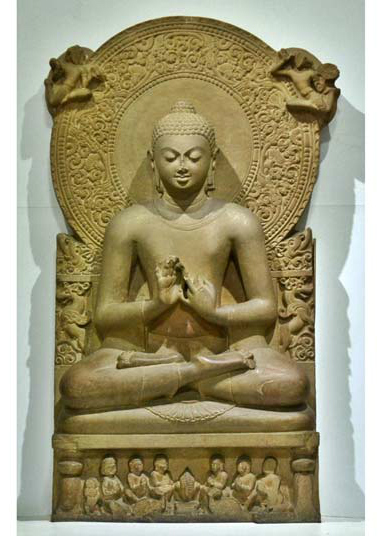
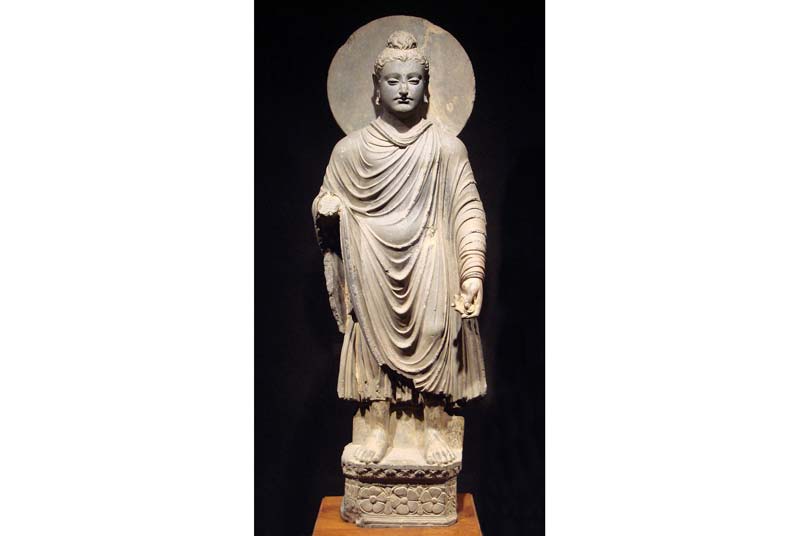
4th Century Sakyamuni Buddha Statue
"But to practice the virtues this must have sufficient wisdom (Prajna - Prajna ). Do you see that wisdom is necessary ? ”The religious men did not answer the Buddha. To make them answer , Buddha preached that the good qualities of a good person are: "Do not do bad things, have no bad thoughts , do not earn a living badly. And don't say anything bad or can hurt others. ”They all said," Yes that's right. "
"But it should do good deeds in a blind it?" Buddha asked. And he said, "No way. Just doing good things is not enough. ” The Buddha explained to the writers :“ Because if so, can an infant claim that he is doing good ? The child has not yet know itself if it is, then it do anything with the body it better as the bike, kicking wildly. He didn't know what the words were, he said something better than crying. It does not know the thought is nothing but crying. He doesn't know how to eat better than tobreastfeed, say something to do bad things . ”
"So the virtue needs to go hand in hand with Prajna , which is another way of intelligence and understanding ."
"There is also reason anymore for the necessity of Wisdom density (Prajna Paramita - Smart apex ). We have to make alms . But if there is no Prajñā ( intelligent , wise ) then that almsgiving can be counterproductive . We have to practice virtues of compassion . But there is no wise the kindness compassion that moves gradually can support bad qualities . "
“I think there must be knowledge and awareness of how to behave badly and how it forms. Similarly , there must be knowledge and awareness about what is right behavior , and what is wrong behavior . Without that knowledge, there is no real practice , even though our work can be a good thing. That is why I say Prajna is a nature must have. "
Then the Buddha finished his lecture with the following commandments for the false religious . “You can give my Dharma a pessimism , because it calls people's attention to the existence of suffering. I would say to you that says about me just like Religion is wrong . "
“It is true that my Tao is interested in the existence of defilements , but don't forget that it also emphasizes the equivalent of eradicating defilements . In Dao I have both hope and purpose . Its purpose is to eliminate ignorance , which means ignorant mind does not understand the existence of suffering. Still having hope because it only leads the way to cessation of suffering for the people . Do you agree with that? ”And fake religious people answer is yes.

The five religious monks were enlightened that this was a new Dharma . They were impressed by the new approach to the troubles of life . So they unanimously stated , "There has never been a Master of a religion before that that the true basis of Tao is the realization of the suffering of mankind . And there has never been a Master who teaches that the cessation of suffering is the main purpose of the Tao as he wakes up.
“Never a method of salvation has been proposed in a very simple way, without super- natural and superman elements . A Dharma truly independent , or can say is truth in opposition to the law through other regular or put emphasis on the soul , in God and in life after death , such methods of this. "
"The world has never had a Tao before that which has nothing to do with the revelation , the mysterious prophecy ; that the commandments of Religion up are derived from the demand for lives of humans , but not from the prohibited thing of the Divine ; like this Tao . ”
"Never that liberation is formed from grace lily happy because people automatically achieved in life is, in this world, by living righteous , moral of themselves as such."
This is the impression that the five venerable spoke with people after they heard the Buddha preach the Dharma his new. They saw from him a reformer with genuine humanitarian goals . A person full of creativity and the courage to dare to brave give a notion opposite, ie the doctrine of liberation even in this world, in this life, through the amendment interior by method self-improvement and self control .
Their Buddha's worship was so infinite, that they immediately submitted to him and wished him to accept them as disciples . Buddha received them in the course of his religious by the welcome became popular , "Ehi Bhikkave" ( "Compassion hybrid monk", which means "Come, monk"). From there they were called "Panchavargiya Bhikkus", ie "The Five Venerable Bhikkhu". And they always recounted a conversation meticulously as a lecture to heart for the disciples of Buddha Shakyamuni then.
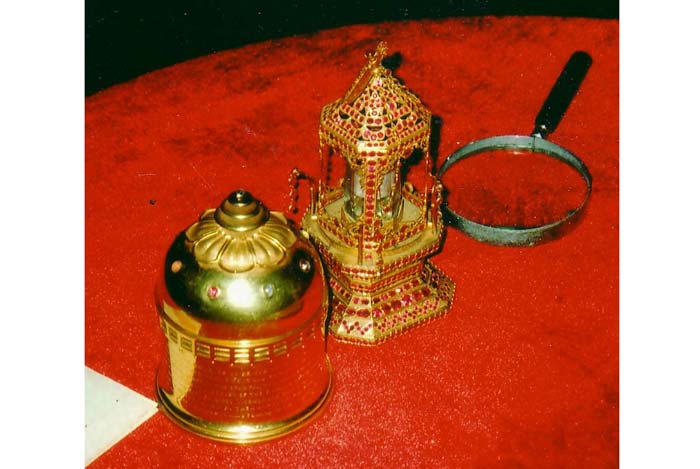
 Gold box containing 3 jade relics of Buddha Shakyamuni by King Kanisha ( Ca Ni Sac Ca ) of the reign of the Kushan (Kushan) buried in Kashmir (Kashmir Si La) century AD 1. The British found it and brought it back to preserve in Mandalay, Burma since 1910. END=NAM MO SAKYAMUNI BUDDHA.( 3 TIMES ).VIETNAMESE BUDDHIST NUN=THICH CHAN TANH.AUSTRALIA,SYDNEY.24/2/2019.



No comments:
Post a Comment