Sow the Pure Land.VIETNAMESE TRANSLATE ENGLISH BY=THICH CHAN TANH.AUSTRALIA,SYDNEY.


All defilements, defilements of talent, identity, identity, reality, lobes are clinging to people. In addition, the working intensity of people is higher and higher, they do not have much time to chant and practice. Therefore, the practice of reciting Buddha's name is considered a salvation for many practitioners today. Even the Blessed One once taught that "In the time of Dharma, the dignity of austerities, there are few who are enlightened, only meditate on the Dharma of the Dharma, and attain the birth and death" (Great Testament) [1]. However, in the Pure Land practice, many people cannot avoid certain obstacles. This article besides the theory of the history of this discipline also wants to emphasize how to make people sow the Pure Land, escape from samsara, return to the realm of Amitabha Buddha.
1. A brief understanding about Pure Land
1.1. Concept
Pure is pure, India is a kingdom, a state. Pure Land is a pure, pure, calm realm. Pure Land is a compounded world, based on the power of Buddha Amitabha. In addition, people also use many different words to refer to Amitabha's Buddha Nation such as the Pure Land, the Pure Land, the West ...
1.2. The essential scriptures in Pure Land practice
The sutras in the Pure Land practice have been pretty much available, but here we only raise three basic sutras: Sutra of Sutra, Sutra of Sutra and Sutra of Sutra.
a. Immeasurable life : This sutra introduces 48 vows of Amitabha Buddha, when he was a monk named Dharma. The essential content of these 48 vows is that after becoming a Buddha, he will create a solemn, pure state, only happy, no suffering, birth and death. If beings in the ten directions of the world often recite His name and pray for rebirth there will be the lead of Amitabha.
b. Kinh Quan immeasurable life : This sutra clearly recorded 16 Dharma and 9 Products, to teach the prayers to be reborn in the Pure Land.
c. Business sub-capital A-Di-Da : This Sutra introduces the scene of the victorious enemy of the Great Bliss, making the mind being devoured by the grave, vowing to cultivate according to the dharma practice "to maintain the name of reciting Buddha's name until one-mindedly disturbed" to be reborn born of that realm.
2. History of Pure Land Tong
2.1. Pure Land Tong in China
The Pure Land theory came from India but did not establish a sect but had to wait until the sutras were transmitted to China and the Pure Land was born.
Although Buddhism was first introduced to China (from the end of the first century), it was not until the third century that the scriptures belonging to the Pure Land method appeared.
"During the period of Wei (250), Mr. Khang Tang Ngai (Sanghavarman) translated the language of Vo Luong Tho, the scholar Chi Khuc (the time of Ton Quyen) translated the Great Amitabha scriptures . To Dieu Tan (4th century), he La Cross translated Amitabha Buddhist scriptures , also known as Amitabha , Amitabha Buddha Da La (Giac Hien) translated Tan Thuong Tho Kinh , Quan Buddha tam Sutra , He Tri Strictly translates the Pure Land . In the Song Dynasty (V century), he Cuong Da Da Xa (Kàlayàsas) translates the Amitayus Sutra , the bodhisattva Bodhisattva (VI century) of Amitayus texts . In particular, his Body before the birth of Pure Land commentary..., to this point, the Pure Land teachings are relatively complete. [2]
The history of Chinese Buddhism considers Mr. Hui Far (333-416) of Dong Tan, the father of Pure Land. He is a disciple of Dao An, brilliantly intelligent. After the chaos, Hue Hue came to Tuong Duong. On the way to practice, when passing Lo Son, seeing that this place is a suitable place to practice, he stopped there and healed Dong Lam Pagoda. The main practice of Huiyuan great master is reciting Buddha's name.
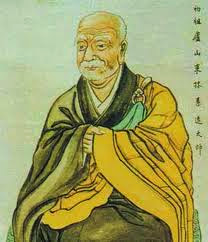
Huiyuan Group
In 402, he established the Buddhist concept of the Buddha's house at Lo Son, named Bach Lien commune. Those who practice at the Bach Lien Xa do not discriminate at home or renunciate, just respectfully worship and recite the name of Amitabha Buddha. The practice of Hue Vien created the way of Pure Land, the method of practice for them later.
From the time of the Northern North Dynasty of Liu Tong Dynasty, the Pure Land sect gradually spread everywhere. Many places teach reading and reciting the Sutra of Long Life, where there are places to build statues and ceremonies for Dam Loan. They devoted themselves to spreading the Buddha's wishes; again advocated to speak of essential ideas, suitable for living beings in the Dharma. He directed the effort to educate the people and was the one who created the rosary to teach how to recite the Buddha's name. For farmers, he showed how to get the beans to count the recitation of Buddha's name, called "small Buddha recitation" . With the work " An optimistic. "”And some other works, the High Priest of the Tang Dynasty wanted to let the public know how to cultivate and cultivate it hard to conclude that the Pure Land practice is easy. After he passed away, Thien Dao maintained Quang Minh Pagoda and Tu An Pagoda, teaching and spreading the Pure Land Method. He wrote ten thousand Amitabha sutras and drew 300 figures describing the Pure Land scene, making the Pure Land become alive and real in the mind of cultivators, so they followed a great deal. He had many scriptures before, such as the Quan Luong Tho Quan, the Sutra , the Venerable Ceremony , the Contemplation of the Dharma , and the European Board . His practice is praised by the latter and becomes a characteristic mode of Pure Land. Pure Land scriptures reach the peak of thought movement.
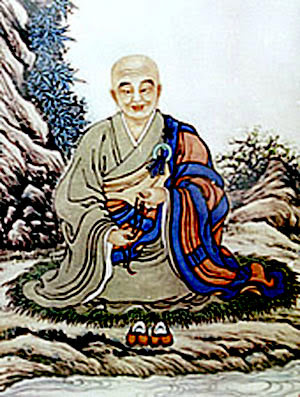
Compassionate Master
Mr. Tu Man (680-748) is a famous Pure Lander in the Tang Dynasty, he also went to India to learn more Buddhist teachings. He returned to India after 18 years, and was awarded the title "Tu Mieng tam Tripi" by King Huyen Ton . He pre-wrote the " Birth of Pure Land " to spread the Pure Land method which he had acquired in India, becoming an independent Pure Land of thought.
By the Song dynasty (960-1279), Buddhist sects were tending to merge together. Therefore, Tinh Do Tong also tends to reconcile with Zen Buddhism. The Tiantai School that represents the Fathers of the Consciousness, Tu Le and Tri Vien also advocates the Pure Land. Lawyers also cultivate the Pure Land by Mr. Yuan Fang advocates. Therefore, the school of Pure Land became colorful.
Sang came to Minh Dynasty (1360-1661), appeared many famous masters such as Dai Su Van The, Lien Tri and Tri Huc, especially lay people in the practice of Pure Land Method developed very strongly. In particular, Mr. Tri Huc proposed the thesis "The Three-Sided Principles" using three tones: Zen, Catholicism, Law; form a tripod, support each other, if one is removed, it cannot be. The policy of this study also means returning to the Pure Land Method.
In Thanh's life, the Pure Land ideology was combined in all disciplines and sects. The great masters of the Chinese Ocean have him Static Am - Really Sage (1686-1734), especially the Indian monk at the end of Thanh's life. He is a high-ranking elder leader with a policy of saving and saving people, directing people to Buddhism. Therefore, the monk who continued to practice the places of reciting Buddha's name grew more and more.
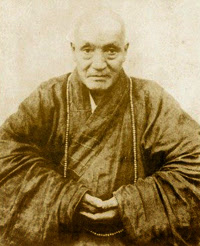
Venerable Indo Quang
The Pure Land Method developed strongly in China, then passed through Tibet, Japan, Vietnam, and Korea. At these, Pure Land is quickly received and developed strongly.
2.2. Pure Land Tong in Vietnam
In the history of Buddhism, Amitabha Buddha's name is mentioned as early as in the Old complex economic examples , stories 60. teachings Buddhist concept has also been mentioned in Luc economic concentration by Kang Senghui (? -280 ) translated into Chinese characters. Thus, early on, before the third century, Vietnamese Buddhists were exposed to the Pure Land practice.
In the fifth century, many important texts appeared, especially the immeasurable life by the monk Dam Hoang (? -455), a Chinese monk who practiced the Pure Land method with the wish to reborn the Pure Land, to Vietnam to study in our country.
According to Cao increasing the story of Hue Hao, Dam Ho Hoang came from a small family, the morality was very solemn, understanding the Law of the Ministry. Around 423, the monk Thich Dam Hoằng went to Tien Son pagoda, recited the Sutra of Longevity and Quan The Long Life.. In 455 he cremated himself but failed because in the middle of the students learned and put out the fire. After that, the whole village was busy because of the association, the whole temple went to Buddhists, he went to the mountain cave to self-burn again. When everyone learned about the place, he passed away. Around this time, in our country there was a fierce ideological struggle. Buddhism is less and less respected before the development of the nation, especially in the period of struggle for the birth of the independent state of Van Xuan. Therefore, Dam Cheng's Self-Immolation Event occurred at the height of this struggle and it was certainly not a random case.
However, we must add that the historical records do not mention who the Patriarch of the Pure Land came to Vietnam.
After Dam Dam Hoang came in the first half of the ninth century, there is no document left to mention the Pure Land method. It was not until 826 that this sect was mentioned in the verse of the monk Vo Ngon Thong (759? -826) to tell his disciple is Professor Cam Thanh (? -860). In the verse, there are sentences: "Tay Thien is this land, this land is Tay Thien" (Tay Thien try the degree, Tay Thien test). The word Tây Thiên here can be understood in two senses, only for Amitabha Buddha's world, and can also be understood as India, the home of Buddhism.
From the middle of the eleventh century onwards, the Pure Land tendency was widespread, with the formation of many Three Jewels. At the time of King Ly Thanh Tong (1023-1072), (belonging to the first generation of Thao Duong meditation line), the king carved a unique statue of Amitabha Buddha unique in the history of sculpture art. ethnicity still remains. In addition, Amitabha Buddha statue was founded by Monk Tri Bat (1049-1117), who was the 12th generation of the Zen Buddhist monk Da Luu Chi, who founded it in 1099. From this period onwards, dharma practice The Pure Land has actually had an important place in the spiritual and cultural life of the halo of the people.
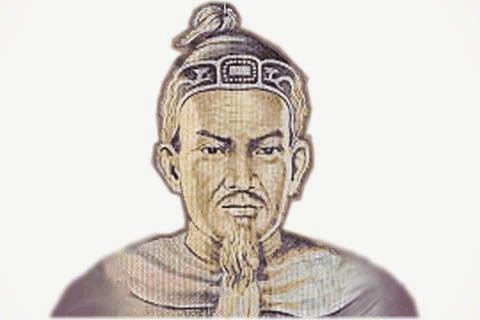
King Ly Thanh Tong
In the 12th century, through the book of Zen Buddhism, he recorded, we know that many Zen masters still practice and penetrate the practice of reciting the Buddha's name. For example, Zen Master Tri Bat "commemorates Amitabha Buddha in the Western World of Great Bliss, so he has encouraged the practice of Buddhism, building a large ashram" (According to the inscriptions carved on the pedestal of the court's lion. lotus at Mot Mai pagoda, Hoang Ngo commune, Quoc Oai district, Ha Tay province. In Tran's life, Tue Trung Thuong Si Tran Tung, Tran Thai Tong also discussed the issue of reciting Buddha's name. The Pure Land ideology is said to be primarily the concept of Amitabha Buddha and his 48 prayers, sometimes used to create a talent examination held by the court.
From the end of the sixteenth century onwards, Tinh Do Tong grew more and more with the introduction of many phonetic and annotated works of this sect such as Vien Van (1590-1644) writing the Bodhi meaning and explanation. about Self-calculation of Amitabha; Zen master Minh Chau Huong Hai (1628-1708) transcribed Amitabha star of Chau Chau; Zen master Chan Nguyen (1647-1726) with many works bearing Chinese Pure Land ideological characteristics such as Buddha's mind, Pure Land meaning . Today, the practice of reciting the Buddha's rebirth in the West is one of the very developed spiritual practices in our country because of its history and effectiveness: universal, diverse, close, easy to practice and easy to get results.
However, Tinh Do Tong in Vietnam, although influenced by Chinese and Japanese Pure Land, still has its own unique characteristics, consistent with the Vietnamese culture and personality.
3. Practicing ways to sow the Pure Land
As we said, Tinh Do Tong is one of the three growing sects in Vietnam. The basics to help people basically act as a guideline are: faith, vow, happiness.
- "What is" Tin ": Belief is a solid, unshakable faith. "Talking to the Fa is to say that I must believe in Me - she is very miserable. I Am immeasurable, boundless "[3]. Believing in one's own ability is capable of liberating by way of the Pure Land.
- What is "vow": Praying is a promise, a desire, a prayer, a desire to perform true things. "I know I - she is miserable, the Bliss is happy, so make a vow of prayer, to leave My misery - she, to enjoy the Bliss of the Bliss." [4] May bring all the merits we apply is reverted to the Western realm.
- What is "Action": Action is practice, follow. The practice is here to have only many methods to practice according to the Pure Land Method. But the simplest practice to help us cultivate is to recite the name of Amitabha Buddha, maintain the mind and mind, and vow the Pure Land to return to the Pure Land.
"With Faith, Vow, Happiness is not enough to initiate Prayer. No prayer is not enough to lead Hanh. There is no virtue to maintain the name, it is not enough to fulfill what I wish, to witness what I believe. ”[5]. Therefore, Tin, Nguyen, Hanh are like three feet to a Pure Land monk, praying for liberation.
As we said above. Those who practice the Pure Land practice want to ask Buddha Amitabha to lead to the ultimate bliss realm, one of the simplest ways is to recite Amitabha Buddha. If you believe deeply, prayerfully, and deeply, only six words of that name can one be reborn in one life. So, when you want to die, always remember to think of Amitabha and can recite from 1 to 10 thoughts, every day Buddhists must always remember to Amitabha Buddha. We can recite the Buddha at all times, everywhere, while walking, standing, lying, sitting, eating, sleeping ... However, in impure places, we must silently contemplate and visualize Buddha Amitabha. Just practice it like that one day we will attain one-mindedness of unrest, the sound of reciting Buddha's name will become a slab, whether it is reciting or not, in our mind, the Buddha's name is still in our ears. However, if a person from a young age to a great time during the recitation of Amitabha Buddha and never prayed to dedicate the merit of the Pure Land to the West, then this person would only increase good and grace in this life and many lives but not necessarily being reborn in the National Degree. Only those who recite Amitabha Buddha bring the merit of the Pure Land and pray after discharging this body to be reborn in the Pure Land can this person be reborn.
But here we are trying to talk about sowing the Pure Land. So if one wants to give birth to death, to pray for rebirth, will the Buddha only recite the only way to sow the Pure Land?
In fact today, some young people just recite Buddha's name all day long, waiting for Buddha to continue. The reciting of Buddha's secret, deep belief, prayer and such practice will surely create a great rebirth factor and he can completely return to the Western realm in this life. However, according to our opinion, the above method is somewhat negative. If Buddhists are healthy, have a mind and wisdom, we should both do good deeds, serve the Dharma alongside the Buddha's recitation. Particularly for those who are seriously ill, old and handicapped ... they can spend all their time to recite Buddha's name, to pray for rebirth.
In addition to reciting Buddha's name to help sow the Pure Land, Buddhists can also perform things that are meant to be reborn. Good actions such as charity, helping poor people, doing merit, offering, giving, publishing scriptures, building temples, reciting Buddhist sutras like the Sutra Sutra, reciting Buddha ... But after doing good deeds, we should kneel before the Buddha's table to pray for all the merit that we have done solemnly on the Western Paradise of Great Bliss. Besides, the free time like before going to sleep, after waking up, while riding on the road, while walking ... we still recite Buddha's name so that we can remember to think of Him. Thus, a person who has recited Buddha's name while doing good things for the society and still has enough grace in the West will be more meaningful to a person who gives up everything, only a recitation of Buddha's name for rebirth.
Besides, when it comes to the Pure Land, it is about the feeling of forgiveness, that is, the power of the Buddhas and the Bodhisattvas. Here, that power is the power of Amitabha Buddha and their saints. Because of the Buddha Amitabha's 48 vows, many passages say that those who recite Buddha's name will be led by the Buddhas and the saints to the West. Staying in pure spiritual practice mostly refers to the problem of forgiveness. People who do not study or practice the Pure Land think like this: Buddhism always places the cause and effect of self-reliance, then the problem of forgiveness is thanks to the Buddha Amitabha who leads the paradox with the practice follow Buddhism or not?
Here, we must understand, the Pure Land's power should not be misunderstood like we wait at death, Buddha Amitabha will take us to the Pure Land. Because of misunderstandings, we think as a relentless refuge. The Pure Land practitioner must understand that the power of force comes from the spirit of cause and effect. The Pure Land is cultivating the cause and effect. Sow the Pure Land to reborn in the Pure Land. In principle, Amitabha Buddha appears with them to guide sentient beings to the West of the Great Bliss, which is not an important issue. It is important for a person to sow the factor and merit enough to reborn or not, that is the problem. Therefore, in the Da Lat Sutra, the Buddha taught very much: "It is impossible to improve the grace of the merit of the blissful person" - don't think that a little of merit and merit is born in the Land of Ultimate Bliss. The meaning of forgiveness in Amitabha Buddha truly gives a principle but is completely a self-reliance of man. There are sowing about pure land, which is to bring this precious blessing to the celestial body, to dedicate to dignify the Pure Land to reborn a life.
Conclusion
This life is precarious, the body is impermanent, even if it is the human life who lived for many years in life, it has experienced the feelings of love, sadness, suffering, suffering from diseases, aging and death. Enlightenment is attributed to the law of suffering, they need to cultivate. However, the present society with so many temptations, the most difficult to achieve vtam6 in practice. Therefore, the Pure Land method can be said to be the salvation for the Buddha. In this article, after a brief presentation of the Pure Land history in China and Vietnam, we want to emphasize how a person sows the Pure Land. Besides always doing good deeds, reciting Buddha's chanting, dedicating merit and dignity to the Western Pure Land, even knowing the world is suffering, let us live this whole life with all virtue and love for everyone.END=NAM MO SAKYAMUNI BUDDHA.( 3 TIMES ).VIETNAMESE BUDDHIST NUN=THICH CHAN TANH.GOLDEN AMITABHA MONASTERY=AUSTRALIA,SYDNEY.20/2/2019.


No comments:
Post a Comment