Gender equality and the women's liberation movement have, to some degree, improved in many parts of the world. But many people still have prejudices and doubts about women's ability to study and achieve great enlightenment. It seems that the existence of outstanding women in Buddhist history is not enough to convince the majority of mankind to believe that the power of women can really achieve enlightenment. Due to the inherent attachment to the gender of cultural, educational, and social factors and many other causes, women practitioners themselves also have misconceptions and lack of confidence in themselves, in it's my ability, my ability, which is really super transcendent.
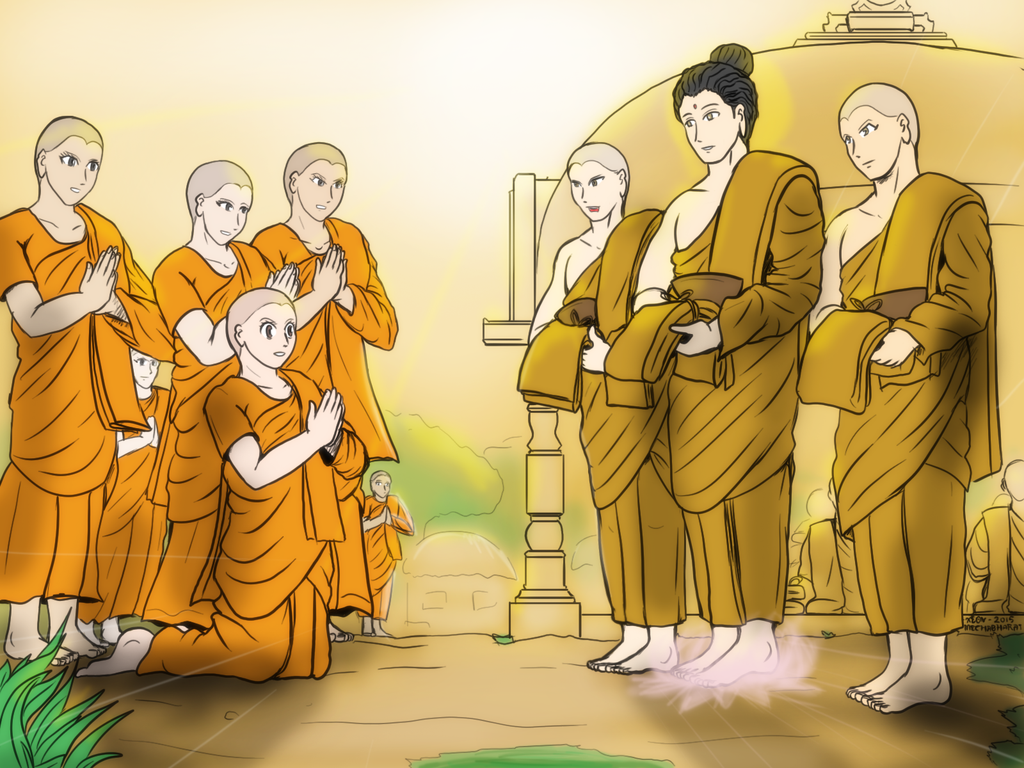
Although the Buddha sometimes referred to the natural tendencies and weaknesses of women as obstacles in the path of practice, he often praised the talents and intellect of women. In the Saṃyutta Nikāya Sutta, the Buddha intended to give many factors to eliminate prejudice about the woman. Thus, the seal of the Buddha and the evidences of the Buddha's liberation results from the female practitioners of the time of the Buddha help to affirm that the woman is not inferior to the male in terms of ability and the attainment of the ultimate enlightenment fruit. In some cases, women are considered to be more intelligent and intelligent than men, and women are also capable of attaining enlightenment after they practice the Eightfold Path:
Hey Master, in life,
There are some young women,
Maybe better,
Compared to boys,
Have intelligence, moral precepts,
Make the music impressed.
(The Anguttara Nikaya 1. Samyutta Kosala. Second Item. The Daughter Part)

Ms. Gotami - First Chief Nun
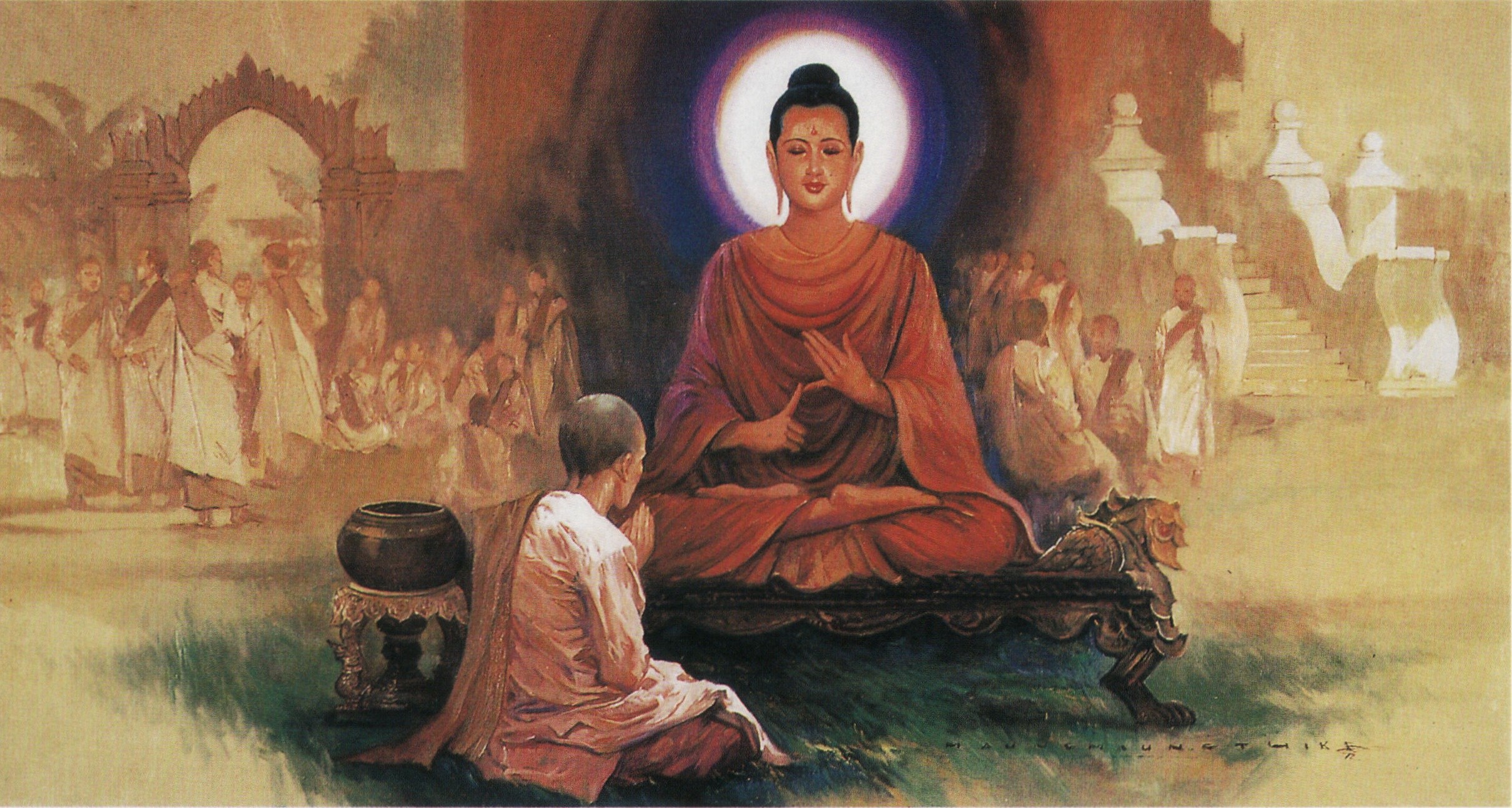
Ms. Gotami - First Chief Nun
In a society where men have always expressed skepticism, lack of faith in the spirit and intellect of women, the Buddha praised when Gotamī visited and celebrated Him at the time she was about to enter Nirvana: "Bhikshuni Gotamī, you have done wonderfully well in erasing the false views of stupid men that in their minds are full of doubt about your spiritual potentials. women".
Female disciple First Wisdom of Buddha
Khemā (Pali meaning calm) was born in the royal family of Magadha (Ma Kiet Da), a very beautiful and intelligent girl. When she reached the age of marriage, she became the concubine of King Bimbisara (Tan Ba Sa La). He was a great benefactor (who provided food for the sangha) of Buddha Shakyamuni. He made an effort to increase the whole vast garden of monks to build monks, and he was very interested in the lives of the monks.

Since coming to his husband's house, Khemā has been told many stories about the Buddha by the king. However, before and after she still refused to meet Shakyamuni Buddha. She said that she feared the Buddha would criticize her beauty so she did not want to go. She was very obstinate, so whatever the king's advice, whatever persuasion would not listen.
Finally, the king came up with a way, he hired singers to sing songs praising the beauty and gentleness of the forest monastery. Do Khemā is a person who loves the beauty of nature so when listening to those songs did not resist, decided to visit forest architecture.

That day, Khemā dressed in silk, anointed with aromatic water and put on makeup to the lecture hall where the Buddha was preaching. The Buddha could read her mind, so she transformed into a beautiful young woman, standing beside Khemā and fanning her. Attracted by the beauty of the girl holding the fan, Khemā thought: "I have never met such a beautiful girl. Maybe I'm even inferior to her. It is said that novices often despise beautiful people, they must misunderstand them. "
At that time, the Buddha allowed the beautiful girl to gradually age, through middle age, to old age, until there were no teeth left, white hair, wrinkled skin, finally fell to the ground. moribund. At this point, Khemā understood the impermanence of life and the illusion of beauty. In her heart, she thought, "If a girl is so beautiful and ruined, I will not escape that outcome sooner or later."

It was at that moment that, although he still wore lavish costumes of the royal palace, Khemā had attained Arhat results. Shortly after, due to the agreement of King Bimbisara, she joined the sangha, becoming an outstanding bhikkhuni.
Bhikshuni Khemā answered about Tathagata
Buddha Shakyamuni praised Khemā as having the "Number 1 Wisdom" among the monks and nuns of the sangha. This is completely not just a legend, a dialogue in the sutta "Corresponding set" has made this very clear.
Once upon a time:
King Pasenadi is traveling to Kosala. When night came, the king came to a small town. Here King Pasenadi wants to find someone to talk to him. Therefore, he sent his entourage to find wise Brahmins or Brahmin monks.
The servants went to ask everywhere but could not find any Brahmin or Brahmin as requested by their master. However, they later learned that a disciple of Buddha Da, the Bhikkhuni, was in town. This person, thanks to his intelligence, wide-ranging and know-how, is very good at rhetoric but is famous throughout the region. That person is none other than the famous female disciple of Buddha momentum - Khemā.

After Pasenadi received the news that he had decided to go to Khemā, respectfully asked her about the Tathagata after death:
- Does Tathagata after death exist?
- The Blessed One does not say Tathagata after death exists.
- So Tathagata after death does not exist or what?
- The Blessed One didn't say that.
- So Tathagata after death both exists and does not exist?
- The Blessed One didn't say that.
- So Tathagata after death has both not existed, can not but not exist?
- The Blessed One didn't say that.

Realizing that King Pasenadi seemed dissatisfied with his answer, she decided to take an example to illustrate her arguments. She asked King Pasenadi: "Can the king have numerals or statisticians who are so good at calculating that how many grains of sand in the Ganges River can be calculated?" The king answered that it was impossible, because the sand in the Ganges was uncountable, uncountable.
She asked the king, "Do you know who calculates how much water under the sea?" The king answered that it was impossible, because the sea water was too deep to be measured.
At this point, she calmly said: "Tathagata can not use identity, receptors, thoughts, onions, consciousness (five aggregates) that can be measured. He is like a deep sea that cannot detect the bottom. ” Therefore, it is impossible to talk about the existence or non-existence of Tathagata after death. All of the above statements cannot define Tathagata, which is an indefinable concept.

King Pasenadi heard Khemā's explanation, feeling very happy. Later, when he met the Buddha, he also correctly asked the four questions above. The answer of the Buddha is exactly the same as that of Khemā, even the way to use words and put the sentence is the same. King Pasenadi finished listening, feeling extremely amazed. At this time, he truly admired Bhikshuni Khemā, the female disciple of Buddha's First Wisdom.
In Buddhism, the principle of motherhood represents the hybrid wisdom. Because Buddha is indeed the fullness of the wisdom of the future, so wisdom is also considered as the mother of all the Buddhas. In the Great Prajnaparamita and the Prajnaparamita, the Great Buddha Pattern of Prajnaparamita is the symbol of this great perfection of primordial wisdom. The wisdom of the Prajnaparamita, the fullness of the profound wisdom of the principle of the motherhood is called "The Tathagata of the Tathagata" or "The Mother of the Buddhas". Therefore, women and the feminine aspect within all sentient beings whether male or female are the symbol of the transcendent great wisdom. END=NAM MO SHAKYAMUNI BUDDHA.( 3 TIMES ).WORLD VIETNAMESE BUDDHIST ORDER=GOLDEN AMITABHA MONASTERY=VIETNAMESE BUDDHIST NUN=THICH CHAN TANH.AUSTRALIA,SYDNEY,19/11/2019.VIETNAMESE TRANSLATE ENGLISH BY=THICH CHAN TANH.


No comments:
Post a Comment