
1.1. Buddha
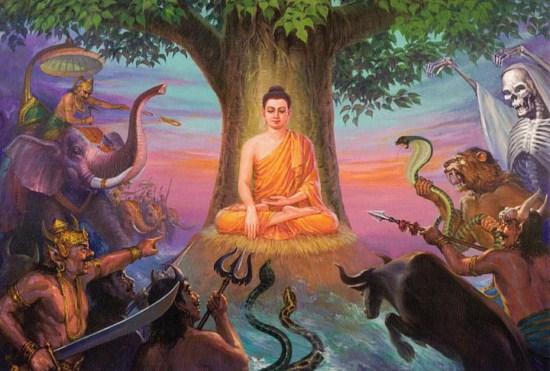
The first object of refuge is Buddha. We take refuge in Master Shakyamuni Buddha, who is an awakened Enlightened One who has fully understood the truth of all things, manifested in human form to enlighten the Golden Light. The Enlightened One was born 2,500 years ago in India with a well-documented history and merit. The relics of the Buddha born, turning the wheel of Dharma, propagating the Dharma or entering into Nirvana are all still hidden. All of the teachings we have access to are preached by the Buddha Shakyamuni, enlightened masters later on promoting his teachings so we must know and appreciate Him as our original Teacher. In fact, the Buddha has never abandoned him and is still beside him silently supporting sentient beings, only because of the karma that prevents him from recognizing him. But if you have respect, faith faithfully toward the Refuge in Him, then the corresponding homosexual will be able to experience His blessed presence. So we have faith that the Buddha is still here, always by his side and never gives up his wish to save sentient beings.

When taking refuge in Shakyamuni, we must understand that the name is also his deeds and energies. The word Sakyamuni Buddha is Indian. When translating the meaning into Chinese, there are two meanings: Powerman and President wear.
"Power man" means the "power of compassion" of egolessness has become a great power for Buddha to save suffering for sentient beings. The love of the Buddha is equal, capable of transforming all suffering to help sentient beings attain enlightenment happiness. It was compassion that became the power for him to manifest countless bodies, whoever prayed to him could save suffering. The power of compassion has helped Buddha for countless lifetimes in the career of saving sentient beings. In the Bodhisattva Sutra, the Buddha Shakyamuni himself said, "I have visited the Sa Sa world eight thousand times". So he has the title "Talented man" or we can understand it as "compassion."
And "President Wear" means Wisdom. "President" is the insightful intellect of the outside, "Wearing" is the wisdom to face one's own interior. External appearance includes success, failure, prosperity, compliments, criticism, hunger, heat, or suffering belonging to the outside without disturbing the Buddha. In the history of the Buddha Shakyamuni said, "The snow mountain practices six years of asceticism." The long years of asceticism of fasting, eating, and suffering so hard on the scenes have never made him flinch. In the Sutta the Buddha teaches: “Winning hundreds of troops is not a glorious feat. The winner of himself is the most glorious one ”. Internal strength has made Him overcome all external situations, before success, failure, prosperity, glory, hunger, criticism ... His mind remained motionless so he called him President. And the literal sign of Mạc expresses His power not to control the mind states, the demons that come from greed, hatred, anger, hatred, craving, and ignorance are not moving him. Thus, both the external and the inner mind do not cause him to waver, be confused, different from sentient beings always dominated by negative externalities and emotions, greed, hatred and delusion.
Thus the title of Shakyamuni Buddha includes both parts of Compassion and Wisdom. As a disciple of Buddha, we must inherit the legacy he has left for sentient beings. That is the treasure of compassion and intellect. That fortune everyone has but because we forget how to use it, we still get tangled around in misery.
After understanding the name of the Buddha, we must know that the Buddha is omniscient, omniscient, with unrivaled mighty compassion. So we must be very honored to be a refugee under His lotus heel.
a. Ten Names of Buddha
We must know the name of the Buddha in order to generate a heart-stirring mind when listening to his name and fostering deep faith in the guru. Every Buddha has the following ten titles:
a. Ten Names of Buddha
We must know the name of the Buddha in order to generate a heart-stirring mind when listening to his name and fostering deep faith in the guru. Every Buddha has the following ten titles:
Tathagata
In this name, "Nhu" means immutable, immutable, unchanged, the word "Lai" means to. Tathagata means that although the Buddha comes to life, he never leaves his immutable nature, always abiding in the unmoving, unchanging, unchanging mind, but often comes to life to perform immeasurably. happy beings benefit. The life of the five contradictory wickedness like this but nothing stirred his mind, just as he remained in the mind nature, still performed countless benefits to all people and all species. Sutra says: “In life, we don't leave our nature. Enter the world without leaving Nirvana. ” For Buddhas, all of them can do that.
Application
In this name, "Application" means corresponding or suitable, "Offering" means offering. Thus, Responding means that the one who is worthy to receive the offering. Because the Buddha had a monk, who practiced austerities of virtue, his fullness of compassion, wisdom and virtue is like fertile fertile fields, and the seeds of merit and merit will easily germinate, bear fruit, according to the sincere wishes of sentient beings when offering the goods that are voluntary fullness.
Regarding the offerings to the Buddha, the important thing is not the more or less the product that you have to be sincere. Even if you do not have enough economic conditions, just a flower offering Buddha with pure devotion will help you accumulate great merit.

The Variables
In this name, "Tri" is the knowing, the wisdom. "True" means the true knowing. The Buddha's knowledge is called true because he has enlightened to all the laws of the world, such as the law of impermanence, the law of karma ... even though there has been immortality, no one realized until Buddha gave a lecture.
Minh Hanh Tuc
In this name, "Minh" means wisdom, "Happiness" is virtue and "Tuc" is sufficient. Thus "Minh Hanh Tuc" is a master full of wisdom and virtue. Buddha's intellect has the ability to comprehend all truths and truths. From that wisdom, he wholeheartedly saved suffering, shared the teachings, and helped sentient beings to escape suffering, so this is the virtue.
Thien Tue
"Compassion" is skillful, "Enlightenment" is to go in the three realms, so Thien An is a skillful person in the three realms. Beings according to karma, which is pushed into what is bound in that realm. Although the Buddha was born in the life of evil misery, he was not bound but completely free to walk in the three realms. Therefore, we praise Him as Compassionate, which is a walk in the three realms but is not bound.
World Prize
The World of Interpretation means that one who has complete knowledge of the worldly realms is the three realms of Sex, Lust, and Formless Realm. Realms include hell, falls demons, animals, people, astral and heaven. The Realm of Realms is the heavenly realm for those who practice the four jhana meditation (basic, second, third and fourth meditation). The formless world is the realm of heaven for those who practice the four emptiness (not boundless in origin, awakened in boundless form, in possession of the land, in the form of non-utopia in the form of thought). Buddha fully understood, the tops of cause and effect, throughout the three realms, so he called the worldly prize. He understood that in order to be reborn in the human realm, we must observe the five precepts (no killing, stealing, adultery, lying, drinking alcohol). He sees killing animals, anger, hostility will be pushed to Hell; stingy, stubbornly clinging to clinging to personality of self, ignorance; instinctively hungry, hungry for sleep, living without knowing who will be threatened as Animal; do good deeds by arrogant mind, personal self, fame, birth into A tu la; doing good works with joyful mind will be reborn in heaven. Because of the thorough understanding of the branch, the cause and effect of each realm and each sentient being, the Buddha is called the "Worldly Prize".
Supreme Master
This title consists of two parts. "Supreme" means nothing more. "Si" means internal virtue of practice from within, accumulating good deeds from many generations, so the Buddha himself emanates from a noble, peaceful, liberating world, free from eight worldly concerns ( They are: looking forward to profit, fear of losing, looking forward to pleasure, fear of suffering, looking forward to fame, worry of being hated, hoping for praise, and being punished. The Buddha is an omniscient intellectual, comprehending all things, so we call him "Supreme Master".
Article Ngu Truong Phu
In this title, "bend over" is the ability to subdue and overcome. "Caduceus" refers to the gentleman, gallant, acts with the heart to sacrifice themselves for everyone, always see suffering and suffering, seeing the catastrophic catastrophe is willing to give up to help.
The Buddha not only subdued and tamed his mind, but he was also able to subdue and tame all sentient beings, including the most difficult beings to tame, so he was praised as the "Article Ngu Truong Phu".

The Sphinx
This title means the Guru of the Heavenly Realms and the Human Realm. Only human beings are intelligent enough to worship him as a teacher and follow his path of education. Although the Buddha has mercy on sentient beings in the Realms of Hell, Demons, Animals, and Asura-like beings, their karma of sentient beings is not intellectual enough to understand the teachings and practice. according to his teachings. And there is another heaven like the Land without boundless origin, no form, no physical body, beings there in a state of transforming mind, immersed in a state of bliss for a long time billions of lives, infatuated to the extent that the Buddhas were born they didn't know, the Buddhas passed away they were also not good, until the end of virtue was fallen back to the three lower realms. Therefore, being born into a long-lived heaven is considered a great tribulation in the eight plagues. The heavenly plane of Lust realm is absorbed in meditation, there is no happiness. Only the Heavenly Realms knows about Buddha because when the Buddha was born there was always a concussion: earth, emptiness, and thunder ... vibrating the Heavenly Realms world. The devas there can know that an Enlightened One was born to pray to the ceremony of studying the Fa with him. Such heavenly realms are blessed as compared to other heavenly realms, where sentient beings indulge in the joy of meditation so they do not know and cannot reach the Buddha's place.
Buddha World Religion
Buddha's enlightenment consists of three levels: self-discipline, enlightenment, and fullness of enlightenment. "Self-awareness" means enlightenment itself, He saw and realized that all body and mind are delusion, recognizing the temporary and impermanent, like the illusory of all things, aware of the law about karma and cause and effect, the nature of Buddha is in us. "Enlightenment" means to bring your enlightenment to share with others, which is a part of fulfilling your self-awareness. "Satisfaction" states the most qualitative expression as of practice with the theory, the part and the corresponding reason is not skewed. Only when we are "fully satisfied" can we have the full capacity and the wisdom to be fully fulfilled. The title of World Religion means the world honored, revered Him as a noble person in the world by the powers of self-discipline, enlightenment, and fullness of enlightenment.
Buddha's enlightenment consists of three levels: self-discipline, enlightenment, and fullness of enlightenment. "Self-awareness" means enlightenment itself, He saw and realized that all body and mind are delusion, recognizing the temporary and impermanent, like the illusory of all things, aware of the law about karma and cause and effect, the nature of Buddha is in us. "Enlightenment" means to bring your enlightenment to share with others, which is a part of fulfilling your self-awareness. "Satisfaction" states the most qualitative expression as of practice with the theory, the part and the corresponding reason is not skewed. Only when we are "fully satisfied" can we have the full capacity and the wisdom to be fully fulfilled. The title of World Religion means the world honored, revered Him as a noble person in the world by the powers of self-discipline, enlightenment, and fullness of enlightenment.
b. The virtuous qualities of the Buddha

The qualities of merit and power of the Buddha include the Ten Forces, the Four Lives, and the Eighteen Real Dharma Realms as listed below:
Ten forces: the ten wisdom of the Blessed One, including
- Perception of non-intellectual power: Origin means morality, intellectual power knows whether things are moral or un-moral.
- Tri tri karmic retribution: Tri knows the cause and effect of sentient beings in three lifetimes (past, present, future)
- Tri Chu meditates in liberating Tam soot Tri : Tri force knows all of the dharma
- Tri sentient beings xinxing xinxing: Intellect knows all the disposition of the disciples, followers and all sentient beings high or low.
- Tri tri racial powers: Tri force knows where sentient beings understand, knows the way of understanding of the world and the world.
- Tri tri racial realms tri: Tri force knows the different realms of beings like.
- Knowledge of the spiritual basis of mind: The intellectual power that knows the results that austerities will reach, such as the ten virtuous practices, the five precepts will be in the realms of God or the heavens, the unlucky practitioners of the eightfold Path will reach Nirvana. .
- Tri natural eyes are not afraid of power: The mind uses the natural eyes to see everything of samsara and the good and evil karma of sentient beings in an unstoppable manner.
- Tri tri network smuggled intellectual power: Tri power knows the previous lives of beings, knows invisible smuggling Nirvana.
- Tri permanent air force: Tri power can know as real as any remnants of gas, hope or, will permanently kill no birth again (know clearly or illegally).
Four Captains: four types of wisdom, four confidence, fearlessness of Buddha when preaching
- The dharma words are thoughtless and fearless: For all things, Buddha knows it thoroughly. Therefore, for beings who do not know the dharma and ask questions, he answers them freely, without fear.
- Greed forever endless fear : Buddha has ceased all the negativity, there is no fear from the external victims.
- The theory of fearless fearlessness: Buddha said "the defiled Dharma certainly hinders the practice". Buddha was not afraid of anyone's retorts or questions.
- Theory of the Buddha : The Buddha shows the path of escape from samsara and the method of training to escape suffering. Buddha preached the doctrine of renunciation without fear of anything.
Eighteen incongruous measures: are the Dharma or characteristics that only Buddha attains fullness, the eighteen characteristics are as follows.
- Tathagata actions are not mistakes
- Tathagata does not omission
- Mind does not expect
- Usually dwell in the eighty
- No separate paranoia
- Always contemplate those who are about to attain enlightenment to lead the way
- Never lose a pure purpose
- Progression does not fall
- Intellect does not decrease
- Meditation does not decrease
- Intellect does not decrease
- Virtue does not decrease
- Bodywork acts according to wisdom
- Export of artificial artifact
- Karma works according to wisdom
- See the past without obstacles
- See the future without obstacles
- Seeing the present without obstacles

The Buddha's three bodies : Dharmakaya, Sambhogakaya and Nirmanakaya , are the perfect body and mind of Buddha and sentient beings. Buddha is omniscient so he manifested completely the Three Body. The sentient beings because ignorance ignorance should not recognize the Three Buddhas!
The three Buddha bodies include:
France Body (Dharmakaya) is the essence, can veracity of Buddha, as synonymous with Truth, that of the universe.
Sambhogakaya (Sambhogakaya) or University of blissful body, the body of Buddhist merit appearing in the Pure Land.
The Nirmanakaya, the Nirmanakaya, is the Buddha Body manifested in samsara with the purpose of saving sentient beings.
On a general level, in correspondence with the Vajrayana teachings on the Three Jewels (Buddha - Dharma - Sangha) and the Three Basic Basics (Master - Venerable - No action, Dharma protectors) we can say Dharma the body is the essence of Buddha and the Master; Sambhogakāya is the essence of Dharma and Guru; The incarnation is the essence of the Sangha, that is, the Sangha of the Buddha Dharma and the non-action and Dharma protectors. Thus, the Dharmakaya, Sambhogakaya and Nirmanakaya are the essence of the Three Refuges (Buddha, Dharma, Sangha). "Essence" refers to the true nature of the Buddha, Dharma and Sangha. This means that whether or not we know or realize the Three Bodies, that essence, the essence, always exists. The quality of the Dharmakaya is omniscient wisdom, the quality of the Sambhogakaya is love, compassion and the quality of the manifestation is indestructible encouragement.
As for the future, we are the Dharmakaya. But because we are not enlightened and still caught in samsara, we do not have enough compassion or love in action, or we are not practicing it nor are we expressing ourselves as an omniscient being or one who encourages other beings. Nonetheless, enlightened qualities certainly exist. Even if we do not manifest ourselves as a person full of compassion, the basic compassion is still in Sambhogakaya because that is the basic quality of Sambhogakaya. To understand these things, you need to practice meditation with sincere mind and under the guidance of an enlightened Master. The practice of a true yogi must be like the example of Milarepa's profound meditation practice, because realization cannot come from knowledge.
The realization of Dharmakaya, Sambhogakaya and Nirmanakaya means that you will truly attain those qualities and become immutable, undying. The incarnation is more related to our physical body; The sambhogakaya is more related to speech and the dharmakaya is more to the mind. Body, speech, and mind are very important points. When you realize the Three Bodies, the Three Bodies will correspond to the body, speech and mind. Then, the mind will be very stable and the hybrid wisdom will show completely.
We must understand the concept of Dharma so that during our practice we can always walk in the right direction. Dharma in the general sense is the method. Method in the world often helps people to have knowledge and temporarily serve life and desire. And the Buddha's Dharma aims to help us have peace and happiness, end suffering in the present and in countless future lives.

There are two correct interpretations of Dharma: one is the teachings, the Buddha's practice methods taught, and two are all things and phenomena in this world.
Through practice, meditation, Buddha Shakyamuni realized the truth of the universe, understood the origin of suffering and ended suffering, achieving enlightenment. He then skillfully re-explained these truths, shared his real-life experiences so that we too could practice, end human suffering and attain enlightenment. Sharing truths, this method is Dharma.
The truths that Buddha realized were called Tao. In fact, Tao is hard to describe through words and can only be realized through the practice of meditation. However, with the omniscient intellect and compassion for sentient beings, the Buddha preached the Dharma so that his followers could attain enlightenment through it. Ethics is the principles, ways for each person to practice and realize themselves.
Because the Dharma is very wonderful and only the upper disciple can understand it, the Buddha used Philosophy, that is, to analyze and explain more so that the lesser disciples can grasp it. However, we need to be careful not to get engrossed in learning and reasoning on Philosophy, otherwise Buddhism would only make sense at the level of Philosophy. You must always remember the purpose of practicing Buddhism is to realize the absolute truth of yourself and all things. The realization here is spiritual realization rather than the theory or arguments of dualistic language.
On the other hand, we can understand the Tao as reality. To understand reality, we use human concepts to explain through words. Although masters can use many words to preach the path, we must also be careful not to be attached to them, the more we will learn the more words we will be entangled, far from purpose. ultimate is the understanding of reality.
What the Buddha cleverly preached is aggregated into the Tripitaka including the Sutras, Abhidharma and Law.- Kinh

The Buddha preached about the truth, the truths of the universe (such as the Sperm, Karma), which are the obvious truths that exist in this life. The Buddha saw, realized the truth of the universe and skillfully preached, so that sentient beings could understand and try to live in harmony with these rules.
The Sutta given by the Buddha stated that he met two conditions at the same time:
- Khế Lý: "Lý" means the truth of Buddha's theory, "Khế" means suitable. Khe Li is always consistent with the truth, with the truth, although thousands, millions of years later still not wrong.
- The Coế means to ensure the conformity with the inborn, level, psychology of sentient beings. Buddha was born in the realm of Sa she should what he preached to be consistent with this world but can not say the Dharma as for sentient beings in the Pure Land. The Dharma of the Buddha is suitable for each locality, each situation, environment. With the wisdom of the Buddha, he can also comprehend the level of each sentient being, and will then be conditioned to say the dharma corresponds to the hearing power. And finally, sentient beings apply the Buddha's teaching to treat negativity and relieve suffering immediately.
b. Comment

The thesis is a thorough analysis, explanation, discussing the meaning of the Sutta, which was carefully analyzed, divided, and discussed by the Buddha and his disciples, helping the disciples with low base. than easily understand the truths, the truths of all things.
- The law

When seeing the Sutta and the Abhidharma, but some beings are difficult to understand and practice, Buddha created the Law, which are simple and clear rules so that we can practice to avoid bad causes, thus, we are not subject to karmic retribution. Unlike some religions, the Law of the Buddha is not imposed and completely voluntary.
After understanding the Dharma in the usual way, you must strive to cultivate a right view and an understanding of all phenomena in life. That is also called Dharma. The ups and downs, the ups and downs, the humes, the failures, the bitterness, the sadness, the joy, the love, the hate, even the painful illnesses of the body ... are Dharma if they help us to be enlightened.
d. Five characteristics of France
 The Buddha's teachings must ensure five characteristics:
1.3. Tang Bao

a. Four virtues - the pure quality of the Sangha

The Buddha's teachings must ensure five characteristics:
- Practical, present: Buddha's teachings are practical, not vague, far from reality, always associated with our body, mind, and scene with the present life.
- Timeless: The Buddha's teachings are not dependent on time. Although the Buddha declared about 2,600 years ago, it has not been wrong until now, because what the Buddha said is always true to truth and truth.
- Turn around and see: the Buddha's teachings cannot be understood through learning or from the outside, but we have to turn inward, right back to our own body and mind to penetrate the Dharma .
- Uplifting upward: the application of Dharma to life will help the sublimated spirit to awaken, to better understand reality, not to have illusions about the past or the future.
- Self- awareness : no one can give us enlightenment, you have to practice Buddhism and experience it yourself to be able to realize the truths of the universe. 1.3. Tang Bao
Next, we learn about the Sangha, the last Refuge object in the Triple Jewel. According to the Mahayana understanding, the Sangha is a monastic community of at least four or more ordained monks, Bhikshunis (i.e. ordained) and lives together to ensure the two conditions are pure and pure. harmony . When saying "renunciation" means you have renounced worldly life with ideals of fame, status, money ... entering the temple to live a life of freedom, practicing according to the Fa. Because renunciations are devoted to the cause of liberation, they have plenty of time to study, practice Dharma and then share the Buddhist Dharma direction for sentient beings. That is why we need to take refuge or rely on monks.
In Vajrayana, taking refuge in the Sangha is the refuge of the Vajra Master, who represents them. Although the Buddha is always present in blessing, due to ignorance and karma we cannot see and receive teachings directly from him. However, we are able to approach our teacher, the Enlightened One, in the form of the Sangha who has received the unbroken Lineage of the Lineage from the Buddha.
a. Four virtues - the pure quality of the Sangha
- Compassion: means sacrificing self-sacrificing for all people, having the wisdom to dismiss the ego to put the common interest on the top, interested in supporting the spiritual life of those around them.
- Direct behavior: frank to everyone, do not talk around, say behind. When making mistakes, dare to look straight and accept your faults.
- Pham Hanh: preserving the moral virtue of purity.
- Dharma practice: Practicing the Eightfold Path (righteous thoughts, righteous thoughts, right speech, righteous thoughts, righteous thoughts, righteous actions, righteous diligence, righteous thoughts and righteous thoughts).
b. Luc hoa - the foundation of the power of the Sangha

- Direct behavior: frank to everyone, do not talk around, say behind. When making mistakes, dare to look straight and accept your faults.
- Pham Hanh: preserving the moral virtue of purity.
- Dharma practice: Practicing the Eightfold Path (righteous thoughts, righteous thoughts, right speech, righteous thoughts, righteous thoughts, righteous actions, righteous diligence, righteous thoughts and righteous thoughts).
b. Luc hoa - the foundation of the power of the Sangha
The foundation of Harmony is compassion, wisdom, and equality. To have compassion, we must have understanding and sympathy to share in order to easily accept and forgive each other. The person who can live peace is the person who has wisdom, because harmony is the spirit of awareness, seeing, understanding and living with the meaning of non-self, rejecting the selfishness of the ego to merge with the common of everybody. And in Buddhism, each of us is equal in Buddha nature, all are equal whether male, female, old, young ... because Buddha is equal, so in the Sangha, we also need to behave equally with each other.
The general of Harmony is Luc Hoa:
- Friendly: in the same place, working on the same thing, sharing the joys and sorrows.
- Khong Hoa: Words are gentle, gentle, honest, and not provocative.
- Italian peace: each member knows how to eliminate his ego, unanimous, concentric, and force will be hard to solve.
- Loi harmony: sharing, no material privacy and financial security.
- World peace: keeping the same precepts no more spirit than losing, there are days of slapping to repent errors and restore pure gender.
- Kien peace: knowledge tri, the school must also draw, when meeting, they share the practice experiences, what they have learned.
1.4. The word "Bảo" in Tam Bảo
1.4. The word "Bảo" in Tam Bảo
The Triple Gem is precious because treasures in the world such as gold, silver, jewels, and wealth do not bring true happiness but only the kind of happiness associated with suffering. As Buddhists, we do not seek that temporary happiness but towards the true happiness, which is available in the mind but we do not know how to find and experience.
Dharma is called noble, because thanks to Buddha Dharma, one can open the source of the true happiness that we have. The treasures of the world bring material prosperity and wealth but are always associated with suffering. The Three Jewels of the World bring peace, liberation in the soul, helping us to have a more serene and softer look. We understand the preciousness of the Three Jewels, and this will support us to find that we have chosen the right path, completely without superstition. Relying on this path we will find the source of happiness in ourselves.
The word 'Bảo' in Tam Bảo has 5 aspects:
- Rarely: Buddha entered Nirvana thousands of years ago. We are fortunate to meet His teachings, but they are not easy to meet. There are billions of people in the world and countless other beings. Yet not all people are predestined to have access to the Buddha, Dharma and Sangha, and to take refuge in the Triple Gem as we do.
- Wisdom : Buddha is wise, has wisdom because his teachings indicate that each person has the ability to attain enlightenment and find true happiness. His teachings are a way for people to find their own basic wisdom, so the Dharma is called insight. Sangha has the ideal of serving humanity, serving the life, so the renunciation path is called the path of wisdom.
- Chaste: The Buddha is pure because all selfishness, ego, greed, anger, jealousy and pride are absent from him. His deeds are always directed towards the benefit of sentient beings. His teachings are pure because they do not cause people to generate more greed, and help people purify their greed, hatred and delusion. Sangha is pure because in the midst of this life, they are still immaculate, not engrossed in fame, not greedy, not arrogant, but only cultivating spirituality, wisdom and the desire to help them all. people.
- Power: The Buddha has no wealth, no weapons, but wherever he goes, he can win over people's hearts with the power emanating from his virtue. The power of the Dharma is healing sickness, supreme, fulfilling worldly wishes ... Sangha are pure monks and nuns in the same community, so the capacity of the Sangha is enormous.
- Beautiful: Each of the beautiful generals of the Buddha is due to the virtue of his virtuous practice of virtue and fulfillment of countless lifetimes. The beauty here is not secular beauty but beauty from His soul, the beauty of selflessness, selflessness benefits only sentient beings. Dharma is very beautiful, very noble because it helps us to attain peace and liberation.
- The most precious : Buddha, Dharma and Sangha can bring us the source of happiness. If we can rely on the Triple Gem to practice and learn, we can find Happiness in the mind itself.
2. Basic Tam
2.1. Basic Diamond Master
a. Importance of the Master Diamond Base:

c. The quality of enlightenment in the Master's Base
2.2. Religion

2.3. Not onions form


Dakini presents the landscape of control, firmness and complete freedom. Such Dakini has the ability to wander in the Dharma without sex and is the source of enlightenment deeds : Instant Ear, Sangha, Belief, and Apparel for the benefit of sentient beings. The essence of Dakini is to support and cultivate the assistance of Dakini, one who accomplishes his career from the beginning stage of mind to the final stage of ultimate attainment. Thus, taking refuge in the form of Dakini is the refuge of the source of enlightenment.

Apart from the refuge, in the Vajrayana we have more Three Basic or three basic medical subjects again include Guru (Guru), The religious (Ydam), K hip Administration (Dakini) . In the Vajrayana tradition, the most important object of refuge taken by every practitioner is the Vajra Guru, recognized as indivisible from the Buddha.
2. Basic Tam
2.1. Basic Diamond Master
a. Importance of the Master Diamond Base:
The importance of the Vajra Vajra Fundamentals
The Sanskrit guru called "Guru", which means the union of all attainments, is the sacred and precious master who embodies all enlightened virtues.
For Vajrayana practice, all levels of practice from beginner to advanced such as Mahamudra, Dzogchen (Dzogchen) put the Guru at the center of the practice. Therefore practitioners need to cultivate their faith in the Master - an enlightened being who is capable of guiding and guiding sentient beings to attain enlightenment. Therefore, in the most important part of Refuge, you must develop a strong mind and earnestly pray for refuge in the Vajra Guru.
The Master is basically a prerequisite for achieving enlightenment
Because of the ignorance of karma, we have not been able to directly receive the teachings of the Buddhas and Bodhisattvas, do not have enough conditions to be enlightened, and receive teachings directly from Buddha Shakyamuni, but can only receive them. teaching through the enlightened spiritual masters.
According to the Vajrayana tradition, the Master Master is the regent of Buddha, Dharma and Sangha. He is the attainment of enlightenment in the form of man. Having attained enlightenment, they took the initiative in transforming themselves to return to the world in different forms and guide sentient beings in many ways such as Theravada, Mahayana or Vajrayana.
By believing that the Master is Buddha, we can approach and receive the blessing, the teaching of the Tathagata, directly connected with the enlightened mind of the Buddhas, the Masters and finally to have being able to realize Buddha nature is available to us.
By believing that the Master is Buddha, we can approach and receive the blessing, the teaching of the Tathagata, directly connected with the enlightened mind of the Buddhas, the Masters and finally to have being able to realize Buddha nature is available to us.
Master is basically the source of blessing
In the Three Basic Bases, the Master is considered to be the source of the blessing because He always presents the quality of compassion and wisdom and directly leads us on the path of cultivating compassion and wisdom towards enlightenment. The blessing of the Master means the growth of enlightened mind or enlightened wisdom in the practitioner.
The master is actually Buddha or the perfect enlightened quality. The view of the practitioner on the basic level of the Master will show how much the practitioner is on the journey to enlightenment. In the Sutta it is said that if one only sees the Guru as a normal world teacher, one has not cultivated a sincere mind and has not yet entered the path of Vajrayana, because the role of the Master has not been recognized and promote properly. If one has a pure view of Guru as a Bodhisattva, it means one has cultivated a higher level of will and the result will receive the blessing of the Bodhisattva. If a practitioner sees his or her Basic Master as a Buddha, he can accumulate immeasurable merit and receive the blessing of Buddha. After all, If one sees that the Guru is the universal truth and can be inseparably united with his enlightened mind, one will attain perfect and complete spiritual attainment. Thus, the mind of pure purity directed to the Master is the basis of accomplishment on the path of Vajrayana. Corresponding to the pure view is the blessing of the Master, so we say that the Master is the measure of merit or the embodiment of one's bliss.
b. The Master is the essence of Refuge

b. The Master is the essence of Refuge
b.1. The Master spoke of the Three Jewels
The master is the embodiment of the Three Jewels because his body is the Sangha, the embodiment of the monks, his speech is the Dharma Precept because he transmits the enlightened teachings of Buddha to us, and finally, the capacity to cultivate the physical body present through his compassionate enlightened mind is the Buddha Bao.
b.2. The Master mentioned the Three Basic Basics
The body of the Guru's Base is the Guru.
The master's spear is the Buddha (Yidam).
The mind of the Master is Non-form (Dakini).
He is the embodiment of the Three Basic Basics because His Body is the body of the Master Lineage, His Holiness symbolizes the Venerable Plate or means and His Heart is Dakini or the wisdom of emptiness.
b.3. The Master stated the Three World Buddha
The master is the embodiment of the Buddhas of the past.
The incarnation of the current Buddhas.
As the source of future Buddhas.
The master also spoke to the Three World Buddhas, embodying the three generations of the ten Buddhas of the past, present and future. The sutras teach that even though there are countless enlightened beings who have fulfilled the merit and attained Buddhahood, but still in the realm of dharmakaya, with infinite compassion and wisdom, mundane incarnation transformed, manifested in the world to constantly benefit all sentient beings. Masters like Tilopa, Naropa, Gyalwang Drukpa, or all lineage holders are the Buddha, they all realize the unity of the mind of great compassion and the wisdom of emptiness. Through the Dharma circuit that inherits their enlightenment, they manifest the transformation of sentient beings.
b.4. The Master spoke of the Three Buddha Bodies
The master's body is the incarnation, the embodiment of relative truth.
The Master's speech is the Clear Body Sambhogakaya indicating the means.
The Master's mind is the Dharmakaya, the true mind that circulates throughout the dharma realm and the absolute omniscience.
Basic Master is also at the same time General Tam Than, His body is Nirmanakaya, His mouth is Sambhogakaya and His mind is Dharmakaya Buddha. Although the Venerable Master manifests throughout the Dharma Realm in the form of the Triple Bodies (Dharmakaya, Sambhogakaya, Nirmanakaya). However, we only often see him as the Buddha incarnation because in the Sutta it is said that the Bodhisattva attained the throne from the first to the eighth throne to be able to see the Sambhogakaya Buddha. Therefore, it is important for us to absolutely believe that the Basic Master is the embodiment of the Buddhas, Bodhisattvas and inseparable from the Buddhas and Bodhisattvas.
The master is the guide, leading the disciple, moreover, liberation is not the ordinary science but the transcendental science of liberation of suffering and samsara, so a true master needs full convergence of special virtues. The Master is not simply a person who knows how to teach the Dharma, most importantly, he must have the experience of realization and be the Enlightened One, who will attain all qualities of compassion and wisdom.
Therefore, when approaching the teacher, we must be very subtle and also need to develop spiritually to discern the virtues of the Master in a discreet and honest way. Bat Nha wisdom and unconditional compassion towards all sentient beings are the two most important virtues of a true Master. These two virtues are interdependent. A true Master must be one who has perfected the Great Perfection and Great Compassion.
d. Three levels of refuge in the Master
By taking refuge in the external teacher, the embodiment of the Three Jewels with enlightened qualities, we are received the teachings and guidance. Through the practice of Dharma and cultivating a sincere mind towards the Master, we gradually realize the inner Master or the wisdom available in ourselves. After all, we can realize the secret Master or enlightenment attainment. Thus, the Master is the bridge to bring the practitioner back to the pure mind nature, Buddha nature always hidden within himself.
d. Three levels of refuge in the Master
By taking refuge in the external teacher, the embodiment of the Three Jewels with enlightened qualities, we are received the teachings and guidance. Through the practice of Dharma and cultivating a sincere mind towards the Master, we gradually realize the inner Master or the wisdom available in ourselves. After all, we can realize the secret Master or enlightenment attainment. Thus, the Master is the bridge to bring the practitioner back to the pure mind nature, Buddha nature always hidden within himself.
Refuge outside
Practitioners put their full faith, earnestly vow to rely on the Three Jewels and the outside Master. Buddha Shakyamuni is omniscient, omniscient. He pointed out, guiding sentient beings on the path of enlightenment more than 2,500 years ago. The teachings and scriptures that he has enlightened to sentient beings to attain enlightenment are the Dharma; And those who earnestly seek enlightenment, single-mindedly on the path towards liberation, is the Sangha. On the spiritual journey, anyone who protects, supports, guides, helps you to develop compassion, intellect and lead a meaningful peaceful life, that's the Guru you need to lead. his sincerity comes.
Refuge inside
Refuge inside tells you that, myself has all three jewels Buddha, Dharma and Sangha. You should not see Buddha as an external existence that Buddha exists in yourself, your pure, compassionate mind and perfect wisdom. These are two aspects of the mind that you cannot seek from the outside. So, the path of practicing, transforming oneself and wishing to practice to attain enlightenment also lies within you.
Take refuge in secrets
The union between the Self-nature of all things ( emptiness and clarity) and the Great Joy (profound and immutable) arises unconditionally. Refuge secret realization of this duality, that is the Hybrid wisdom. Therefore, the Refuge Refuge is also the realization of the mind's original nature:
The transcendent mind is pure and attained Buddha.
Immutable and immaculate mind is Dharma.
The mind of fullness in all enlightened qualities is Sangha.
2.2. Religion
Definition of Ton
Absolute terms, Japan honor is Buddha-nature, self-interest is available in every living being. Buddhas always appear around us, but because the karma of ignorance obscures them, ordinary beings cannot directly connect with the blessing. With their compassion, the Buddhas have manifested through appearances (Buddha-body, Vajra Dharma protectors, etc.), sounds (true speech) ..., so that basic beings can also connect and practice. So comparatively, the Buddha can be understood as a means of the Buddha nature, a way, a class of practice.
In Vajrayana Buddhism, practitioners practice visualization of the Buddha according to the mind of the mind. The Dharma practice of the Buddha originates from the profound teachings of Buddhism and uses extremely skillful techniques to awaken realization at the deepest level.
The Buddhas of Ton are visualized as perfect models of enlightened energy and merit. They are inseparable from everyday life and everyday human experiences, but rather are reflections of different states of consciousness. The Buddha, the Buddha-God, Tara and the Venerable Anping symbols symbolize transcendental mind aspects, while the Venerable Venerable Gods symbolize internal inclinations that have not been transformed such as hatred and riddle. Cavalry, greed and sin. When we do not understand the nature of these potential energies, they will expose in the negative direction. But when we take initiative in recognizing them consciously, we will be more accepting and tolerant of ourselves and people. In terms of general appearance, the Buddhas present outside are perfect objects of meditation, but logically, They present the positive and negative energies within each person. Therefore, Gnostic meditation helps us transform our inner energies into fine creative energy.
Importance of Plate
In the Three Basic Basics, the Buddhas of the Abhidharma are the source of accomplishment because through the skillful means of practicing the Vigil, we can realize the nature of mind. A Vajrayana practitioner considers Buddha Shakyamuni to be a specific object of meditation and seeks to cultivate through his own experience of the union with the qualities of the Buddha's Body, Speech and Mind. the body of the three enlightened Diamonds: Immutable body, Indestructible speech and unmoving mind. These three Enlightened Bodhisattva, Speech, and Enlightenment are utterly transcending the body, speech, and mind, often filled with obscurations and instinct to practice qi. By visualizing the body, speech, and mind that are Virtue, Truth, and Wisdom, we become open to receiving the perfect blessings, transforming our bodily thoughts and speech into the three indestructible Diamond qualities.
2.3. Not onions form
Definition No model
If the Buddha is the means aspect of Buddha nature, then No form - Dakini is the intellectual aspect. Because wisdom is the Mental energy, Dakini is often expressed in the form of the Buddha.
The term 'Dakini' comes from Sanskrit, the equivalent Tibetan word Khandro means "Not to practice". Dakini appears in the form of a female and is often divided into worldly and intelligent Dakini. The earthly Dakinis are beings who still drift in the heavenly-human realms, which can take on a beautiful appearance or a yaksha. The female practitioners have achieved some kind of enlightenment but have not yet escaped from samsara, also called the worldly Dakini. The wisdom dakini are enlightened beings like the Vajra Yogini Vajra Mother Buddha. In this sense, Dakini is one of the Refuge objects of the Three Basic Bases. Although the outer appearance is female (symbolizing intellect, Mental energy), the inner manifestation of Dakini is the Basic Wisdom or the Enlightened Mind of the Master.
Importance of Aerospace
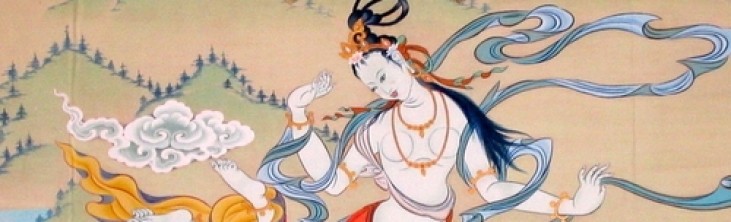
Dakini presents the landscape of control, firmness and complete freedom. Such Dakini has the ability to wander in the Dharma without sex and is the source of enlightenment deeds : Instant Ear, Sangha, Belief, and Apparel for the benefit of sentient beings. The essence of Dakini is to support and cultivate the assistance of Dakini, one who accomplishes his career from the beginning stage of mind to the final stage of ultimate attainment. Thus, taking refuge in the form of Dakini is the refuge of the source of enlightenment.
In general, Dakini symbolizes the energetic and energetic form of energy that tantric practitioners must practice in order to attain enlightenment. Dakini is the wisdom of emptiness, symbolized by the energy of the Sample. The other aspect is compassion or skillful means represented by the secondary energy. All sentient beings, whether male or female, have the potential to realize the wisdom Dakini within themselves. When compassion (or the Extra-energy) and the wisdom (the Form energy) are perfectly united, we will attain enlightenment and become a Buddha. END=NAM MO SHAKYAMUNI BUDDHA.( 3 TIMES ).WORLD VIETNAMESE BUDDHIST ORDER=GOLDEN AMITABHA MONASTERY=VIETNAMESE BUDDHIST NUN=THICH CHAN TANH.AUSTRALIA,SYDNEY.19/11/2019.


No comments:
Post a Comment