9 missions during the reign of King Asoka.
About A Kingdom
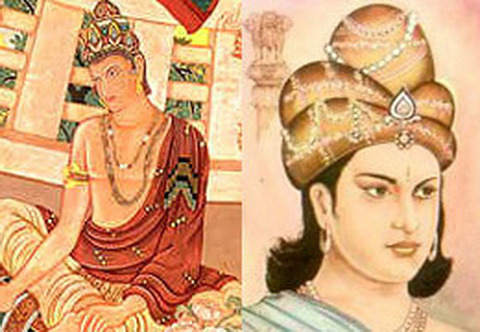
It can be said that A prince is one of the greatest emperors in Indian history. Up to now, after more than two thousand years, his fame and virtue are still revered by the Indians. He reigned from 269 BC to 232 BC, belonging to the third generation of the Mauryan dynasty. His empire was vast, almost all of the Indian subcontinent stretching east to west.
In about 260 BC, Asc King carried out a war crushing the invasion of Kalinga. After the victory, he saw the dead. Frightened by this catastrophic situation, he took refuge in the Three Jewels under the direction of Moggaliputta Tissa.
After returning to Buddhism, Asoka kingly support and bless the Buddha. From a so-called king, this evil king became a good monarch, from a very evil king to become a perfect king with all his heart. In his position, he maintained the Dharma actively and effectively. The third BCE collection of about 250 BCE in Palialliputta is one of the important concessions under the protection of Asoka. History records that the Tripitaka, Law and Comment are fully assembled and recorded in writing. In this gathering, apart from the purification of the Sangha, another important issue is bringing the teachings of the Buddha to countries outside India. Namely, there are nine delegations to different areas to propagate the Dharma.
Nine delegations abroad
According to the Sri Lankan chronicle, during the reign of Asoka, nine of the missionaries went abroad following the suggestion of His Holiness the. The great monks were sent to nine regions to propagate Buddhism. All of them are monks who are well versed in the Tipitaka, professors of the Buddha-dharma and are capable of teaching the teachings in a proficient manner. This is considered to be the first time in the history of Indian Buddhism that Buddhism is spread out of the territory. Since then, Buddhism began to appear throughout the continents of Asia and Europe.
This is considered as the first foundation for the spread of Buddhism in the world. Chin cụ đoàn đoàn cụ cụ cụ cụ
1. The first delegation went to Kashmir and Gandhara, led by Majjhantika, accompanied by five other monks. Here, the delegation used the magical energy to submit to a dragon and teach the people teachings of the Buddha through the Āsivisūpama and Āsīvisa in the Sutra. The suttisuppama is like an allegory about the power of evil that man is aware of. And teach another sutta called Āsīvisa, about the dangers of anger.
Kashmir and Gandhara were in remote parts of India at that time, so few monks were active. Thus, in these areas, in the more open law, it is possible for the five monks to conduct a great precept. This is the case for the eunuchs in the borderless areas where there are no large populations. In this case there must be at least one Law Enforcement Officer and understand the Law of the Apostles. In other areas of strong Buddhism, there must be enough Three, new evidence to celebrate a great world.
2. The second mission led by Rakkhita to Varanasi teaches the Anamattagiya to transform those who are filled with ignorance and craving. Or, in other words, this sutra to deal with the four basic sins of man are: self, self, arrogance and self.
3. The Mahādeva Mission to Mahisamandala was delivered by Mahādevala to teach the Siddhartha. This country is often referred to as Mysore. Where to call Máhissati is the capital of an island on the Narbadá River.
4. Dhamma Rakkhita's fourth mission to the Indian coast of West Indies to teach the Agghikhandupama. This sutta emphasizes the moral conduct of man. According to the Mahāvamsa, over 37,000 of these evangelists returned to Buddhism and more than a thousand were ordained in the Sangha. [2] It should be said that the Bhikshu, a famous figure associated with the Milindapanna Sutta, is also a disciple of Dhamma Rakkhita.
The Aparantaka was identified west of the Indian subcontinent, including northern Gujarat, Kathiawar, Kachch and Sindh. In this area the Greek community may have gathered. Today the city of Gujarat is named Junagadh called "City of the Greeks".
5. Mahadharmarakkhita's fifth mission to Maharattha is to teach the Mahanaradakassapa in Jātaka. It emphasizes compassion and joy, the renunciation of evil, the good that brings peace rather than attachment in pleasures.
6. The sixth mission delegation led by Mahārakkhita to Yonaloka region in Turkey to teach the Kālakārāma. In that the Buddha emphasized the belief through reason. Do not blindly believe.
7. Majhima delegation to Himalayas to teach the Dhammapada. The first sermon of the Buddha in Deer Park on the truth of four truths: suffering, training, killing and the Way and the Middle Way (Holy Eight branches) lead to liberation.
8. The 8th mission was led by Mr. Sonaka and Uttara to the Golden Triangle of Burma to teach the Brahmajālā. In it, the analysis of the speculation of philosophy and the strong branch to human virtue. According to the Mahāvamsa, the emperor Asoka sent two monks, Sona and Uttara, to Suvannabhumi to propagate Buddhism.
9. The Mahinda Group came to Sri Lanka to teach the Cūlahatthipadopama and some other sutras. In it, the branch strengthens the true faith in the Three Jewels.
The names of the nine missions also appear in the book Samantapāsādikā, where interesting details are given.
According to Sasanavamsa, there are five places in Southeast Asia, where the missionaries of Asoka taught Buddhist scriptures and took refuge in Buddhas. It is Kasmira and Gandhara are in the south of Kabul; Mahisamandala is in Andhra; Vanavasa is in the area around the Prome; The Aparantaka is on the west side of the Irrawaddy; Maharattha is Thailand, Yona is the land of the Shan tribe and Suvannabhumi (golden triangle) is Thaton now in the Republic of Burma.
The result of the mission
One of the most important achievements associated with the Theravada tradition is the Buddha's teaching. These great achievements lasted centuries as Emperor Asoka sent monks who were proficient in the Tipitaka and could recite it to teach in nine countries and territories.
It must be said that the mission to Ceylon, Kashmir and Gandhara was very successful. This resulted in a long period of Buddhism being present and dominating in those regions. [3] The greatest success of King Asoka was to bring Mahinda's son to Sri Lanka along with four other monks and a monk. This mission succeeded in transforming the Sinhalese emperor into a Buddhist monk, and has been the site of the Pāli Sūtra Tripitaka until today. Another success was the missionary mission to Egypt and Greece.
There was a mixture of Greek thought and Buddhist teachings at that time. Thus, there was a Buddhist community in the Greek society, especially the first monasteries built before the Christian era. [4] The role of the Greek monks for the development of Buddhism here is very important. It must refer to the Menander dynasty mentioned in the Mahāvamsa.
There is a posthumous sutra in the Sutra which is the First Sutra. It mainly describes the question and answer between Master Na Lan and King Milinda. The content of this dialogue is transmitted, the Buddhist worship near the peer with the Buddhist doctrine spoken. Particularly for Burmese Buddhism, this sutra was recorded in the Ministry of the Five Ages in the Five Sutras of the Theravada Buddhist Canon. The earliest occurrence of this business is around the first century BC. And the place where it first appeared must be Northwest India, in the Ngu Ha basin, where the dialogue took place.
It is worth mentioning here that the agility of the missionary monks during this period was so successful by the use of the magic means to teach beings. Buddhism in each country is integrated with the cultural traditions and customs of that region. This integration has made Buddhism gradually foothold and sustainable development in each locality.
Thus, we can say that A prince has a great role in spreading the Dharma of the Buddha not only in India, but also in other parts of the world. The nine missions were protected by King Asoka, so they were quite easy in transmitting the Buddha's teachings to the people. And gradually, deep-rooted semi-gurus became centers of Buddhism that flourished later.
Regarding Moggaliputta Tissa, the central figure in Asoka's evangelical activities, the inscription " Sappurisasa Mogalīputasa " is engraved in the inscription, showing his immensely important role in King Asoka. The person who was able to convert the king from taking the invaders and slaughterers into becoming a king of blessing and propagating the greatest Buddha-dharma in the history of world Buddhism, receive.END=NAM MO SAKYAMUNI BUDDHA.( 3 TIMES ).VIETNAMESE TRANSLATE ENGLISH BY=THICH CHAN TANH.THE MIND OF ENLIGHTENMENT.VIETNAMESE BUDDHIST NUN=GOLDEN LOTUS MONASTERY=AUSTRALIA,SYDNEY.1/10/2018.
In about 260 BC, Asc King carried out a war crushing the invasion of Kalinga. After the victory, he saw the dead. Frightened by this catastrophic situation, he took refuge in the Three Jewels under the direction of Moggaliputta Tissa.
After returning to Buddhism, Asoka kingly support and bless the Buddha. From a so-called king, this evil king became a good monarch, from a very evil king to become a perfect king with all his heart. In his position, he maintained the Dharma actively and effectively. The third BCE collection of about 250 BCE in Palialliputta is one of the important concessions under the protection of Asoka. History records that the Tripitaka, Law and Comment are fully assembled and recorded in writing. In this gathering, apart from the purification of the Sangha, another important issue is bringing the teachings of the Buddha to countries outside India. Namely, there are nine delegations to different areas to propagate the Dharma.
Nine delegations abroad
According to the Sri Lankan chronicle, during the reign of Asoka, nine of the missionaries went abroad following the suggestion of His Holiness the. The great monks were sent to nine regions to propagate Buddhism. All of them are monks who are well versed in the Tipitaka, professors of the Buddha-dharma and are capable of teaching the teachings in a proficient manner. This is considered to be the first time in the history of Indian Buddhism that Buddhism is spread out of the territory. Since then, Buddhism began to appear throughout the continents of Asia and Europe.
This is considered as the first foundation for the spread of Buddhism in the world. Chin cụ đoàn đoàn cụ cụ cụ cụ
1. The first delegation went to Kashmir and Gandhara, led by Majjhantika, accompanied by five other monks. Here, the delegation used the magical energy to submit to a dragon and teach the people teachings of the Buddha through the Āsivisūpama and Āsīvisa in the Sutra. The suttisuppama is like an allegory about the power of evil that man is aware of. And teach another sutta called Āsīvisa, about the dangers of anger.
Kashmir and Gandhara were in remote parts of India at that time, so few monks were active. Thus, in these areas, in the more open law, it is possible for the five monks to conduct a great precept. This is the case for the eunuchs in the borderless areas where there are no large populations. In this case there must be at least one Law Enforcement Officer and understand the Law of the Apostles. In other areas of strong Buddhism, there must be enough Three, new evidence to celebrate a great world.
2. The second mission led by Rakkhita to Varanasi teaches the Anamattagiya to transform those who are filled with ignorance and craving. Or, in other words, this sutra to deal with the four basic sins of man are: self, self, arrogance and self.
3. The Mahādeva Mission to Mahisamandala was delivered by Mahādevala to teach the Siddhartha. This country is often referred to as Mysore. Where to call Máhissati is the capital of an island on the Narbadá River.
4. Dhamma Rakkhita's fourth mission to the Indian coast of West Indies to teach the Agghikhandupama. This sutta emphasizes the moral conduct of man. According to the Mahāvamsa, over 37,000 of these evangelists returned to Buddhism and more than a thousand were ordained in the Sangha. [2] It should be said that the Bhikshu, a famous figure associated with the Milindapanna Sutta, is also a disciple of Dhamma Rakkhita.
The Aparantaka was identified west of the Indian subcontinent, including northern Gujarat, Kathiawar, Kachch and Sindh. In this area the Greek community may have gathered. Today the city of Gujarat is named Junagadh called "City of the Greeks".
5. Mahadharmarakkhita's fifth mission to Maharattha is to teach the Mahanaradakassapa in Jātaka. It emphasizes compassion and joy, the renunciation of evil, the good that brings peace rather than attachment in pleasures.
6. The sixth mission delegation led by Mahārakkhita to Yonaloka region in Turkey to teach the Kālakārāma. In that the Buddha emphasized the belief through reason. Do not blindly believe.
7. Majhima delegation to Himalayas to teach the Dhammapada. The first sermon of the Buddha in Deer Park on the truth of four truths: suffering, training, killing and the Way and the Middle Way (Holy Eight branches) lead to liberation.
8. The 8th mission was led by Mr. Sonaka and Uttara to the Golden Triangle of Burma to teach the Brahmajālā. In it, the analysis of the speculation of philosophy and the strong branch to human virtue. According to the Mahāvamsa, the emperor Asoka sent two monks, Sona and Uttara, to Suvannabhumi to propagate Buddhism.
9. The Mahinda Group came to Sri Lanka to teach the Cūlahatthipadopama and some other sutras. In it, the branch strengthens the true faith in the Three Jewels.
The names of the nine missions also appear in the book Samantapāsādikā, where interesting details are given.
According to Sasanavamsa, there are five places in Southeast Asia, where the missionaries of Asoka taught Buddhist scriptures and took refuge in Buddhas. It is Kasmira and Gandhara are in the south of Kabul; Mahisamandala is in Andhra; Vanavasa is in the area around the Prome; The Aparantaka is on the west side of the Irrawaddy; Maharattha is Thailand, Yona is the land of the Shan tribe and Suvannabhumi (golden triangle) is Thaton now in the Republic of Burma.
The result of the mission
One of the most important achievements associated with the Theravada tradition is the Buddha's teaching. These great achievements lasted centuries as Emperor Asoka sent monks who were proficient in the Tipitaka and could recite it to teach in nine countries and territories.
It must be said that the mission to Ceylon, Kashmir and Gandhara was very successful. This resulted in a long period of Buddhism being present and dominating in those regions. [3] The greatest success of King Asoka was to bring Mahinda's son to Sri Lanka along with four other monks and a monk. This mission succeeded in transforming the Sinhalese emperor into a Buddhist monk, and has been the site of the Pāli Sūtra Tripitaka until today. Another success was the missionary mission to Egypt and Greece.
There was a mixture of Greek thought and Buddhist teachings at that time. Thus, there was a Buddhist community in the Greek society, especially the first monasteries built before the Christian era. [4] The role of the Greek monks for the development of Buddhism here is very important. It must refer to the Menander dynasty mentioned in the Mahāvamsa.
There is a posthumous sutra in the Sutra which is the First Sutra. It mainly describes the question and answer between Master Na Lan and King Milinda. The content of this dialogue is transmitted, the Buddhist worship near the peer with the Buddhist doctrine spoken. Particularly for Burmese Buddhism, this sutra was recorded in the Ministry of the Five Ages in the Five Sutras of the Theravada Buddhist Canon. The earliest occurrence of this business is around the first century BC. And the place where it first appeared must be Northwest India, in the Ngu Ha basin, where the dialogue took place.
It is worth mentioning here that the agility of the missionary monks during this period was so successful by the use of the magic means to teach beings. Buddhism in each country is integrated with the cultural traditions and customs of that region. This integration has made Buddhism gradually foothold and sustainable development in each locality.
Thus, we can say that A prince has a great role in spreading the Dharma of the Buddha not only in India, but also in other parts of the world. The nine missions were protected by King Asoka, so they were quite easy in transmitting the Buddha's teachings to the people. And gradually, deep-rooted semi-gurus became centers of Buddhism that flourished later.
Regarding Moggaliputta Tissa, the central figure in Asoka's evangelical activities, the inscription " Sappurisasa Mogalīputasa " is engraved in the inscription, showing his immensely important role in King Asoka. The person who was able to convert the king from taking the invaders and slaughterers into becoming a king of blessing and propagating the greatest Buddha-dharma in the history of world Buddhism, receive.END=NAM MO SAKYAMUNI BUDDHA.( 3 TIMES ).VIETNAMESE TRANSLATE ENGLISH BY=THICH CHAN TANH.THE MIND OF ENLIGHTENMENT.VIETNAMESE BUDDHIST NUN=GOLDEN LOTUS MONASTERY=AUSTRALIA,SYDNEY.1/10/2018.

No comments:
Post a Comment