After 11 years of teaching ascetics, ascetic enough smell, praying with many Buddhist monks, Bodhisattva Siddhartha still not satisfied. He found that the way of practice, the theory of the masters still negative deadlock. He immediately abandoned the practice and went to meditation on the banks of the Uruvila River alone. After 49 days of entering the sun, Bodhisattva Siddhartha natural enlightenment, attained the Supreme Immaculate Buddha, the name is Buddha Shakyamuni. After attaining truth, the Buddha came to meet the five brothers Kieu Tran Nhu at Deer Park. The Buddha's first sermon on the Four Noble Truths is called Dhamma (Chakrapravartana). The Four Noble Truths (Suffering, Practice, Extermination, Directing) through the Noble Eightfold Path or Noble Eightfold Path (Right View, Right Thought, Right Speech, Right Action, Right Effort, Right Effort, Right Effort,
For the past 45 years, the Buddha and his great disciples have traveled all over India, from the banks of the Ganges to the remote villages, essential to spreading the teachings of the Buddha. The light of Buddhism transmitted where the ignorant darkness melted there. Millions of people have found happiness and freedom. The Buddha passed away at Kusinagara in 486 BC. That year, he was 80 years old.
Buddhism flourished in India, especially in the city of Kosala and Magadha, also known as Buddhist centers. But after the Buddha's passing away for about 200 years, Buddhism also followed historical events with many ups and downs. In these historical events, the ascetic battle of Kalinga's King Asoka was the famous landmark in the history of Indian Buddhism.
King Asoka shuddered to awaken the king's dream when he saw the bloody dead horse lying dead in the battlefield. The bloody image of the tyranny of the tyrant, which caused him regret, caused the destruction of sentient beings. Since then, Asoka has transformed the soul, learn Buddhism and through the teachings, As King Wang gradually domesticated to become the most virtuous king of Indian history.
The remains of Buddhism in India are marked by the resurrection of Asoka; So now we can learn and understand more about the history of Buddhism through inscriptions and holy sites.
Holy Land
Đ the Buddha Shakyamuni had left his footprints all over the territory of India and His silhouette engraved in human minds. During the prosperous Dharma, important landmarks were mentioned. The four famous places of Buddhism in particular and of India in general are: Lumbini Garden where the Buddha was born, Bodh-Gaya where the Buddha, Deer Park (Sarnath) where the Buddha first turned the dharma, and Kusinagara where the Buddha passed away.
Four other important places also mentioned in the history of Buddhism are four places where the Buddha performed miracles in order to educate beings. These places are: Sravasti (the capital of Kosala) where the Buddha performed the miraculous powers of Puruna Kasyapa, the Tirthika leader. In the second place is Sankasya, the Buddha went to the 33rd sky to teach the Queen Ma Gia (his mother). The third place is Rajagriha (the capital of Magadha), where the Buddha had sent the elephant killed by Buddha Devadatta to kill the Buddha. The fourth place is Vaisali, where the Buddha used the bowl of honey offered by the monks.
These famous sites and events in the Buddha's life have been the subject of thousands of Buddhist artifacts from the past.
These places have attracted many visitors to worship, and many temples, towers, inscriptions were built around these holy places. However, during the decline of Buddhism in India, some holy sites were destroyed by dust and time.
Today, Indian archaeologists are on the way to excavating the relics and restoring the shrines.
The first place: Lumbini (Lumbini)
L minus Ty Ni (Lumbini), Buddha's birth place, is a mecca in the Rummindei within the territory, from a regional miles north and two miles north Paderia Bhagwanpur area Nepal. Archaeologists have identified Lumbini now north of Uttar Pradesh's Basti district.
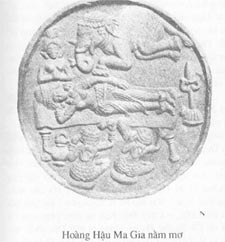
According to Buddhist history, Lumbini is located 12 miles from Kapilavastu. It is customary for Mausoleum Queen to return to her motherland for birth. "When she arrives at the lumbini, she feels strange in her body. The song hissed on the tree, the wind blowing hiu to make the soul gentle gentle, Hoang Hau leisurely watching the scenic view of nature.
When coming to the Saola Museum, Hoang Hau raised the flowers in front of his face and strangely, the crown prince in the standing position of the mother. Devotees greeted, seven dragons sprinkle water fragrant bathe Crown Prince and Prince seven steps soundly declared: "I am the Supreme Master of Heaven. (Heavenly people, the only one). From the garden of Lumbini, the Prince was the palace of the servants back to Kapilavastu.
Prince Siddhartha's birth scene is the subject of thousands of Indian art that is today found in sculpture and paintings.
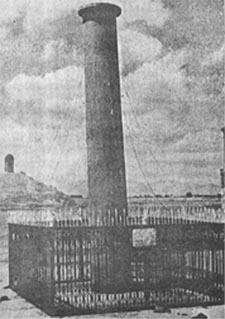
Identifying the name of Lumbini, we must remember the merits of King Asoka. Twenty years after the emperor's ascension, King Asoka personally visited the shrines celebrating the holy places, and the King sent a pillar with the inscription "This place is where the Buddha was born. " King Asoka also reduced the annual tax rate by 5% for the people of this region. It was a privilege of King Asoka to the local people where the Buddha was born. Beside this pillar, an old temple carved images of the Buddha's birthplace.
Lumbini has become a leading holy place for Buddhists. Thousands of years ago, Chinese temples all visited Lin Liu Ni. Surrounded by pillars made by Asoka, the pilgrims also made their own large stone tablets marking the offerings. Later, the Nepalese government ordered excavation of this area to find more evidence.
Second place:
Bodh-Gaya
Bodh-Gaya
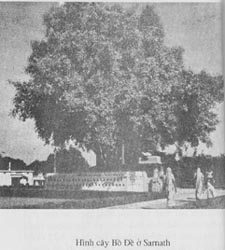
The second most famous site in Buddhist history is Bodh Gaya where the Buddha attained enlightenment. Here the Buddha meditated for 49 days under the pipala tree, next to the river Ni Lien Meditation. Because of this immortal phenomenon, this place has become Bodh Gaya, and the ancient pipala tree is named Bodhi tree (meaning "enlightened, bodhi tree").
It can be said that Bodh Gaya has become a cradle of Buddhist cultural history and Buddhist disciples have longed for at least one visit to this place. The Buddha's meditation yard, the Bodhi Tree, is well looked after. Large stupas and stone pillars around Bodh Gaya, made by pilgrims of India, China and other countries, make pilgrimage to the shrine, and his records Hsuanzhuang, has given us a glimpse of the glorious landscape of this place in the past more than 2500 years ago. Bodhi tree is now the great tree of thousands of original Bodhi tree, but the leaves are still bloated, large trunk solid.
It was Alexander Cunningham and a number of other scientists who were the first to unearth the inscriptions and pillars of this Bodh Gaya. Bo De Tower was restored many times with a huge cost.Asoka also built a shrine at the shrine. The temple built by Asoka was described in Indian art;However, the remains of this temple are no longer visible.
The tower of Bodhi we see today is the new tower was restored later. According to the description of the Three Gorges, the Bodhi Tower was built in the 7th century AD following the model of a great stupa in Burma.
At present, the Great Stupa at Bodh Gaya is nearly 160 feet high and is in quadrangular shape. At the top is a sharp tower. In the tower, people engraved the Buddha statue. North of the tower is a narrow street 4 feet from the ground. It is described as a small path that the Buddha, after enlightenment, has walked meditation on this path. In addition, there are many pictures of lotus carved on the road because it is believed that every step of the Buddha to have lotus flower bloom there. There is also a red sandstone next to the Bodhi tree, which represents the cushion of grass that over 2540 years ago the Buddha sat and witnessed. There are many other carved sculptures that depict the image of the Buddha and the great disciples, the Brahma.
Third Holy Land: Sarnath
M OT sanctuary more memorable in the history of Buddhism is Isipitana or Sarnath shrine. Here, in the stillness of Deer Park, the Buddha opened the first Dharma talk for the five brothers Mr. Kiều Trần as before as the ascetic with him. The content of the sermon speaks about the sufferings of human life and ways to solve them. This event has been dubbed "Zhuan Falun," which means that the Buddha converted the first dharma wheel to mark a glorious era of a sustained religion over 2500 years ago.
Sarnath was the place of religious origin founded by Shakyamuni Buddha. Thus, Sarnath became the largest Buddhist center for over 1500 years. In the first centuries of the flourishing Buddhist period, during the reign of Asoka, Sarnath became a popular place of debate between sects and religions. Hien and Tran Huyen Trang came to worship this relic in the 5th and 7th centuries AD. They have left us many valuable documents about this holy history. Here, Asoka also sent a man to build a pillar marking the retreat area in various large and small buildings of over 1500 Buddhist monks to Sarnath.In those remnants, one must mention a beautiful temple with bronze Buddha statues in the form of turning Falun Dafa, an ancient tower and a stone pillar. All are built by King Asoka. It has flourished in many dynasties and has been restored many times. According to the inscriptions and archaeological evidence, the temple has a statue of Buddha Zhuan Falun, restored after the order of Kumaradevi in the first half of the 12th century BC. Soon after, the site was destroyed by the army of Muhammad Ghori, Huns' army and Mahmud Ghazni, but Sarnath was restored by the efforts of the Buddhist monks and nuns everywhere. Later, however, because of the decline of Buddhism in India, Sarnath, a famous and once-forgotten historical site, was lost in the ruins of the dust of time. It has flourished in many dynasties and has been restored many times. According to the inscriptions and archaeological evidence, the temple has a statue of Buddha Zhuan Falun, restored after the order of Kumaradevi in the first half of the 12th century BC. Soon after, the site was destroyed by the army of Muhammad Ghori, Huns' army and Mahmud Ghazni, but Sarnath was restored by the efforts of the Buddhist monks and nuns everywhere. Later, however, because of the decline of Buddhism in India, Sarnath, a famous and once-forgotten historical site, was lost in the ruins of the dust of time. It has flourished in many dynasties and has been restored many times. According to the inscriptions and archaeological evidence, the temple has a statue of Buddha Zhuan Falun, restored after the order of Kumaradevi in the first half of the 12th century BC. Soon after, the site was destroyed by the army of Muhammad Ghori, Huns' army and Mahmud Ghazni, but Sarnath was restored by the efforts of the Buddhist monks and nuns everywhere. Later, however, because of the decline of Buddhism in India, Sarnath, a famous and once-forgotten historical site, was lost in the ruins of the dust of time. It is known that the temple has a statue of the Buddha Zhuan Falun was restored under the order of the late Kumaradevi in the first half of the 12th century BC. Soon after, the site was destroyed by the army of Muhammad Ghori, Huns' army and Mahmud Ghazni, but Sarnath was restored by the efforts of the Buddhist monks and nuns everywhere. Later, however, because of the decline of Buddhism in India, Sarnath, a famous and once-forgotten historical site, was lost in the ruins of the dust of time. It is known that the temple has a statue of the Buddha Zhuan Falun was restored under the order of the late Kumaradevi in the first half of the 12th century BC. Soon after, the site was destroyed by the army of Muhammad Ghori, Huns' army and Mahmud Ghazni, but Sarnath was restored by the efforts of the Buddhist monks and nuns everywhere. Later, however, because of the decline of Buddhism in India, Sarnath, a famous and once-forgotten historical site, was lost in the ruins of the dust of time.
Today, the Indian Institute of Archeology has spent a lot of energy and money on the excavation and restoration of Sarnath. When we arrive at Sarnath from the direction of Varanasi, we will see an octagonal plane of bricks rising from the ground. This plane is a remnant of a stupa that marks the place where the Buddha met with five brothers, Mr. Kieu Tran Nhu. This octagonal tower was last restored by the emperor Akbar in 1588, under the Gupta dynasty.
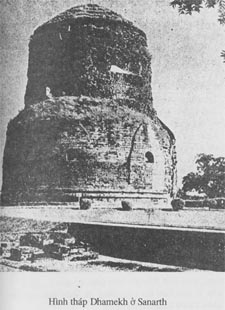
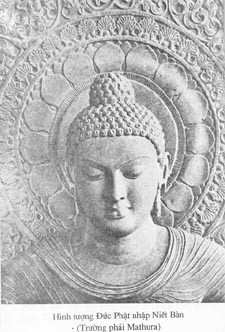
Among the remnants of remnants not destroyed by the army is the tower Dhamekh higher than the ground 150 feet. The tower was built of hard durable materials, huge blocks of stone and shaped like pillars. The inscriptions on the tower face tell us that the Dhamekh pyramid was built in the 6th century BC by the Gupta dynasty. The term "Dhamekh" comes from the Sanskrit term "Dharmekh - Dhamma." The tower is not far from the west is a small tower built by King Asoka. King Asoka building, according to the description of Tran Huyen Trang, may be the place where the Buddha meditation sermon for the five brothers Kieu Tran Nhu. A little further north, is a very lithograph shaped lion head. This lion pillar is now on display at the nearby archaeological museum. At this tower, we see remains of large stone blocks of the main hall and large columns of a main gate leading to the main entrance of the tower. In addition, we see many fragments of Buddha statues and Bodhisattvas carved sculptures of many different dynasties. A beautiful statue of Buddha carved with sand stone carved Buddha Zhuan Falun is a beautiful statue carved sculpture Gupta dynasty.
All sculptures of this era are carved in the eight historical events of the Buddha's life, such as the Buddha's birth, enlightenment, turning the wheel of dharma, entering into nirvana, performing miracles, etc. Significantly is a stone carvings engraved with the Four Noble Truths in the ancient Pali language.
Though devastated by time, Sarnath is still attracting visitors to India to remember the image of His compassion and his eternal resonance in the heart of the Buddha.
Fourth place:
Kusinagara
Kusinagara
K usinagara or Kusinara is the place where Shakyamuni Buddha recorded the death of his 80-year-old son under two palm trees. The site was later identified by archaeologists as Kasia in the Deoria district of Utta Pradesh.
Like other holy places related to the historical events of the Buddha's life, Kusinagara has become an important holy place for Buddhists to worship.
At that time, thousands of monasteries and stupas were built around this shrine. However, for unknown reasons, it may have been destroyed by the Islamic Army or by the time of fading marks that the holy site was destroyed. Phap Hien and Xuanzang, who came to worship this holy place, also uttered the grievances when looking at the ruins of Kusinagara.
Through the excavations to find the trace, people dig some pieces of debris of the Buddha, pillars spread. However, based on the signs of the remnants and the inscriptions, certainly here is the holy site of Buddha's Nirvana. The Great Tower of Nibbana, built by King Asoka, can no longer be found, and it may have been buried under the neo-Nirvana monastery built during the Gupta Dynasty.
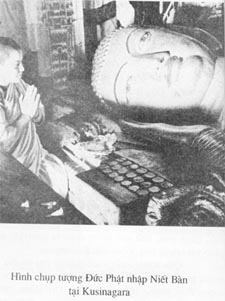
Among these relics, a statue of Buddha was found in the posture of nirvana. The statue was also crumbled and carved by the sculptor Carlleyle cleverly repaired. The Great Ramabhar Stupa was erected at the site of the Buddha's relic and the relics were divided into eight parts together for the eight largest kingdoms of the day.
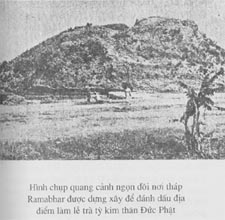
Archaeologists continue to excavate the site of Kusinagara, hoping to find more evidence to further clarify a sacred site that has received the Shakyamuni Buddha The Buddha
Fifth Sanctuary: Sravasti
S ravasti, the capital of the ancient kingdom of Kosala, was revered by Buddhists for its place more than 2540 years ago. The Buddha demonstrated the spirituality of the teachers of fire.
According to recorded records, the Buddha performed miracles on the body in water, below the body to fire, on the body to fire, under the body of water, or the sun the moon shines at the same time in the sky. , and many incarnations of the Buddha. These miracles have been the subject of many works of Indian art from ancient times to the present.
Even in the time of the Buddha, Sravasti was a flourishing Buddhist center. It was here that the head of the Classical Ancestors bought gold from the garden of the Crown Prince of Japan to build the monastery to the Buddha and the monks. The story of the gold rush to buy the land of Anathapritus has fiercely stirred up the aristocratic kings, kings, elders, and it is also the head of the absolute devotions of his Majesty, as well as the Indian art work later. Later, many pyramids, stupas scattered around this place made Sravasti more famous and prosperous.
Archaeologists believe that the Sahra-Maheth local Sravasti lies near the border of Gonda and Bahraich districts of Utta-Pradesh. Here they found some inscriptions related to the Jankens in Sravasti.
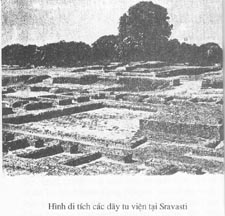
The name Saheth - Maheth is made up of two distinct regions. The largest, Maheth, 400 acres, was once a prosperous town. Saheth is only 32 acres wide, 0.25 miles southwest of the peninsula. The Maheth excavations have shown us that Maheth was a very wealthy city in the past. Saheth, although smaller, is more famous because the place where the Buddha stopped to teach and left many floors of the monastery, monastery, stupa; Most of the monks and tourists visit Saheth to visit.
The monuments display signs of the Mauryan era until the Buddhist years began to decline in 12th century AD India. Here one finds the oldest stupa built from the 3rd century BC, containing the relics of the Buddha and a statue of the Buddha in the first century AD Bala. This statue of Buddha is now displayed at the Indian Museum in Calcutta. Kumaradevi's wife, Govinda-Chandra's wife, was the last person to sponsor the construction of the restoration of the Jamboree in 1128-29.
Buddhism has now waned in India and the site of Sravasti, a famous place in the history of Indian Buddhism, was razed by the heathen of the Muslim army.
Sixth
Sankasya
Sankasya
M ot other sacred sites related to the life of the Buddha is Sankasya where Buddha perform miracles up heaven to earth 33 minutes instructive sermon His mother was Queen Maya and Devas. The Buddha taught the Abhidharma on the Brahma Heaven. This event occurred after the Buddha performed the miracle in Sravasti.
Sankasya, also known as Sankisa or Sanisa Basantapur, is in the Farrukhabad district of Utta Pradesh.This locality is known for its authenticity thanks to the inscription of King A-Day carved on an elephant statue marking this holy place.
Not only were Phra Hien and Huyen Trang visiting Sankasya shrine, but many other Chinese monks also visited the shrine - but the documents left by them did not have enough evidence. To better verify this place. The village now stands on a hill, 41 feet high and 1,500 square meters wide. It is 0.25 miles south of the tower that Devi ordered to build. Scattered around this hill are crumbling rubble and remnants of gates, crossings, rafters, etc. These ruins do not have enough data to determine the history of the Sankasya shrine. .
The elephant statue of King Asoka is the most important monument marking the place of Sankasya and excavations in the future hope to bring us more interesting about Sankasya.
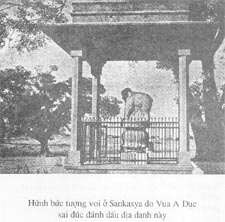
Seventh place:
R ajagriha, the capital of the mighty Magadha kingdom, can be said very well in the history of Buddhism for many reasons. Not only was Rajagriha the place where the Buddha had stopped many times in his life, but also in the place where Devadatta, the cousin of the Buddha, conspired many times to kill him. . Moreover, in this capital, in the Sattapanni Cave on Vaibhara Hill, the first congress was held here under the presidency of Umm Ba (Upali) and Ananda (Ananda). The main points of the doctrine and the precepts of Buddhism are all stated in this congress. Thus, Rajagriha became a famous and important place in the establishment and development of the Buddhist Congregation.
As a famous city in the past, Rajagriha is now a town in the Patna district of Bihar, surrounded by hilly mountains. Rajagriha is also known as Vaibhara, Vipula, Ratna, Chatha, Udayagiri and Sonagiri. At the foot of the hill to the north of the old town of Rajagriha is the kingdom of Ajatasatru, the son of King Bimbisara. Prince Udayin succeeded the throne and moved Kusumapura away, and the next king, Kalasola, moved the capital to Pataliputra, so Rajagriha gradually lost the important role of the king. it in the kingdom. However, despite many ups and downs in politics and religion, Rajagriha has always been mentioned in the history of Indian Buddhism and the history of other religions.
The relics of the ancient Rajagriha are scarce. Through ruins and broken inscriptions, archaeologists believe that the shrine was once the home of many different religions. Even the Sattapanni Cave, where the First Buddhist Congress was held, was also blurred. According to scriptures and records, the Sattapanni cave, on the north side of Baibhara hill, and the Stein scholar, reasoned that the rock was located in the north on a very large piece of land with many small caves. A remarkable architecture, Jarasandha Ki Baithak, on the hillside of Vaibhara in the East, has uneven, large and small cellars, described as the retreat of Mahakasyapa, the presiding They were the residence of Jainism monks for a time.
The once-retired Gridhrakutta, near the city of Rajagriha, and some historical data as well as local residents reside in the area, the Sonbhandar cave east of Vaibhara Hill. The gold mine has not been cleared here.
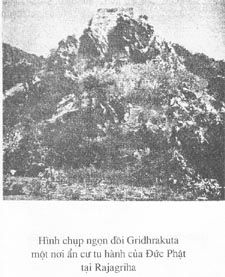
Rajagriha, now a tourist attraction both inside and outside the country, is not only a popular place in Buddhist history, but also a hot springs site for healing and nursing.
Eighth:
Vaisali (Vishnu)
Vaisali (Vishnu)
T follower of Buddhism flourishing, Vaisali, the city of Lichchhavi mighty kingdom, the cradle of the culture of the Buddhist philosophy.
The Buddha had three times his hymn in this city. Here the Buddha received the bowl of honey donated by the monkeys and here is also the Buddha's territory declared 3 months he will enter the Nirvana. Moreover, the Vaisali is the place where the Buddhist Congress was convened for more than 100 years after the death of the Buddha. For the Jains, the Vaisali is also a holy place because Mahavira, the 14th generation of Jainism was born.
Vaisali is a city in the Muzaffarpur district of Bihar. During the reign of Gupta, the Vaisali was a thriving capital. Merchants, ships, ports of commerce. Shops, banks, offices, open all day and night.The rice, silk, etc. of the palace are flooded. The Vaisali, at that time, helped the Gupta dynasty stand firmly in the political arena until the Mauryan dynasty, where the Vaisali remained an important capital.
Phap Hien and Huyen Trang came to worship this holy place. According to Xuanzang, the Vaisali is only about 10, 12 square miles wide. Around the Vaisali there are innumerable towers, stone stele that do not know which man to say. But the time has ruthlessly wiped out the ruins and left only in Kolhua, two miles northwest of the city of Raja Bisal Ka Garh, a stone lion statue carved higher than 22 feet.
This stone lion looks like the stone pillars King Asoka sent to build but there is no signature or inscriptions for us to identify this pillar of the era of King Asoka. Near this pillar, to the south, there is a small lake, which is said to be the puddles that 2,000 years ago, monkeys have dug for water to drink the Buddha every day. Thus, this lake is called Rama-Kund or Markata-Hraka, which means "lake of the monkey." To the northwest, a ground of a shrine remains. This ancient temple was built by Asoka, and a statue of King Asoka was left in the pristine land of this prosperous and important time.
Time has faded and how many dead monuments and stupas, but the Buddhist holy sites are always the homeland of the people of the Buddha.
Important Places
T rong period Buddhism development and prosperity, in addition to the holy places related to the life of the Buddha, the important landmarks in the history of Buddhism in India like Sanchi, Nalanda also contributed to the deposit the dharma of the Dharma.
Monasteries in Gandhara, Taxila, Purushapura, West Pakistan, East Pakistan are all Buddhist centers.In addition to the unique aesthetics and architecture, these cultural centers of Buddhism are also the place where the origin of Buddhist masterpieces created the debates of philosophical literature are very exciting heroic excitement; Typical of Sanchi Buddhist centers, Nalanda, Ajanta and Ellora.
These places, also according to the law of impermanence that things change. Those remains are not enough to bring light into the golden past of these places. However, despite the fading of history, these important landmarks are still attractive enough to scholars, monks and nuns, followers of Buddhist monuments to remote areas to find again. a little bit of the richness of Indian Buddhism.
Sanchi
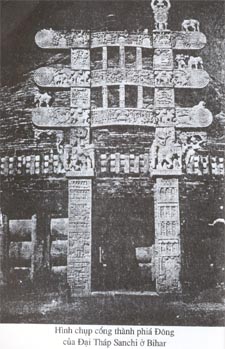
S anchi is one of the most important landmarks of Indian Buddhist history. This place is not related to the life of the Buddha, but Sanchi is a very famous and prosperous Buddhist cultural center of Buddhism. According to legend and legendary Buddhist literature, Sanchi is a place of convergence of Indian fine arts, and it can be said that Sanchi is the finest architectural and sculptural work of India.
As the Sri Lankan king Asoka married his daughter a rich and lowly merchant was born a Prince named Mahinda. Prince Mahinda is a devout Buddhist and is loved by the King of Cha and Ma Mau.When Asoka was old, he wanted to send his sons and daughters through Sri Lanka, and the Sanchi Tower was built on the hill of Vidisa, when Prince Mahinda stopped resting on it. Road through Sri Lanka Buddhism.
Whether the material is true or not, the inscriptions, towers in Sanchi are bearing the seal of King Asoka, and it is believed that only King Asoka, the great benefactor, could afford to develop. Sanchi is a center of Buddhist culture prosperous and famous.
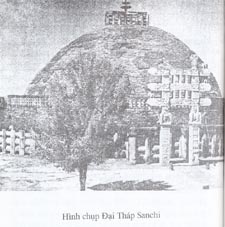
Most of the towers in Sanchi are located on a high hill surrounded by a solid stone wall in the 10th century AD. These stelae are stamped from the 3rd century BC to the 12th century AD, from the Sanchi tower 50 feet high and the diameter of the Sanchi tower is 100 feet is the largest To the smallest pyramid of no more than one set, these small towers themselves make the hill a mighty stand strong.
The Great Stupa at Sanchi was built by Ashoka stone tiles, consisting of tall, solid stone pillars around the tower, and the main gate of the tower was crushed and crushed. Unique as the picture next to. Two pillars stood in touch with original Sanskrit texts. Two elephants supported the crossbar, there were places where the elephant, lion, literature, etc. represented the philosophical activities of the Dharma, the Indian Buddhist statue. The four towers have 4 gates, one large and three small. The small gate also carved and carved like a large gate with elephants, lions, men and women, horses, etc., depicts the gods of the life and teachings of the Buddha. The theories of the life of the Buddha, depicted in the Jataka, are engraved by Indian artisans on the gates and walls of the tower. Noteworthy is the statue of King Asoka carved on a gate, depicting scenes of King As A visit to worship the Bodhi tree in Bodhgaya. The image of King Asoka in Sanchi is the only image carved by the artists and subjects of the King engraved in memory of the gratitude of a great Buddhist master has full support for the propaganda. Dhamma.
These works reflect the devotion of the devotees of the local Sanchi people. They cost a lot and take many years to complete these beautiful architectural works. Each carving, each stroke, each line drawing in it the soul of love art, devotion, dedication and gratitude of the artist. These artisans do not work because of their fame and status, so their minds are relaxed, peacefully oriented to the soul for the arts. Thus, the works come to life with a fierce intensity to make viewers feel deeply moved as living in the light of the Golden League of Fun.
Of these towers, three are the most noted.
The first is the third tower, located northeast of the Great Tower, although the smallest is the model tower. In the room of the relics, General Cunningham discovered the relics of Sariputta and Dhyana, the two great disciples of the Buddha. These two are very famous. Sariputta is the "first knowledge."His Holiness is the "First Spirit." The relics of two great Buddhist disciples brought to England by archaeologists, displayed in the London City Museum, and then brought back worship in Sanchi in this tower No. 3. In the past, this tower number 3 is often excavated excavation.
The second tower, located on the western slope. The tower has no relics, no main gate, but retains some of the artisan's old stuff to forget, and the materials used to help people know more than 2500 ago. year, the artisans have molded sculpture how. The sculptures in this tower seem more modern than the architecture of the Great Tower.
The last small tower near the foothills of the west is where the relics of Lord Ca lettuce. In addition to this special, the tower is also special with pillars, head columns, walls carved extremely unique images.
Many small towers scattered around the Great Tower were found. Among them, many broken pieces of statues, inscriptions, etc. In Sonari a few miles away Sanchi, many monuments are found. In Satdhara, three miles away, one finds Sariputra relics in two small stupas, like the relics found in the Sanchi tower. There are many towers in Bhojpur, Andheri, where the faint markings can not help us to identify the towers built in the Asoka period or after the first century AD.
Among the tower itself, the most significant is the Asoka stone pillar with four lion statues facing each other, near the main entrance to the Great Sanchi Tower in the south. At the top of the pillar, there is an inscription proclaiming the command "Prohibition to divide, to destroy the Sangha, shall be severely punished" by King Asoka. In addition, the temple number 17, No. 18 was built between the 7th and 12th centuries AD, with statues of Buddhas, pillars, walls and carvings contributing to the beautiful works. in Sanchi.
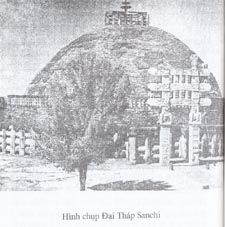
The towers of Sanchi have been preserved, carefully restored and handcrafted by sculptors and archaeologists. The most accomplished man in the excavation was John Marshall, former director general of the National Archaeological Institute of India. He repaired, repaired and restored the monuments and visitors to Sanchi can be imagined as returning to the golden past of the Dharma with the towering majestic horns of a sky.
Ajanta goes Ellora
H one significant landmarks Ajanta and Ellora anymore is located in Maharashtra. In a narrow valley is a beautiful cave Ajanta with the relics of temples and monasteries.
From the natural stone, the artisans have carved, carved into the Buddha statue, Bodhisattva or extremely fine arts. The walls, pillars, mantles are superbly carved, with the hallmarks of Buddhist art that last for 800 years and there is no monument in India that can be compared to the masterpieces. This.
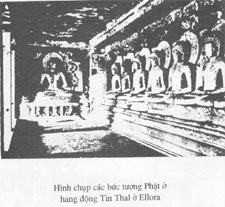
The caves in Ellora are unearthed and found on a vast rocky plateau. Unlike Ajanta, Ellora represents the artistic synthesis of three major religions in India. These are: Buddhism, Brahmanism, and Jainism.The famous temple of Brahmanical Kailasa is the best example of world art with its ceilings, artistic design corridors, living goddess paintings by carved sculptures, paintings. All these relics are carved out of the rocks, making the temple in the Ellora cave more famous.
The caves in Ajanta are marked by the last centuries of the pre-Christian era, and in chronological order, Ajanta has contributed to the development of art, fine art, sculpture, and the building of miracles. Cave 9 and No. 10 are the oldest caves deep in the heart of the rocks in Ajanta. From these rocky ranges all the way to the 19th and 26th caves, a myriad of images, Buddha carvings, have been found in many different ways. Buddha statues, pictures depicting the Buddha sitting in meditation posture or standing in the shape of Zhuan Falun. Artisans of ancient times devoted their artistic heart and devotion to the Blessed One through their drawing and engraving.
The 16th, 17th, and 02 caves are the most important caves. The 16th and 17th caves were built in 500 AD and the 1st and 2nd caves were built a century later. These caves are beautiful thanks to the pillar-engraved stone and the coolness of the large corridors. But the magnificence of Ajanta is due to the enormous amount of paintings. Famous artists have painted the Buddha's life according to the Dhammapada and added pictures of the Buddha, the Bodhisattvas and the Brahma.
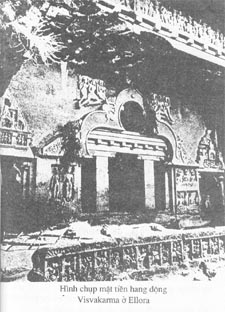
Among the bare caves in Ellora, 12 caves along the south are laid bare in Buddhist mythology, and are cave-like in Brahmin and Jain. The monuments in Ajanta and Ellora often have the footsteps of scientists, archaeologists and artisans to admire and learn more than tourists, as the cave is located deep and higher in the mountains. However, Ajanta and Ellora are still listed on the list of famous landscapes in India.
Nalanda
TNalanda Hospital occupies an extremely important position in the history of modern Buddhism.Traditionally, the Buddha visited the Nalanda Monastery several times and the monastery's history may have been associated with the reign of King Asoka. However, excavations were not sufficient to prove the time of the monastery's construction, and evidence such as inscriptions, imprints, and some relics coincide with some of the monuments that Nalanda monastery flourished. and famous from the 5th century until the end of the 12th century AD. It was here that the famous Chinese rising monk, Tran Huyen Trang, came to stay several times. He recorded many data and diagrams of the various architectures of Nalanda Monastery, a monastic institute that is home to more than 10,000 monks and nuns practicing here every year for spiritual practice. and debate. Hsuan-Hsuan-Tsang also noted the donation of Harsha's support and the successive kings of the dynasty. I Tsing, a visiting Chinese monk, also visited Nalanda Monastery and noted the monks of Nalanda supported by more than 200 surrounding villages. assisted by many kings.
Nalanda was entered into the history of world Buddhism because here the masters Silabhadra, Santarakshita and Atisa Dipankara had a long time studying and contributing to the reputation of the Nalanda Institute.
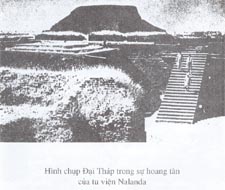
The ruins of Nalanda have led visitors to see the regret of a Buddhist monastery famous for a while, only a few relics of the shrines, towers and rooms. The remnants of the relics also tell us that in the past, the towers and shrines occupy the length from north to south, the rampant monks reside, stretching from the hillside east to west. of the big hills. Although Nalanda is now blighted, it still allows us to visualize the crowded, crowded scene of the birth of tens of thousands of monks several centuries ago.
Tower No. 3 is a massive structure located in the middle of the hillside southwest and surrounded by countless small towers. The first tower was just a small tower, but gradually grew large. The tower has now been enlarged up to seven times, each time enlarged and engraved sculpture aesthetic, more strange. The tower is still square in the structure of the first stupa, but by the time of the fifth rebuild, the carved artisans painted four more sides of the tower with large pieces engraved with Buddhist texts above. pen in the 6th century AD.
To the north of this tower is the monastery has been renovated several times. Here, visitors still find traces of many temples, small towers, etc. At a nearby museum, many relics, fragments of Buddha statues, Bodhisattvas are displayed. These relics were found during the excavations of Nalanda Monastery.
The inscriptions found in Nalanda are also few. Bronze, stone, brick and stamps, terra cotta pens were found. The inscriptions made of bricks engraved with the sutras or doctrines of the Twelvefold Causal and the mantras are inscribed carefully and displayed at the Archaeological Museum of India.
Nalanda is still famous for the support of many royal kings such as the Narasimhagupta, Kumaragupta, Vainyagupta and Vishnugupta kings of Gupta, Sarvavarman and Avantivarman dynasties of Maukhari dynasty, Bhaskaravarman of Kamarupa, Kanashj's Harshvardhana and many other generations of kings have been continuously donating to Nalanda Monastery for centuries. A stone inscription of King Yasovarman of Kanauj was also found, and a bronze inscription named Pala Kings, like King Dharmapala, King Devapala, King Balaputradeva of the Sailendra dynasty. In the lifetime of the Pala kings, Mahipala was the last to sponsor the renovation of Nalanda monastery with the contribution of the monk Vipulasrimitra.
The Theravada and Mahayana teachings were taught by the monks at Nalanda, but later the influence of the Buddhist tantra was spreading among the monks, mixing the mysteries of the Brahmanical tantra. Teachings make the Buddhist doctrine of the wrong change, not true. Later on, because of the divisive conflict in the Sangha, Islam took the opportunity to invade and destroy the famous Buddhist sites, and a true religion famous for the philosophy of the Buddha Shakyamuni. Nuns have faded over time, blurring the righteous mark in the Buddha's homeland.
Epilogue:
P singing is a major religion in Asia. Through many ups and downs in history, Buddhism has also been used by many other religions to mix misconceptions into righteousness.
However, the causes of the Four Noble Truths, the Twelvefold Causality, the Prajnaparamitta, the Absolute Nibbana are always standing and shining in the sky of religious scholarship, and the holy places are forever the source of the source. Prize of Buddhists around the world. END=NAM MO SAKYAMUNI BUDDHA.( 3 TIMES ).VIETNAMESE TRANSLATE ENGLISH BY=THICH CHAN TANH.THE MIND OF ENLIGHTENMENT.VIETNAMESE BUDDHIST NUN=GOLDEN LOTUS MONASTERY=AUSTRALIA,SYDNEY.11/10/2018.

No comments:
Post a Comment