Jade relics are parts of the relics of Buddhist monks after cremation. These are small size particles, rounded or otherwise. Some small seeds may look like pearls or crystals, with different colors.
It is a treasure of Buddhism all over the world. It should be noted that all things that belong to the Buddha and the saints such as the bowl, hair, nails ... are also considered relics.
Folk are often rumors of the relics of the relics of the damage and confusion. For example, a 64-year-old practitioner meditated for 49 days and died at Vinh Binh Pagoda in Kim Son district, Ninh Binh Province. Also, the relics of the Buddha have miraculous powers such as luminescence, self-transfer or can be broken down into other pearls.
CAUSES FORMATING
There are now three main hypotheses on relics: spiritual power and the greatness of the higher relics of the relics; Due to the habit of vegetarianism, meditation and due to the condition (gravel).
The first is the hypothesis of the spiritual strength of the monks that turn into relics. In other words, it is the mental process that turns into matter. This is the explanation that is often seen a few thousand years ago, when human understanding is very limited. However, according to science, that is not true. If so, all the monks who have relics, and the higher the morality, the more relics, but we do not see that in practice.
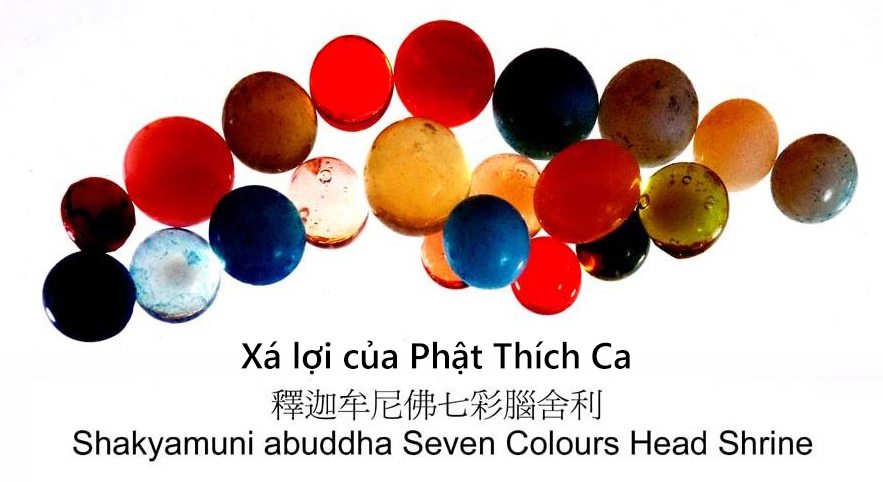
According to the vegetarian theory, higher elevates frequently use more fiber and minerals, so digestion and absorption are easy to produce phosphate and carbonate salts. These crystals of salt accumulate in the body and gradually turn into relics. Many people disagree with this hypothesis, claiming that many people are vegetarian but have no relics in cremation.
However, if the element of meditation is added, this hypothesis is partly true. Sitting meditation much (such as the rise) will increase the ability to form crystals of salt in the body. The vegetarian or ordinary Buddhist does not have that risk, as the meditation time is not much.
Many people disagree with the pathological theories (relics are pathological stones), the cremation of sick people do not see the relics, and the rise is usually healthy, less sick. However, it is only possible to recognize or disprove this theory when conducting cremation testing on many patients. I personally think that if this is, then this is only a secondary cause.
THE TRUTH ABOUT ERRORS
The truth about the relics has been revealed by the three Holden physicists, Phakey and Clement of Monash University, Victoria, Australia, who found that crystallization of cremation bones, other crystalline crystals Each one will be formed if the cremation process is at the right temperature. In the June 1995 issue of the International Journal of Forensic Science, they reported using a scanning electron microscope to track the femal crystallization of people aged 1 to 97 years in the 200 - 1,600 ° C for 2, 12, 18 and 24 hours.
As a result, the crystallization of minerals in bone (which accounts for two thirds of bone mass) begins at a temperature of 600 ° C in various shapes: spherical, hexagonal, small, and irregularly shaped. . These small particles can crystallize into larger masses in the range of 1,000 - 1,400 ° C. And when the temperature reaches 1,600 ° C, the crystals begin to disintegrate. Thus, if the cremation conditions are appropriate, relics may appear due to the crystallization of minerals that are abundant in human bones.
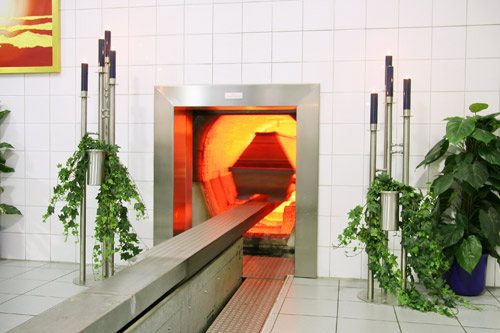
So why ordinary people have no relics? We can answer by asking the opposite: So why do not all the monks have relics? The answer is that if the initial cremation temperature is about 600 ° C, then increased to 1,000 ° C, it is likely that crystals will appear, as long as the temperature is not too high. Cremation furnaces often have a temperature limit of around 1200 ° C, which is quite suitable for crystallization.
The relics can be a combination of all three hypotheses: vegetarianism and meditation; gravel disease; and crystallization of bones when appropriate cremation conditions. In my opinion, this is the most persuasive hypothesis that we have today. However, it is important to emphasize the "chance" of this combination: It is a random process in which the appearance depends on many factors that are sometimes uncontrollable. Perhaps so, not all monks have relics.END=NAM MO SHAKYAMUNI BUDDHA.( 3 TIMES ).VIETNAMESE TRANSLATE ENGLISH BY=THICH CHAN TANH.VIETNAMESE BUDDHIST NUN=GOLDEN LOTUS MONASTERY=AUSTRALIA,SYDNEY.25/9/2017.

No comments:
Post a Comment