When Buddhism first came into being, the Buddha was the only one who did not distinguish Hinayana and Mahayana. After he entered nirvana, because the object of sermon on the thought of Buddhism is not the same, the content and scene of the sermon also differ. From that came the concept of Mahayana Buddhism and Hinayana.
For people with low levels, poor awareness, the Buddha only teach the doctrine of human beings, teaching the five worldly, ten good things called human nature. For the world's boring people, the Buddha taught the method of escape from birth and death, called the Theravada bar. As for those with high levels of awareness, there is the humanity of the Buddha, then the Buddha preached the teachings Mahayana Bodhisattvas.
In fact, the Dharma divides into five categories: the redundant (ie, the Buddhism of the human world), the divine (Buddhist for the heavens), the vanity bar, the left anal and the bodhisattva.
- According to the five precepts and 10 good things in the high (high) will be born in the heavenly realms. Here according to 5 world 10 good things in the middle (middle) will be born human. The combination of the two are collectively called the Way of Man and the Beast.
- The bar text by listening to Dharma practice that is freed from samsara. Indoctrines do not hear the Dharma, no teacher that enlightened themselves, freed from samsara. The combination of the two is collectively known as the path of liberation of the second.
- The bodhisattva path is a path of liberation, not separating the path of man and heaven, so the path of the Mahayana Bodhisattva is the path of both paths of liberation and the path of man and species. God.
According to the five precepts and 10 goods in the path of man and the species of the heavens are still only ordinary people. Cultivators, the proof of freedom is no longer reincarnated samsara, called the holy. Because of the only concern for myself that praying for the Buddha's Dharma to be liberated, there is no intention to return to saving sentient beings, so called Hinayana.
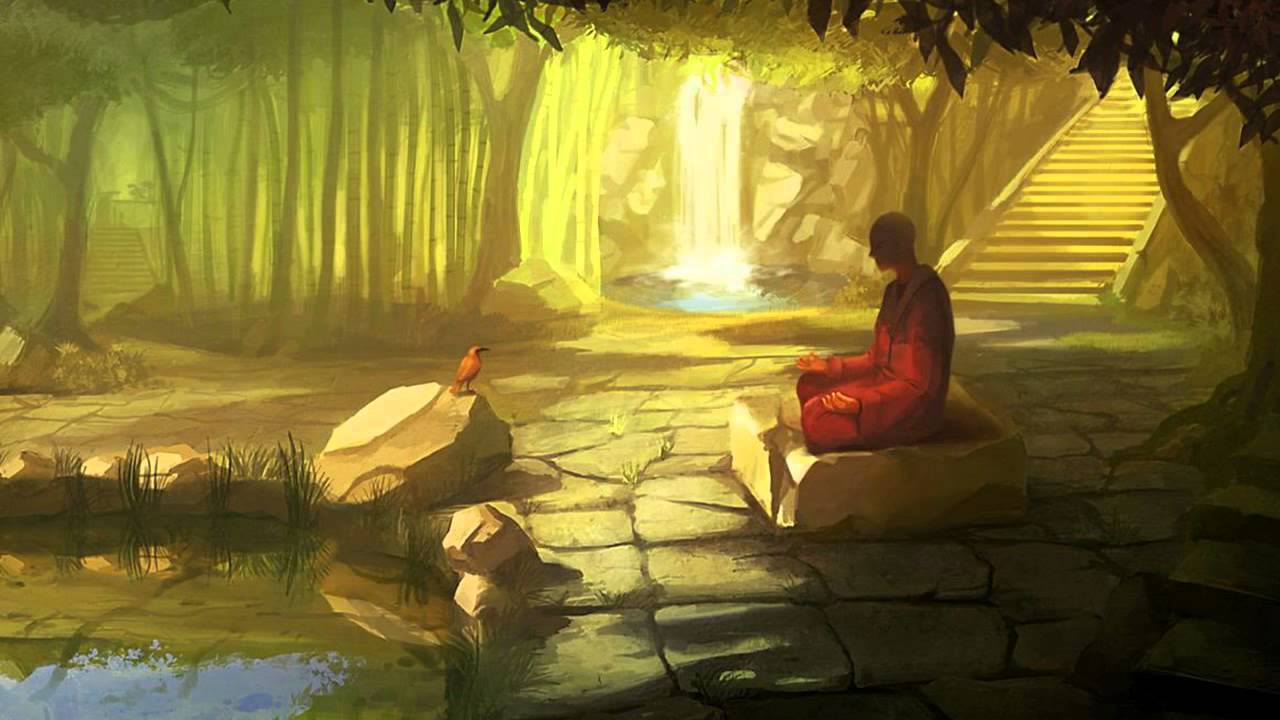
Tu following the Bodhisattva path called Mahayana, because the Bodhisattva, on the supreme Buddhist path to liberation from birth and death, under vow to escape the immeasurable sentient beings to escape the sea of birth and death.
In terms of geographic distribution, it is commonly referred to as Sanskrit-based, Chinese-centric Buddhism, which includes countries such as Japan, Korea, Mongolia, Tibet, Vietnam. Mahayana Buddhism. Male Buddhists use Pali canonical texts, which are centered on Sri Lanka and include countries such as Burma, Thailand, Laos and Cambodia, often called Theravada Buddhism.
In fact, it is only the distinction of the Theravada tradition, and the Theravada Buddhism does not recognize that distinction. This is because, in the Vinaya of the Vinaya, vol. 45 and jinja A volleys 28 pages 69 are registered from Mahayana to refer to the followers of the Noble Eightfold Path and Journey to Action 26 pages 204 using the word master only for the four practitioners of the Four Dharma.
The highest increase A function book 19 also states six degrees of Mahayana. In Theravada Buddhism, in the field of reasoning, there is more to the development of Theravada Buddhism, but in practice, the Mahayana tradition is not all Mahayana, nor is Theravada Buddhism all according to the Hinayana.
Chinese Buddhism, in addition to eating the boys' school, is no better than traditional Theravada Buddhism. Chinese Buddhism was influenced by the ideology of Tao Trang and the noble way of talking (the mysticism of the talks) so it was also treated as a mystery by the ruling class Wei Qun.
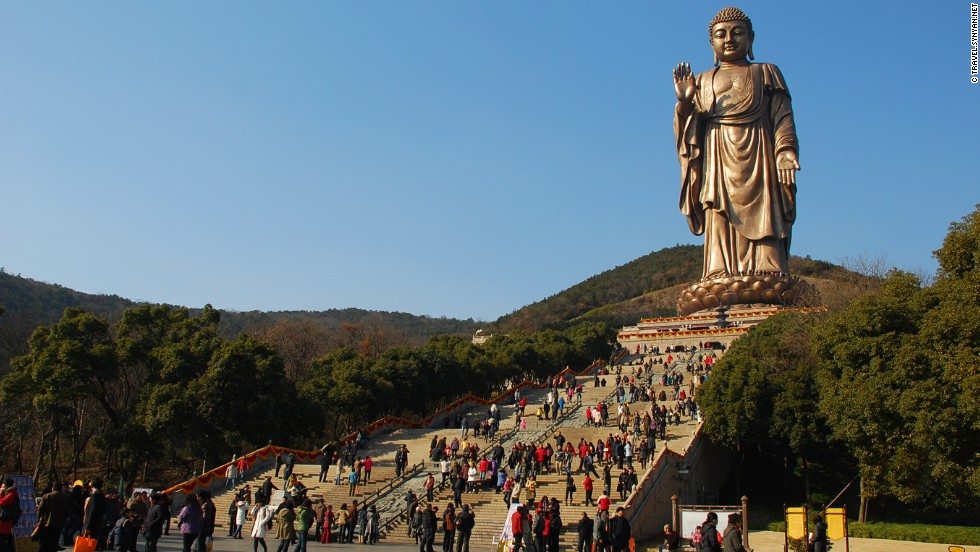
The theories of Chinese schools such as Tiantai and Huayang are influenced by this class. Therefore, there is a recent Japanese scholar, Mr. Thôn Thái Hiền commenting on Chinese Buddhism as a learned Buddhist, not a practical Buddhist. Such criticism, is not without reason.
In fact, the ideological structure of Hoa Nghiem Tong and Thien Thai Tong derives from the realization of the Chinese monks, not the full ground of the Buddhist thought of Indian Buddhism.
Therefore, it can be said that the true spirit of Mahayana Buddhism, so far not popular with the Chinese folk, but what is the place of convergence of Chinese folk beliefs! So someone says, Chinese Buddhism on the idea of Mahayana, on behavior is Hinayana. END=NAM MO SHAKYAMUNI BUDDHA.( 3 TIMES ).VIETNAMESE TRANSLATE ENGLISH BY=THICH CHAN TANH.THE MIND OF ENLIGHTENMENT.VIETNAMESE BUDDHIST NUN=GOLDEN LOTUS MONASTERY=AUSTRALIA,SYDNEY.25/9/2017.

No comments:
Post a Comment