Buddha robe, the Buddha's bowl.
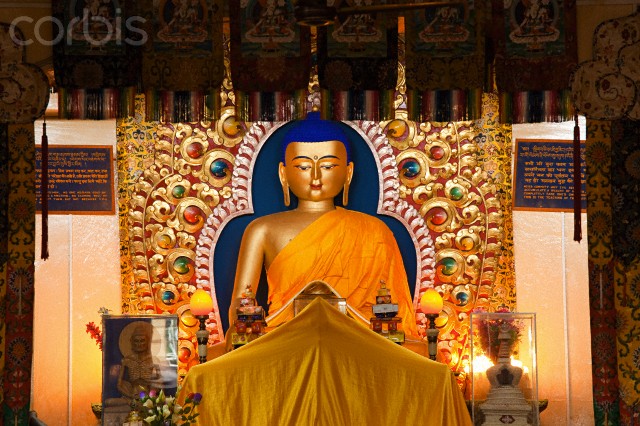
Since the Buddha's passing away, in order to commemorate and make offerings to him, his disciples often worship, pray and offer the relics and relics of his relics.
The relics of the Buddha are the sacred relics of His existence in the human world, the source of blessedness for the practice of Buddhists, and the message of the impermanence of conditioned things. , whether it is the body of an enlightened being.
Normally, the relics of the Buddha are of three types: the amnesty-benefit (the remaining remains after the tea ceremony of the Buddha, such as bones, teeth, hair ...) Items used by the Buddha in the world such as y, bowl, accumulator, coordinates ...), and legal-benefits are the scriptures or laws and laws that he taught. In Buddhism, the Buddha and the Buddha's bowl are respected because they are not only regarded as amulets associated with the life of Sakyamuni Buddha but also the lineages of the Buddhas in many. life.
According to the excerpts of the Buddha's Biography and the Sutras, after surpassing his family, Prince Siddhartha thought that the costumes of silk in Bāla were not suitable. to those who traveled everywhere to seek the truth and so he changed it to receive a light suit from a hunter who was a reincarnation of a Brahma. [1] This costume is considered to be the beginning of the tradition of pāṃukukla or healing (a kind of yarn sewn from torn cloth collected from garbage or cleaned cemetery) in the Sangha. Negotiating wisdom explained that, in Indian society in the ancient time, white libido for pleasurable pleasures should be worn in many attire, and there are ascetic practitioners practicing asceticism, the disciples of the Buddha according to His mirror shifts away from these two extremes, living in the age of sexuality, self-sufficient, dressed enough to cover his body.
The most original of the Tripitaka records that in the past time in Calvary there were ten brothers who were ordained, practiced and attained bodhisattva. Before they passed away, these Bhikshi handed over their healing tablets to their mother and said that in the future life there was Shakyamuni, the son of King Sri Soudhothana who attained enlightenment. If you give these clothes to Him, you will be blessed immeasurably. The mother of the Bikkhu should keep these robes carefully. Before she died, she handed them over to her daughter to keep. When the girl began to grow old, she brought them to hang on the tree and prayed for the goddess of protection to hand over to the son of King Sri Soudhothana. At the time, Sakyamuni took care of this and waited until he was ordained, becoming a hunter to change the costume for Prince Siddhartha. Upon returning to Heavenly Thirty Three, Thich built a royal temple to worship the prince and this tower was called the Buddhist monastery. [3] The prince he had exchanged for the hunter was the costume worn by the prince during his ascetic practice. According to the Lalitavistara, over a period of six years of ascetic, this sheet of prince was torn and he came to the cemetery picked up the old cloth used to cover the corpse of a maid. This girl died in the house near the head of the village. The prince washed all these pieces of cloth and then sewed a new suit for himself at a tree that was later called Pāṃśukūlasīvana. [4] [3] The prince he had exchanged for the hunter was the costume worn by the prince during his ascetic practice. According to the Lalitavistara, over a period of six years of ascetic, this sheet of prince was torn and he came to the cemetery picked up the old cloth used to cover the corpse of a maid. This girl died in the house near the head of the village. The prince washed all these pieces of cloth and then sewed a new suit for himself at a tree that was later called Pāṃśukūlasīvana. [4] [3] The prince he had exchanged for the hunter was the costume worn by the prince during his ascetic practice. According to the Lalitavistara, over a period of six years of ascetic, this sheet of prince was torn and he came to the cemetery picked up the old cloth used to cover the corpse of a maid. This girl died in the house near the head of the village. The prince washed all these pieces of cloth and then sewed a new suit for himself at a tree that was later called Pāṃśukūlasīvana. [4]
During the journey after the date of enlightenment, the Buddha was many homeowners donated rare silk, but he gave back his disciple discretion to use. The story is that once doctor Ky-she was offered a gift of precious cloth, not water, worth the price of ten thousand dollars as his remuneration. The doctor presented the cloth to the Buddha. The Buddha gave the cloth back to the monk A-nan and the author cut the cloth for the Buddha, La-la la and other bhikkhus. The Tibetan Journal reported that the Kieu Dam Diary used silk we woven into a robe and offered it to the Buddha. When rejected by the Buddha, the model was unhappy and said that she had raised the Blessed One in her childhood and now she has woven this robe for the sole purpose of offering the Buddha . The Buddha told her she should bring him to the monks because the monk said to increase the field of blessing, offerings to monks are also offerings to the Buddha. Then the sample was in the midst of the Sangha and he donated it to the author of Di-Lac. [5] In addition to the Di divine offering to the Buddha, the Buddhist scriptures also record the story of the Ca-lettuce doctor changed his soft monk to receive the medicine of the Buddha. Venerable monks who practice the sun but still not found a suitable medicine. One time the Buddha visited at the time under the tree, Venerable monk folded his medicine and put the Buddha sitting on the doctor. When listening to the Buddha praising the soft yarn, Venerable heart sincerely asked to be offered his plate for the Buddha and look forward to life preserves the medicine that the Buddha used. The Buddha knew that he was in need of chakras to practice the virtue of his promise. [6] After receiving him, the author used it until the end of his life.
Pāli and Sanskrit Buddhist texts do not seem to talk much about the medicine that Buddha used during his last years of life and when he passed away. The Book of the Five Noble Truths tells the story of the Sangha of the Buddha given by the heavenly king to the lawyer Dao Tuyen as follows. Before entering the three-month kill, the Buddha told him to rendezvous mass at the colon. When the congregation was assembled, the Buddha said that after he had left the monastery and changed his clothes for a hunter, he was promoted by the god of a tree to the Sangha of Lord Ca-lettuce. the words of Ca-lettuce. After the Buddha's enlightenment, he preserved and carefully preserved this sheet for fifty years. [7] According to the work of the Great West Records of Xuanzang, when news of the Buddha's passing, Ma-da, the goddess of heaven, came to Kåñëa to see the last of her body, the vajrayana, the bowl and the rod of the Buddha. [8] According to Hsuan - Tsang, when he came to Elaa in northwestern India, he saw the Buddha 's relics and the Sangha. [9] According to the Department of History, after the cremation at the Sentinel, amnesty-benefit of the Buddha was sent to the eight countries to build the tower; His other personal belongings were taken to various places such as the bowl and the staff in Vajirā, the meditator in Kusaghara, the waist in Pāṭaliputra, the bath in Campā, the Pharisee in heaven. ] However, this work does not say why the Buddha's relics are brought to these places and how to worship and preserve them. [8] According to Xuanzang, when he came to Elaa in Northwest India, he saw the Buddha's relics and monks. [9] According to the Department of History, after the cremation at the Sentinel, amnesty-benefit of the Buddha was sent to the eight countries to build the tower; His other personal belongings were taken to various places such as the bowl and the staff in Vajirā, the meditator in Kusaghara, the waist in Pāṭaliputra, the bath in Campā, the Pharisee in heaven. ] However, this work does not say why the Buddha's relics are brought to these places and how to worship and preserve them. [8] According to Xuanzang, when he came to Elaa in Northwest India, he saw the Buddha's relics and monks. [9] According to the Department of History, after the cremation at the Sentinel, amnesty-benefit of the Buddha was sent to the eight countries to build the tower; His other personal belongings were taken to various places such as the bowl and the staff in Vajirā, the meditator in Kusaghara, the waist in Pāṭaliputra, the bath in Campā, the Pharisee in heaven. ] However, this work does not say why the Buddha's relics are brought to these places and how to worship and preserve them. His other personal belongings were taken to various places such as the bowl and the staff in Vajirā, the meditator in Kusaghara, the waist in Pāṭaliputra, the bath in Campā, the Pharisee in heaven. ] However, this work does not say why the Buddha's relics are brought to these places and how to worship and preserve them. His other personal belongings were taken to various places such as the bowl and the staff in Vajirā, the meditator in Kusaghara, the waist in Pāṭaliputra, the bath in Campā, the Pharisee in heaven. ] However, this work does not say why the Buddha's relics are brought to these places and how to worship and preserve them.
Along with him, the bowl of the Buddha is also considered as the relics of the Buddha and the lineage of the Buddha. According to the Buddhist records of both the Southern and the Northern traditions, after the enlightenment under the Bodhi tree, the Buddha took his first meal in the eighth week by two Pharisees (Tapussa) and Three - Bhallika worship. When the two merchants give food, the Buddha thought that the Buddhas in three generations use the bowl to receive food, now we should follow this tradition. At that time, there were four goddesses who knew each other's minds, each carrying a bowl of stone and offering it to the Buddha. Because of these royal princes, the Buddha received all four bowls and he used the power of the four bowls to become a bowl.
Late 4th century AD, when Phap Hien visited Phattha-sa-la (in the area of Pradala), he had the opportunity to contemplate and worship the alms bowl above the Buddha in a monastery. in which. According to Phap Hien, when King Nguyet Dan conquered this country, he wanted to bring bowls to his country to worship, but in all the different ways, even with the help of eight elephants, he could not bring the bowl let's go Thought that the coast has not come, the king built stupas with an old lam to worship. Daily, before noon and at night, monks and laypeople are allowed to worship, offering bowls. The strange thing is that when the poor donated some wreaths, flowers bloomed full of bowls, while the rich people put hundreds of flowers in bowls, bowls are not always filled. More than two centuries after Hsuan - Tsang came to this place, The bowl is no longer available and only the altar of the bowl. Xuanzang also said that the bowl had moved to many countries and at that time the bowl was in Persia. [13]
When he arrived in Ceylon, Fa-Hsien met an Indian monk and he said that the alms bowl of the Buddha was worshiped at Vaisali-and then every few hundred thousand years would move in sequence. to different countries such as Kuwait, Kei Tan, Sri Lanka, China ... and finally back to India. When returning to India, the bowl will be lifted to Heaven. Here, Di-Lac and gods are glad to welcome and make offerings for seven days. From the bow of the bowl will be brought back to Yan-edutainment and be brought down Long bow. By the time Di-chow is about to become a Buddha bowl will be divided into four old bowls at Mt. When Di-Chullian four nobles will carry four bowls of this bowl to Maitreya. Fa Enlightenment states that the Buddhas in their mortal life share the same tradition. [14]
The bowl of the Buddha is considered a treasure that always brings many blessings to the human, a symbol of the rise of the Dharma. When this bowl was worshiped and kept careful, then the Dhamma was strong. When the bowl is broken or about to disappear is also signaling the period of Dharma. According to the Buddha's death after the shroud, when the bowl moved to any country, where the disaster, the pestilence, the crop is swollen, the dhamma is showing, the benevolent king, all living in peace and peace. [15] Until the period of mishaps, when the bad omens such as disease, crop failure, natural disasters occur, human life shortened life, food becomes scarce, etc., then it is the same time the bowl is no longer stay in the human. [16] At the time the bowl was brought down the bow, The sun is falling, the moon is hidden, the sky becomes dark for seven days, seven nights. [17] Siddhartha has recounted a story that: In the past there was a Phoenician disciple called the Lotus Flower. This man, though he is fluent in astronomy and geography, is still mentally ill, confused. Salute the money, the Federation has donated to the four laymen, but during the offering he suddenly initiated a poisonous idea that later himself will destroy the Buddha. Due to the blessings on so many generations in the United States is physically serious. In the last life of the United States, the Royal family was born in the royal family and later became the King of Miracles-la-la-la. The king was a devout pagan should find ways to maltreat Buddhism and also he broke the bowl of the Buddha. Soon after breaking the bowl the king fell into the great hell. Because the bowl of the Buddha was destroyed by the King Mi-chi so the Dharma in that gradually gradually fallen. [18]
The bowl that the King of Mi-Chi broke was not the bowl of the four Uranus mentioned above, which is one of the bowl that Buddha used when he was in the world. The book of the French forest is said to have a bowl of earth by a mountain god offering to the Buddha after the day of enlightenment. During the thirty-eight years, Lord Buddha used this bowl very carefully. One time he was King of the Emperor of the city of Rajasthan to experience the life of a son. After that day, La Salle brought this bowl to the Dragon Lake to wash but unfortunately broke the bowl into five pieces. At that time, instead of blaming the La Salle, the Buddha mended the bowl and he predicted that in the future, after his death there would be monks who did not honor and receive the teachings, in the five hundred The first year of the Vinaya is divided into five sets, The Dhamma is divided into eighteen and when the Dharma dies, the Tipitaka is divided into five hundred. This bowl was later relieved by the Thich, the King, King, etc., worshiping, offering, and finally being given to the Buddha in the future. [19]
One of the important events related to the transmission of medicine and bowl of Buddha Shakyamuni for Maitreya in the future is that the author of the Great Ca-lettuce entered the body at Mount Tuc. The Pāli writings do not say anything about the event of the extermination of the author of the Great Ca-lettuce, in particular the Great-sir-sage and Amulet story have details in this regard as follows: Satisfied, the author decides to enter the mountain to enter the Great Tuan waited until Di-Shilling enlightenment will return the bowl of Shakyamuni. Before going up the mountain, Sun worshiped at Wang Xa to bid farewell to A-bar-king. At that time, the king was resting, so he went alone to Kesu. After awakening, King A-bar-so found the religious A-nan and asked him to pay homage to Great Ca-lettuce. When they both came to the mountain, according to the Great Ca-lettuce prayer, Mountains open and both of them are admired and bowed to the last great Ca-lettuce. [20] The North India is where Buddhists visit. According to Fa-Hsien, there are often Arhats in the mountains, with tigers, leopards and lions in the mountains. [21] The Great Wall of China records that the mountain is towering, hollows, hollows, trees, ramps, people later life, respect for religion Dai Ca-lettuce should call this mountain is Sun Tzu. Twenty years after the catechesis, the author of the Great Ca-lettuce knew that he was about to pass away, so he followed the Buddha's riches into this mountain and decided to give her money to Maitreya. [22] There are often hordes of La Han, in the mountains there are many tigers, leopards and lions. [21] The Great Wall of China records that the mountain is towering, hollows, hollows, trees, ramps, people later life, respect for religion Dai Ca-lettuce should call this mountain is Sun Tzu. Twenty years after the catechesis, the author of the Great Ca-lettuce knew that he was about to pass away, so he followed the Buddha's riches into this mountain and decided to give her money to Maitreya. [22] There are often hordes of La Han, in the mountains there are many tigers, leopards and lions. [21] The Great Wall of China records that the mountain is towering, hollows, hollows, trees, ramps, people later life, respect for religion Dai Ca-lettuce should call this mountain is Sun Tzu. Twenty years after the catechesis, the author of the Great Ca-lettuce knew that he was about to pass away, so he followed the Buddha's riches into this mountain and decided to give her money to Maitreya. [22]
The Dai Ca-lettuce sacrifice for Maitreya is detailed in the Buddhist doctrine of Maitreya Buddha. According to this sutra, when Maitreya had used the power to open Kesucian mountain, Pham Vuong used oil to massage the forehead and the body of the author of the Great Ca-lettuce. Devotees came out of Destruction, right shoulder, kneeling on the right knee, and offer the Sangha of Shakyamuni to Maitreya. At that time the congregation of Maitreya told him that why on this mountain today there is a small head like insects, wearing Sa-subjects, worship him like that. Maitreya taught his disciples not to initiate this contempt. This is the fake author Dai Ca-lettuce, the first step in the first of a thousand two hundred and fifty disciples close friend of the Buddha, is the monk, very diligent practice, beings are poor, dark in the sky, the people ... you should be a hand with glass ceremony ceremony. When listening to Di-lecture so, the whole congregation no longer wonder, all the worship worship of Great Ca-lettuce. [23]
According to the intellectual mind, human beings in the time of Maitreya has a large body and longevity is also much higher than human beings in the time of Shakyamuni should see the author Dai Ca-lettuce has a small body, The maitreya and all the congregation of Maitreya were amazed. At that time, Maitreya taught his disciples that though the body was small, the Great Ca-lettuce had achieved the triumphs, and they were the benefits, the great body did not accomplish how such a virtue At that time, the whole assembly is ashamed, humble. Maitreya taught that dharma teachings made many people attain sainthood. [24] It is noteworthy that although they were born during the time of Maitreya, their body was much larger than that of Shakyamuni, But the sheet that fake the great Ca-lettuce up still fit Maitreya. This is explained by the Taoist Zen master Soto in Japan: "The size of the human body is different from that of the Buddha. The human body can be measured and the body of the Buddha can not be measured. For this reason, Ca-lettuce's medicine is suitable for Sakyamuni Buddha, and Sakyamuni's medicine is also suitable for Maitreya Buddha. "[25]
When Zen was born in China, he was considered the sacred symbol of the dharma and the most important lineage in meditation. This tradition originated from an anecdote from the Buddha who gave the teachings of the doctrine to the great Ca-lettuce on Linh Son Society recorded in Ascension. [26] It has been reported that after sending the heart to HH, the Bodhidharma Bodhidharma also passed on meditation to meditate on the meditation and considered it as a treasure to prove the transmission of the word. a patriarch of Thien Truc for a Chinese discipleship. The Dalai Lama also prophesied that after he had passed away two hundred years, when he learned more, he practiced much less, saying the truth is much, but the reason is less, forensic medicine is not transmitted anymore. [27] Calendar security agents also reported that at the forensic meditation for second-hand Hue, The Dalai Lama suggested that when a King of the Most Holy Redeemer was ordained as the seventh, treachery was to symbolize the transmission of the Dharma. [28] Thus the transmission of medicine, the bowl in Buddhism, especially in Zen refers to the transmission of a teacher or a teacher for the disciple who is worthy and has obtained the law. We can better know this by the Buddha-momentum Bala-meditation for Lord Zhao or the faith of the Fa-dharma.
The Zen tradition also claims that forensic medicine has been passed down from the time of the dharma until the time of Hui Neng, a medallion that the Buddha handed down to the Great Ca-lettuce master, Assembly of Linh Son. According to the mystery of the Dhamma mentioned above, as well as in the Dharma Guard [29], when asked by Dharma practitioner Hai Hai about the transmission of forensic medicine, Mr. Hue replied that according to the Bodhi- ma, after he passed away forensic medicine will not be transmitted as before anymore. According to the God of the Society, in India, where there is a higher order of purity and purity, forensic medicine is not considered as seals. The passing of the medal to the certificate takes place in places where there are so many who seek fame, favor, or controversy and live in vulgarity, such as China. [30]
In addition to symbolizing the existence of the Buddha in the human world, the Buddha and his bowl are also a meaningful message to his disciples. In the activities of the Sangha, the practice of nurturing and observing the rules is one of the most important things for the congregation to be purified and to inherit the tradition of the Dharma of the Buddhas in many generations. The virtue of each monk is partly shaped by the uplifting way of life, through the receiving of life's goods to support the body and cover the body. Y and the bowl of the Buddha or of each of the monk is to distinguish the way of life of the secular, but also the aspiration, aspiration that the monk is directed to. People suffer too much suffering, disaster is because they are too passionate five. The image of a king, the most respectable,END=NAM MO SAKYAMUNI BUDDHA.( 3 TIMES ).VIETNAMESE TRANSLATE ENGLISH BY=THICH CHAN TANH.THE MIND OF ENLIGHTENMENT.VIETNAMESE BUDDHIST NUN=GOLDEN LOTUS MONASTERY=AUSTRALIA,SYDNEY.3/6/2018.

No comments:
Post a Comment