RECEIVE THAT YOU CAN NOT STAY
IN AND WITHIN YOURSELF
IN AND WITHIN YOURSELF
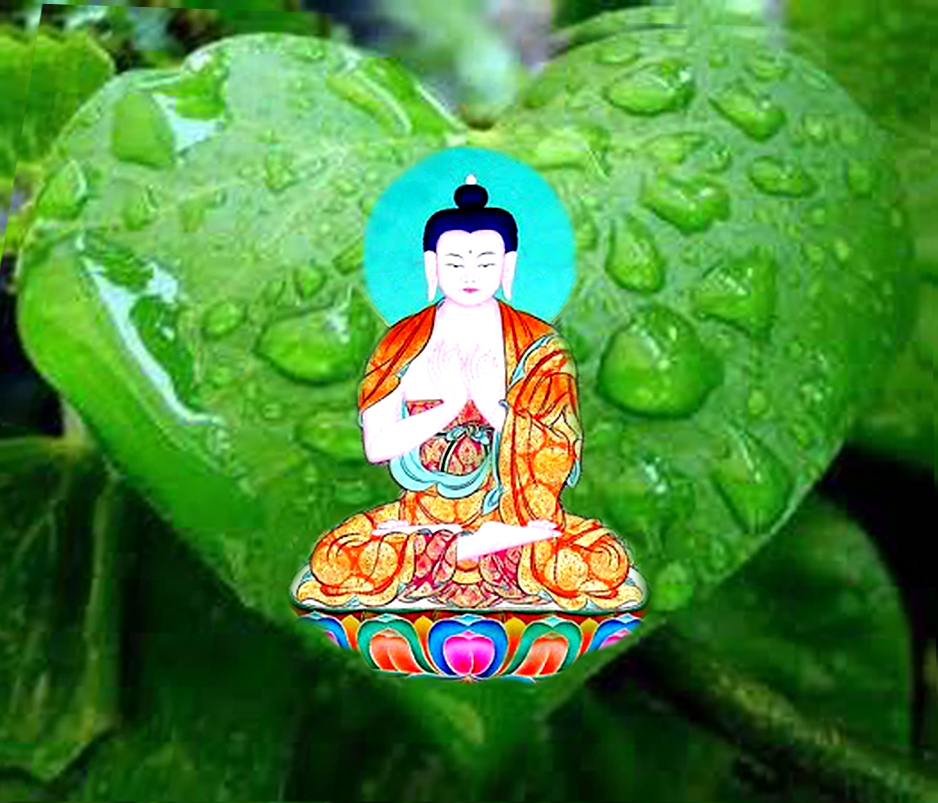
As the carriage is expressed by words in the depending on the set of the parts,so a conventional world , a sentient Being set on the aggregates of spirit and body - BUDDHA -
In Buddhism the term self has two meanings that must be distinguished to avoid confusion. A sense of self is 'individual' or 'sentient'. This is a human being , love and hatred, who performs good deeds and accumulates good or bad, who experiences the results of those deeds , rebirths in samsara , traitors cultivate the path of spirituality , and etc ...
Meaning other self happening in terms calculated selfishness , where it is connected to a position to imagine, too specific rigid a mistake of existence called "the existence inherent" or self-calculation . Ignorance grasping at a such exaggeration is actually the source of sabotage , the mother of all the attitude mistakes - perhaps we even might be called perverse evil . To contemplate "the self" dependence on the attached computer center management and physics , consciousness is exaggerated it into the existing inherent, although really those factors psychology and physics are contemplating not contain any object exaggerated so.
What is the true position of a being? Like a car in the depending on its parts, such as wheels, axles , and so on ... so a sentient being set up in a convention in the subject on the mind and body can . No individual is found either separated from the mind and body or in the mind and body .
IS ONLY LISTENING
This is the reason why "I" and all phenomena other is described in Buddhism as "just the name itself". The meaning of this is not "me" and all other phenomena are just words , because the meaning of these phenomena is related to the real objects.Rather, these objects do not exist in them and in themselves; The term 'just alphabet' eliminates the possibility that they are set from the main character of the object. Weneed this reminder because "I" and the phenomenon of non existence merely by the set of their title and thought . Completely contradictory.
For example , we say that the Dalai Lama is a monk, a human , and a Tibetan .Does it seem that we are talking about this with no relation to your body or mind but to something individual? Thinking constantly about this, it seems that there is a Dalai Lama separated from his body , and separate even his consciousness . Or self interest . If your name is Jane, for example , we To say, "Jane's body, Jane'smind ," seems to us to have a Jane who possesses her mind and body , and a body and mind that Jane owns.
How do we understand that this perception is wrong? Focus on the fact that nothing in the mind and body can be "self". Mind and body are empty an "ego" in essence .Rather, just as a car is set up in dependence on its parts and even not the content of its parts, so the "self" depends on the mind and body. can . An "I" does not depend on the bodyand the mind is non-existent , whereas an "ego" is understood to depend on the physical and mental existence consistent with the conventions of the world . Understand "me" this sort absolutely can not find in the mind and body , and even not the content of the mind and body, but exist only through the capacity of the name of it and thought of we, is useful when we try to see ourselves as we really are.
FOUR STEPS TO CONFIRM
There are four important steps for realizing that we are not present in the way we think we are . I will discuss these things first , and then in detail .
The first step is to identify the confused beliefs that must be challenged. We need to do this because when we perform the analysis of the search yourself in the mind and body , or separate from the mind or body , and we can not find it, we can conclude a mistake that we did not quite exist .
Because "I" exists in the consciousness we are established in it and of itself, so when we use the analysis tries to find it and could not find it, so apparently "me " absolutely does not exist , whereas it is only the" I " independent , the existence inherently of" I ", but it does not exist . Because there is a danger here of the error of denial and nihilism , so it is as essential as the first step First is to understand what is denied in anattå .
"I" appears in consciousness we like? It does not appear to exist through the power of thought ; Rather, it appears to exist in a concrete way . We need to pay attention and identify the pattern of this comprehension. It is the aim of us .
The second step is decisive , if the "I" exists in the way that it seems to be, it must be either with mind and body or separate from mind and body . Once admit that no other possibility, in two steps remaining we analyze to see either "I" and complex body / mind can be either an entity to be set inherently or those entities are set differential inherently.
As we discuss in the next sections , through meditation we gradually come to understand that there are delusions with the "I" embodied in these. At that point, we can readily realize that a "me" exists try useful not be found . This is the cognitive realization of selflessness . Then, when we have to realize that the "I" does not exist It is easy to realize that what is "mine" does not exist inherently ( non-self ).
FIRST STEP: DETERMINATION OF OBJECTIVES
Normally despite what appears in the minds of us , it seems to exist from its own side, an ideological independence . When we pay attention to an object - whether it is the us , one other person, body , mind , or something material - we accept it appeared like this is conditional ultimatum , really, really. This can be seen clearly at times of stressFor example, when someone criticizes something that we did not do: "You spoil it like that - and - like that." We suddenly thought very strongly, "I did not do it. "And we can even scream at the slanderer .
"I" appear like in mind we at that time? This "me" that we are proud of and love somuch seems to exist like? How we perceive comprehend it? By reflecting on these questions we have to achieve a sense of the way the mind perceived as a natural and innate "ego" as being from the side of it, inherently .
Let's take another example . When there something important that we should have done and we threatened to remember that we have forgotten, we may be angry within the consciousness of us : "Oh, what memories my my "When we are angry with their own thoughts, and" me " angry he and minds that we rage appeared separately together .
Things like that happen when we feel uncomfortable with the body we , or any part of the body , such as the hands of us . The "me" of anger seems to have its own manifestation, within itself and itself, separate from the body in which we are angry .On a case like that we can observe how the "I" seems like themselves it stands separate, like himself it conducted itself established by way of features its own. For consciousness so, "I" does not appear to be set in the subject on the mind and body .
Do you remember when we did a bad thing and we thought, "Did I really mess things up?" At that time, we identify with the "me" of the concrete entity , which is not the consciousness as well as the body but something that appears more strongly.
Or recall the time when we do something really great , or something really nice happened to us , and we feel very proud of him. This "me" is so valuable , so loving, so amusing , and so self- important that it is clearly specific and lively . At such times, the meaning of the "I" is especially clear .
Once we grasp an expression evidently so, we can make one feel mistake of "I" appears in the minds of us , and not to give way makes it strength Its small, we can verify, like from a corner, it exists in a particular way or not, but it appears . In the seventeenth century, Germany Dalai Lama Thursday spoke about this with the pure infinity :
Sometimes the "ego" would seem to exist in the scope of the body . Sometimes it seems to exist in the realm of consciousness . Sometimes it seems to exist in the sphere of feeling , distinction , or other factors. At the end of the manifold patterns of appearance , we shall conclude that an "I" exists from the very nature of itself, that it exists inherently (from self-nature ), that self-initiation is self -established , exists in a way that is not different from mind and body , which is also coordinated as water and correct. This is the first practice , the denial of the object in the view of selflessness . We should act with it until the profound experience arises .
The three remaining steps, which are discussed in three chapters follow , is towards a kind comprehend the "I" of this kind, which we believe is too much and is that which governed too much to the attitude of us , truth This is just a falsehood of imagination. "I" specifically this, totally non-existent . To act for the next steps , it is essential to recognize and abide with the strong feeling of self - esteem .END=NAM MO SAKYAMUNI BUDDHA.( 3 TIMES ).VIETNAMESE TRANSLATE ENGLISH BY=THICH CHAN TANH.THE MIND OF ENLIGHTENMENT.VIETNAMESE BUDDHIST NUN=GOLDEN LOTUS MONASTERY=AUSTRALIA,SYDNEY.28/6/2018.

No comments:
Post a Comment