THE BUDDHISM OF BUDDHISM IN INDIA .VIETNAMESE TRANSLATE ENGLISH BY=THICH CHAN TANH.AUSTRALIA,SYDNEY.


Buddhism in India has 10 important relics, of which the above four relics are most concerned by Buddhists, due to their important meaning associated with Buddha's life, 6 relics The bottom is also very important, but the level of attention of the believers is somewhat less, because most do not study the history of the Buddha rather than the less important ones.
Summary of relics
1 / Lumbini Garden (藍 毗尼 Lumbini) is the place where Buddha was born 佛 誕生, the full moon day of the fourth lunar month called Buddha's Birthday là also means Buddha's birthday. Lumbini is now Nepal's Rupandehi district, about 36 km from the border with India.
2 / Bodhgaya (菩提道場Bodh Gaya), where Buddha attained enlightenment waterfront Nairanjana (尼連禪Niranjana). Now a city in Gaya district, Bihar state, India. This place is considered the most important relic, 96km from Bihar state's Patna capital, 52m high Dai Giac tower. Here is Vietnam Tu Quoc Tu pagoda, a Vietnamese temple built in 1987 by Thich Huyen Dieu, located 2km from Bo De Dao Trang.
3 / Deer Park (鹿苑 Sarnath) also known as Loc Da (鹿野 Mrigadava, garden deer) is the Buddha's sermon for the first time for 5 brothers Kieu Tran Nhu (憍 陈 如 Koṇḍañña), the so-called turning dharma. Deer Park is about 10 km from the ancient city of Varanasi (Ba La Nai 菠 羅奈). Varanasi was formerly the capital of Uttar Pradesh state, now the capital moves to Lucknow. Here is the Dharmarajika tower, one of the towers built by King Ashoka, and despite the foundation, the material of the tower was moved to Varanasi for use as a construction material in the 18th century. .
4 / Thi Na verse (拘 尸 那, Kushinagar) is the place where Buddha entered Nirvana between two saola (sa la song tho 沙羅 雙樹). The Thi Na verse is the capital of the Malla state, a small and poor town compared to the flourishing countries of the time, but the Buddha chose this place as a place of destruction for reasons related to his predecessor. In the old days, The Poetry of Na was the capital of Zhuan Falun 轉輪 聖王 named Thien Kien 善 見, one of the precursors of Buddha, which was also a prosperous capital. And it was here that he discharged himself seven times. Today Kushinagar is a small town of about 18,000 people in Kushinagar district, Uttar Pradesh state.
5 / Ca Ca La Ve (迦 毘羅 衛 Kapilavatthu) located close to the Nepal - India border, this country is about 320 km 2 wide and is home to Prince Tu Dat Da during the first 19 years of Buddha's life. the court of the king's father, Sanskrit (淨 飯 Suddhodana). Xuanzang's Great Great West Book of Books states, "This country has a circumference of more than 4,000 miles. In which there are more than 10 cities are abandoned and devastated. The capital is also buried and ruined by land. The reason for this situation is that even during the time of the Buddha, Ca Bhikkhu La Ve was destroyed, the Sakyamuni family was massacred by the prince of King Luu Ly (毘 琉璃 Virudhaka) the second son of the Persian king, his Prince Tu Da (祇 陀 Jeta).
6 / The City of Xa Xa (王舍城 Rajagaha), the capital of the Ma Kiet Da country, is the place where Siddhartha learned from the monk when he was ordained, and also the Buddha's first sermon under the promise of King Qin Ba Sa La (頻 婆娑 羅, sa. Bimbisāra ) after giving a lecture to the Kieu Tran Nhu group, in the first session after the enlightenment. There is Truc Lam Tinh Xa (Veluvana) donated by King Qin Ba Sa La. Buddha went through the first retreating season here. Here took place the first classics at the cave Sattapanni. Near this citadel, there is Linh Thuu mountain (靈鷲 Gijjhakuta), Jivaka mango garden. This is also the place where Buddha attends to the fierce elephant of the king of Asojas (阿闍世, sa. Ajātaśatru) that De Ba Dat Da (提婆達多 Devadatta) uses to kill Buddha.
7 / The Citadel of Xa Xá Ly ((毗舍 離 Vaisali), the capital of the Licchavi tribe, is also the homeland of layman Duy Ma Cù (維摩詰 sa. Vimalakīrti), which is the context of the Duyen Ma Cacata Theory. where the Buddha once once eradicated epidemics for the people, was also the place where the Bhikshuni monastic organization was established, this is the place where the second classic is gathered, where Buddha resides and operates in the years. end of life.
8 / Citadel Protection (舍 衛, sa. Śrāvastī pa. Savatthi) is the capital of the country of Kieu Tat La (憍 薩羅, Kosala), ruled by the Persian king (匿 匿 Pasenadi). There is Tinh Xa Ky Vien, the Elder of the Lonely Level, who bought from Prince Tu Da (Jeta) to be the main residence for the Buddha and his disciples. Later Prince Tu Da was murdered by his brother, Luu Li, because he did not support the massacre of the Sakyamuni family. Buddha spent 25 years of low-security retreat here. How pure net Vihara (Jetavana) about 5 km has a mango garden, that is the East Park Loc Model lecture hall (東 園 鹿 母 講堂 Pubbārāma Migāramātupāsāda), by the female master Bhikkhu Khưu ((佉 Visakha) offerings. She lived over 120 years old, died after Buddha entered Nirvana for about 60 years. Before the Venerable Gate of Vien Vien, there was an ancient Bodhi tree still present, due to the venerable A Nan Da (阿 難陀 Ānanda) growing and extracting the branches from the Bodhi tree where the Buddha became enlightened.

The Bodhi Tree is planted by the venerable A Nan Da before the gate of Vihara
9 / The Sangha Thi (僧伽 施 Sankasya) is the place where the Buddha went to Heaven to benefit pháp 利 sermon for Ma Ma and returned after three months. Here is a tower built to celebrate the place where Heavenly God and Brahma followed the Buddha when he came back from the 33rd heaven to the world. Today, Sankasya is a poor small village of less than 1,000 people in the district of Mainpuri, Uttar Pradesh state.
10 / Nalanda University. Nalanda means "intellectual donor". It was a very large university area of Buddhism from the 5th century to the 12th century. Born in Buddha many times to this place, at that time, there was no university. When going from King Xa to Hoa Thi Thanh (Pataliputta now Patna city), Buddha often traverses Nalanda, stops at Pavarika's mango garden and lectures the scriptures here. The Religion of Relics (ất, sa. Śāriputra) passed away here. Nagarjuna also studied at Nalanda. Nalanda is 90km from Patna to the southeast, about 12km from Vuong Xa. This place is now located in the village of Bada Ganon. At its peak, this university campus was recorded as having ten thousand students and two thousand professors. Nalanda was destroyed, completely burned in 1193, when Turkish Muslims under the command of Bakhtiyar Khilji raided this place. They burned down schools, monasteries, and killed monks here. This event is also seen as a milestone marking the decline of Buddhism in India, although Buddhism has actually weakened a few centuries earlier. From 1915 (during 1915-1937, and then from 1974-1982), Nalanda was formally excavated under the direction of the Archaeological Survey of India, with the sponsored by the Royal Society of the British Asiatic Society. Many pagodas and temples were found, many related relics were discovered. The whole area of Nalanda today is about 14 hectares wide. Although much has been excavated, but based on the report of Xuanzang, what is known is only a small part of the whole of Nalanda. monastery and kill monks here. This event is also seen as a milestone marking the decline of Buddhism in India, although Buddhism has actually weakened a few centuries earlier. From 1915 (during 1915-1937, and then from 1974-1982), Nalanda was formally excavated under the direction of the Archaeological Survey of India, with the sponsored by the Royal Society of the British Asiatic Society. Many pagodas and temples were found, many related relics were discovered. The whole area of Nalanda today is about 14 hectares wide. Although much has been excavated, but based on the report of Xuanzang, what is known is only a small part of the whole of Nalanda. monastery and kill monks here. This event is also seen as a milestone marking the decline of Buddhism in India, although Buddhism has actually weakened a few centuries earlier. From 1915 (during 1915-1937, and then from 1974-1982), Nalanda was formally excavated under the direction of the Archaeological Survey of India, with the sponsored by the Royal Society of the British Asiatic Society. Many pagodas and temples were found, many related relics were discovered. The whole area of Nalanda today is about 14 hectares wide. Although much has been excavated, but based on the report of Xuanzang, what is known is only a small part of the whole of Nalanda. although Buddhism was really weakened a few centuries earlier. From 1915 (during 1915-1937, and then from 1974-1982), Nalanda was formally excavated under the direction of the Archaeological Survey of India, with the sponsored by the Royal Society of the British Asiatic Society. Many pagodas and temples were found, many related relics were discovered. The whole area of Nalanda today is about 14 hectares wide. Although much has been excavated, but based on the report of Xuanzang, what is known is only a small part of the whole of Nalanda. although Buddhism was really weakened a few centuries earlier. From 1915 (during 1915-1937, and then from 1974-1982), Nalanda was formally excavated under the direction of the Archaeological Survey of India, with the sponsored by the Royal Society of the British Asiatic Society. Many pagodas and temples were found, many related relics were discovered. The whole area of Nalanda today is about 14 hectares wide. Although much has been excavated, but based on the report of Xuanzang, what is known is only a small part of the whole of Nalanda. Many pagodas and temples were found, many related relics were discovered. The whole area of Nalanda today is about 14 hectares wide. Although much has been excavated, but based on the report of Xuanzang, what is known is only a small part of the whole of Nalanda. Many pagodas and temples were found, many related relics were discovered. The whole area of Nalanda today is about 14 hectares wide. Although much has been excavated, but based on the report of Xuanzang, what is known is only a small part of the whole of Nalanda.

In a straight line, Kushinagar, at the center of the relics, is about 100km from Lumbini, 150km from Vaishali, 200km from Sarnath, 300km from Bodhigaya, about 400km from Sankasya.
Most of the relics are located in Uttar Pradesh state

There are four important Buddhist relics in Bihar state.
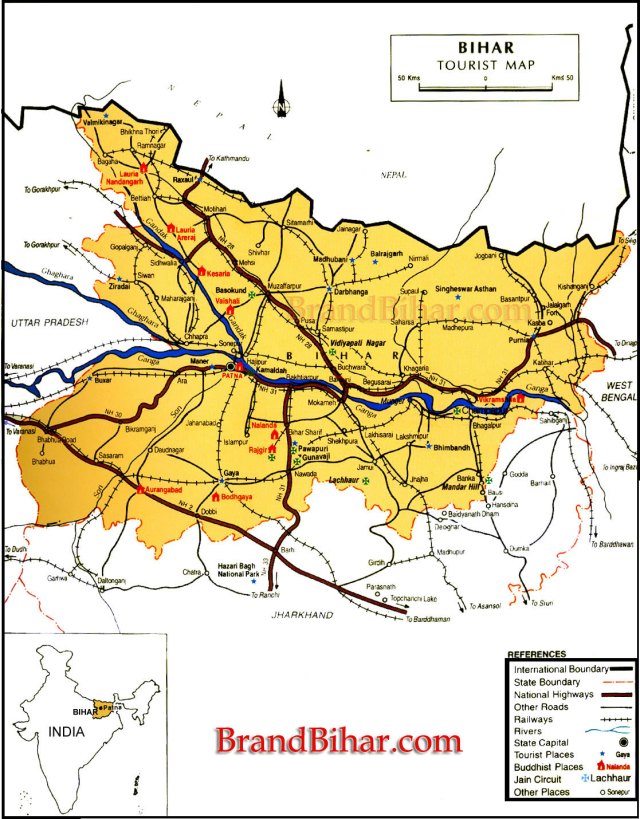
Important Buddhist relics in Bihar state: Vaishali (Ly Xa Ly), Nalanda, Ragir (Vuong Xa), Bodhgaya (Bodhgaya)
The area of activity of the Buddha is in the states of Uttar Pradesh, Bihar and partly Nepal.
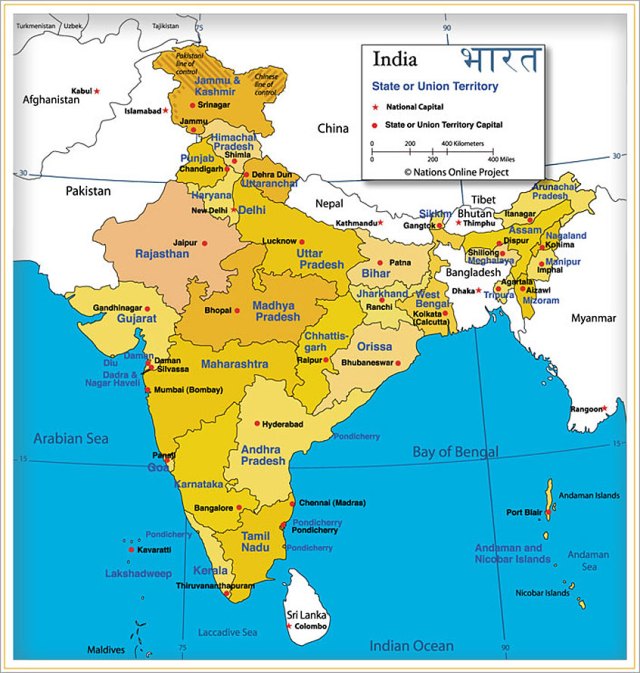
The area of the Buddha's activity is only within the states of Uttar Pradesh, Bihar and part of present-day Nepal. Thus the area of Buddha's activity has a total area of about 340,000 km 2 , only slightly more than one tenth of the area of India today.
A brief history of Buddha
Shakyamuni Buddha (释迦牟尼 Sakya Muni) was born in 623 BC. So by 2013, he was 2636 years old. But Buddha Calendar only started from the time he entered nirvana, in 543 BC, it was year 1, and at the beginning of the sun was PL 544 and is now PL 2557. His era is the time of outstanding saints; Lao Tzu (born in 570 BC, founded Taoism), Confucius (born in 551 BC, founder of Confucianism) these sects influenced deeply, profoundly the thoughts, beliefs and lives of a lot of people on earth, guiding how to live and act wisely, bring peace, prosperity, purity to society.
The origin of Siddhārtha Gautama ( Đạt 毘羅 ut Kiều Kiều Kiều Kiều Kiều Kiều Kiều 喬達摩 Kiều thành La La Kiều Kiều Kiều Kiều Kiều Kiều Kiều Kiều Kiều Kiều Kiều Kiều Kiều Kiều Kiều Kiều Kiều Kiều Kiều Kiều Kiều Kiều La Ca Ca Ca Ca Ca Ca Ca Ca La ) is the Shakyamuni Buddha [迦 毘羅 衛 sa. (sankrit): Kapilavastu ], today called Padaria. At the time of the Buddha, it was the capital of the kingdom of the same name belonging to the Sakyas family ( Sakyas ), under the rule of King Sanskrit (淨 飯, sa. Śuddhodana ).
Ca Lu La Ve, at that time, was a country of Kieu Tát La (憍 薩羅, sa. Kośala ). Then the ruler Kosala was the king of Ba Tu Lac [波斯 匿 P (Pali): Pasenadi ; sa .: Prasenajit ], there is the capital located in Xa Ve (舍 衛 Skt .: Sravasti ), now in Uttar Pradesh state, northern India.
REPORT THIS AD
At the time of birth, Queen Ma Da May (Mayadevi) went to her mother's home to prepare a traditional birth, along the way to Lin Yi Ni (藍 毗尼 Lumbini), she gave birth to the Prince Tat Dat Da.
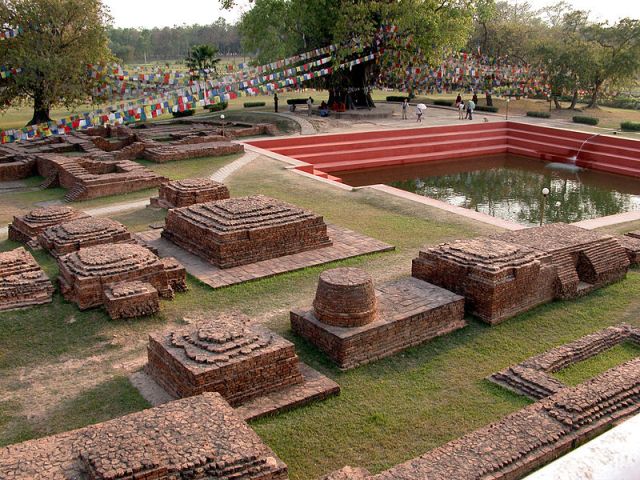
Lumbini Garden
At the time of his birth he had a full 32 good generals, A-Tu-da prophet (阿 私 陀 Asita) said that Siddhartha would become either an emperor or an enlightened being. Seven days after giving birth, her mother died, Tat Dat Da received an aunt and sister of Empress Ma Da, Ma Ha Ba, Ba Di Kieu (Di. Mahāprajāpatī Gotami ). . At the age of 16, Tat Dat Da married Princess Da Da Da La (耶 輸 陀 羅, sa. Yaśodharā ).
At the age of 19, after Princess Da Du Da La gave birth to a boy named La La La (羅睺羅, sa. Rāhula), Prince Siddhartha decided to leave the palace, join the ascetic with many different monks. Siddhartha was determined to find ways to eliminate suffering and to pray in many masters with different teachings. There are 5 brothers Kieu Tran Nhu (憍 陈 如 Koṇḍañña) with Tu Dat Da. After years of ascetic practice close to death, Siddhartha realized that it was not a practice that led to enlightenment, he began to eat normally again, the other five fellow practitioners were disappointed to leave. He sat under the root of a pipala (later called the Bodhi Tree) on the Ni Lien Zen River (尼 連 禪 Niranjana) where later called Bodhgaya and vowed to enter without leaving the seat until at finding the cause and mechanism of suffering. After 49 days of meditation, despite being harassed by Ma King, Siddhartha attained full enlightenment at the age of 30 after 5 years of study and 6 years of ascetic practice. From that moment,
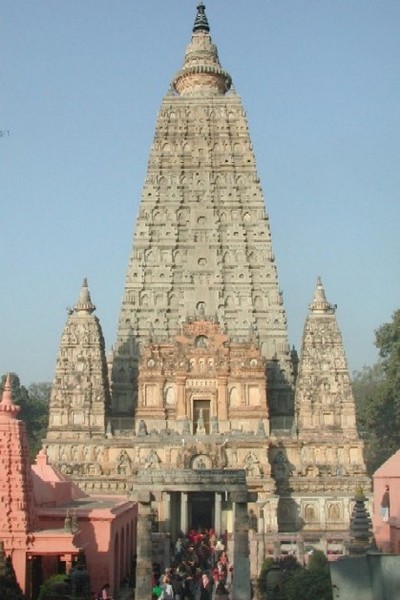
Dai Giac Tower at Bodhgaya
Buddha now carries the title of Thich-ca Mau-ni 释迦牟尼 "The fake position of Thich-ca lineage". Then the Buddha met the five monks 比丘 (the official transcription is the sutra, but Vietnamese Buddhism is often transcribed as monks) who realized that Buddha had completely changed. Through aura emanating from Buddha's body, they know that this person has attained the path, has found the path to escape suffering, the path that they cannot find by practicing asceticism. They ask for teachings and for compassion for sentient beings, Buddha ends the silence. At the Deer Park Buddhist started preaching, scriptures called Zhuan Falun (law wheel), first for his 5 Parivrajikas, he speaks of Four (DUKKHA苦諦, sa. Duhkharyasatya , Episodes 集諦, sa. Samudayāryasatya, Destroyer 滅諦, sa. duḥkhanirodhāryasatya, Dao De 道諦, sa. duḥkhanirodhagāminī pratipad) Dependent Origination (緣起, sa. pratītyasamutpāda) and Law of Causality 因果. The five monks became the first five disciples of the Buddha and the first nucleus of the Sangha (僧伽 pa.Sangha).

Traces of Ashoka's stone pillars set up in Deer Park
Then Buddha went everywhere to preach from year to year. The Buddha used to stay in Wang Xa (王舍城, sa. Rājagṛha ) and Bhikkhu Ly (毗舍 離 sa. Vaiśālī ), living by alms, going from one place to another. The disciples of the Buddha became more and more crowded, including King Qin Ba Sa La (頻 婆娑 羅, sa. Bimbisāra ) of Ma-master-da (xứ Magadha). This king gave a monastery a monastery near the capital of King Xa. The important disciples of the Buddha are A Nan Da (sa. Ānanda阿 難陀), Xa Loi Loi (舍利弗, sa. Śāriputra), Muc Kien Lien (目犍連 pa. Moggallāna), etc. Also during this time, Bhikshuni group (比丘 尼 sa. bhikṣuṇī) was founded by Mrs. Qiao Dam Di who led after a lot of efforts because at first Buddha did not accept for monastic women, because it would shorten the life of the Dharma.
In the map of Buddhist relics, we see the place of Sankasya (Tang Gia Thi Thi 僧伽 施 near present-day New Delhi), which is relatively unknown. That is where the Buddha used divine powers to the heavenly Dao 忉 利 天 the sermon for his mother, Ma Ma, and the Buddha came to heaven for only one time, but the worldly saw three months, after three months the Buddha had just returned On earth, there is De Thich and Pham Thien following. It is similar to the drill of the Pure Land magician visiting the Western Paradise of Bliss in just 20 hours, but the people see it as 5 years and 6 months.

Stone stele carved out of the legend of Thich Thich and Pham Thien Hau Buddha returned to the world in Sankasya (Tang Gia Thi)
Where is the Blade of Heaven (忉 利 天)? We cannot find in this universe, but not without. According to Stephen Hawking (British physicist, now holds the title Lucasian Professor, Cambridge University's Mathematics Professor, only outstanding scientists such as Isaac Newton or Paul Dirac only have this title) and Neil Turok ( born in 1958 in Johannesburg, South Africa, Professor of Physics at Princeton University, Director of Perimeter Institute for Theoretical Physics), the two speak in a postulate (postulate): "The quantum world is one of virtual particles continually đang kết thúc trong and đã có sẵn không có, không có trong một vacuum, của các thiết bị mở rộng và các phân tích superstrings, nhiều nào có thể tạo và theo đây, của một phần mềm trong cơ sở dữ liệu nào, spacetime and matter are or merged in one 'instanton' (Quantum world is the world of virtual particles that constantly oscillate back and forth between existence and both nowhere, of superstring vibrations and distortions in 10 or 11 dimension_ but most of these dimensions are swept up and invisible by a reality in which gravity, time, and matter, are or have been combined in the 'present moment'. So the heavenly domain of Loi Loi is located in a universe parallel to our universe, belonging to the dimension of being swept away, so the naked people cannot see, but people with divine powers like Buddha can see and reach . How come? By using mindfulness, only one thought is coming. This is the main mode of movement in the Three Realms. of the superstring vibrates and deforms in 10 or 11 dimensions_ but most of these dimensions are swept up and invisible by a reality in which gravity, time, and matter, are or have been combined in 'close to the present money'). So the heavenly domain of Loi Loi is located in a universe parallel to our universe, belonging to the dimension of being swept away, so the naked people cannot see, but people with divine powers like Buddha can see and reach . How come? By using mindfulness, only one thought is coming. This is the main mode of movement in the Three Realms. of the superstring vibrates and deforms in 10 or 11 dimensions_ but most of these dimensions are swept up and invisible by a reality in which gravity, time, and matter, are or have been combined in 'close to the present money'). So the heavenly domain of Loi Loi is located in a universe parallel to our universe, belonging to the dimension of being swept away, so the naked people cannot see, but people with divine powers like Buddha can see and reach . How come? By using mindfulness, only one thought is coming. This is the main mode of movement in the Three Realms. Of the dimensions of the space being swept away, the naked people cannot see, but those with divine powers like the Buddha can see and reach. How come? By using mindfulness, only one thought is coming. This is the main mode of movement in the Three Realms. Of the dimensions of the space being swept away, the naked people cannot see, but those with divine powers like the Buddha can see and reach. How come? By using mindfulness, only one thought is coming. This is the main mode of movement in the Three Realms.
In the nine important relics directly related to the Buddha, there is also the name La La Phiet Tat To 室 羅 伐 悉 底 also known as the Xa Ve nơi which is the place where Buddha once practiced the great spirit. Five 72-year-old Buddhas (551 BC, this year in China, Confucius was born), something happened. There was a very rich man, saying that he heard that the priests of this patriarch expressed divine powers but in fact, he had not seen anyone with divine powers before, he thought that people only confessed smoothly. only, and he went out to buy a large bowl of red bass and at the same time he found very high bamboo and pieced together a bamboo pole then hung the bowl on the bamboo pole and said:
“It is difficult for this pole to climb up, only those who have the supernatural ability to climb up to get the bowl, if there is someone in the world who has the divine power, then it is possible to get up the bowl hey. ”
REPORT THIS AD
He hung for seven days without anyone taking up the bowl, after which he declared to everyone that the monks only bragged, without divine powers, suddenly a monk, a disciple of Buddha, was just one But the monk increased, but when he attained enlightenment, he went begging to hear it, thinking that "if the other man had such a challenge, no one would get the bowl down, the more and more people would believe. In the wrong view, do not submit to the Buddha-dharma ”, so he manifested the spirit of divine powers to get the bowl down, the people around him shouted and believed that it spread into the Citadel, to the Buddha's ear. Buddha said the monks were not allowed to manifest divine powers and from then on the Buddha forbade monks from performing miracles. The pagans said: "Buddha has no divine powers but if He does, He does not prohibit that.
At noon that day, the Buddha taught to bring him a mango, the mango fruit was offered to The Ton to eat dessert, eat it, He let the mango seed go to the ground, the mango seed immediately grew into a mango tree growing, growing, He looked at the mango tree growing up very quickly. Then the Blessed One appeared divine power by yamaka-pāṭihāriya, (divine manifestation of parallelism) ie from his pores at the same time spraying water and fire. According to the principle of divine powers, a person who wants to turn the spirit into water must enter into the water subject, if he wants to turn the spirit of fire, he must enter the fire, but he can simultaneously display the pair. contradictory, so from his pores can spray both water and fire, that miraculous magic called yamaka only has the Enlightenment level can do it,
The Buddha mentions three kinds of divine powers: body like mind, such as airborne astronaut, walking on the water, or turning out like this, the second divine power is called forgiveness, which is knowing mind What other people's thoughts think, the third spirit of divine education is to change people by way of education, such as teaching a bad child to become a good person. He used the spiritual power to teach the fierce elephant of De Ba Da (提婆達多 Devadatta) so that it became tame and obedient. In these three divine powers, the Buddha praised the supernatural power of divine teaching, if in the time of life, the Buddha only focused on divine powers, today there is no Buddha-dharma passed on to us. So the Buddha said very clearly that the path of Buddha Dharma is the way of education, the Buddha himself has divine powers,
The Citadel is also the place where Buddha spent the last 25 seasons of retreat. 安居 结 夏 (Vassà = low temperature 结 夏 Rain's retreat- stays in one place during the rainy season). There is the Vihara called the Life of the Loner, 祇 樹 給 孤獨 園 , which is the garden by the Lonely Elder (給 孤獨 Anathapindika) bought by Prince Tu Da (祇 陀 Jeta) by spreading gold. throughout the garden. The prince is offering fruit trees available in the garden, so the garden has such a common name.

Tinh Xa Ky Vien (The Life of A Single Member) in the Citadel
Living until 80 years old, Buddha Shakyamuni passed away. Through 49 years of teaching, thinking that disciples can accept what they say is truth, not just an enlightened means, Buddha declared he never said a word. The last teaching of the Buddha is: "All compounded elements are impermanent, subject to transformation, to be diligent in studying (to attain liberation)!" . According to the Mahayana Nirvana Sutta (大 般 涅槃经 pi. Mahāparinibbāna-sutta ), the Buddha passed away at Verse Thi Na (zh. 拘 尸 那, sa. Kuṣinagara ), about the chronology, scholars estimated in 543 B.C. He passed away in a lying position between two salas (sa la song tho thọ 雙樹).

Sala tree
After the Buddha passed away, his disciples held four times the classic assembly.
The first episode was at the Xa Xa (Rajagaha) city, three months after the Buddha's death, including 500 Arhats, sponsored by the king of A Soap (阿闍世Ajatasatru ) of Ma Kiet Da (摩 揭陀Magadha ), the host is Ma ha Ca Lettuce 摩訶 迦葉. Superiority of Ly Ly (优波离 Upali) coincides with Vinaya. Nan coincides with the Sutra Pitaka. Not appearing Abhidharma, it also lies in the Sutra Pitaka.
The second episode was held in the city of Bhikshu Ly (Vasali, Vaishali), 100 years after the Buddha's death, there were 700 monks of the two cities Bhikkhu Ly and Baht (跋耆 Vajji) attending, there were the patronage of King Kalasoka, the eight-month conference, during this period there was a division in the monks, some separated the establishment of the Mahasanghika, advocating to correct the precepts to suit The actual scene had many changes, the rest advocated keeping the precepts, they established Venerable Theravada (Theravada).
The third episode in 248 BC, sponsored by Ashoka, was almost 300 years after Buddha passed away, taking place in the city of Pataliputta (The Three Towers of Li Zi 巴 嗒 厘 子 城 - Vietnamese Buddhists Nam is also called Hoa Thi Thanh, located in the south of the Ganges River, which was once the capital of Vuong Xa, who moved here, now Patna City, in the state of Bihar) of the Ma Kiet Empire, which is sponsored by the Great Asoka (阿 育 Asoka) was born in 299 BC, who reigned the Confucian Empire (孔雀, sa. Maurya , meaning "peacock") from 273 to 232 BC. He was the first monarch of ancient India (sa. Bhāratavarṣa) has unified a great territory, even bigger than India today. He was a great protector of Buddhism. The first part of his reign was a constant war, expanding the Maurya empire. After the conquest of Kalinga occurred in 257 BC, nine years after the throne (265 BC), the land was located on the eastern Indian coast of what is today Orissa state, extremely bloody with hundreds Thousands died, the king awoke and turned his head to support the Dharma. The king built many stone pillars to mark the times when he visited Buddhist relics and built many stupas throughout the kingdom. So far, only 19 stone pillars have been carved in which 6 stone pillars have animal heads (animal capitals).

Stone pillars at Ty Xa Ly citadel (Vaishali)

Stone pillar shaped 4 lions in Deer Park (Sarnath) in Uttar Pradesh state
The conference was hosted by Moggaliputta Tissa (Section of Inter-Tu Tu Tu Tu 目犍連 子 帝 須), with 1000 monks attending. The conference lasted for 9 months, for the first time the Abhidharma is separated from the Sutra Pitaka, forming the Tripitaka. (including the Tripitaka 經 藏, sa. sūtra-piṭaka, Vinaya 律 藏; sa., pi. vinaya-piṭaka, Commentary 論 藏, sa. abhidharma-piṭaka). Especially after this third episode, King Ashoka wanted to give the Buddha's Dharma to spread extensively into neighboring countries and to maintain the essence of Buddha Dharma from then on, the king asked them to Contemporary Arhat and discussing plans to propagate the dharma, establish missionary missions sent everywhere. The plan of the king was approved by the Arahant Arhat, especially Elder Moggaliputta Tissa. Soon, nine delegations were established, starting to spread the Buddha's Dharma.
The first delegation, according to legend, the Elders Mahinda, Ittiya Uttiya, Sambala, Bhaddasàla and Sa-di Sumana took the responsibility of missionary mission in Sri Lanka (Lankà, Lankàdìpa, Lankàtala), departing in 247 p. CN. According to the book Mahàvamsa, they used divine powers to go to this country during the reign of King Devanampiyatissa. The monk Mahinda was the son of Ashoka, the nun Sanghamitta, the daughter of Asoka emperor also came to Sri Lanka to bring a branch of the Bodhi root from the Buddha to become a Buddhist monk. That Bodhi Tree is still alive today.
The second mission was led by Majjhantika elders to mission in Gandhàra and Kasmìra. Mr. Majjhantika is an Arhat. In the Third Class, he was also an excellent member. When Venerable Majjhantika came to preach in this country, the people of Gandhàra were suffering from natural disasters such as storms, floods, droughts, and elders used divine powers to neutralize the disaster and the Sutra theory (蛇 諭Alagaddupama suttanta - The Snake Simile).
REPORT THIS AD
The third mission was given by the elder Mahàdeva to the mission in Mahisamandala. The elder is also an excellent member in the third Sutra Collection. Mahisamandala may be the lower reaches of the Godhàvarì River, today called Mysore.
The fourth mission by the elder Rakkhita took the missionary mission in Vanavàsa. Vanavàsa is a district, probably the northern part of Kanara, south of India. According to the "Great Monarchy" [Mahavamsa - Minghui Bhikkhu translates], the elder came to this land with divine powers. When he arrived, he stood in the middle of the midst of the sermon for the people of this land to hear about the sutta Anamatagga Samyutta (the 15th article of the Samyutta Verse in the Samyutta Nikaya)
The fifth mission by the elder Yonaka Dhammarakkhita took the responsibility of spreading the Buddha's Dharma in Aparantaka (now India's Bombay city). He was born and raised in Greece, had a good relationship with the Dharma and was ordained, then practiced diligently and eventually attained Arhat.
REPORT THIS AD
The sixth mission led by the elder Mahàrakkhita took the responsibility of propagating the dharma in Central Asia, northern Iran. The language of Pali calls this land Yonaka.
The seventh delegation led by the elders Majjhima, Kassapagotta, Mulakadeva, Durabhissara and Deva Sahadeva took the responsibility of spreading the Dharma in Himàlaya area, which is the foot of the Himalayas. The book Mahàvamsa (Great History 大 史, vol. XII.41 , records the five elders of the delegation dispatched by King Asoka to the Kingdom of Himavā and preached the Dharma. The first period of the theory given in this country is the Sutta Zhuan Falun (Dhammacakkappavatthanva suttanta).
The eighth mission, led by two elders Sona and Uttara, took the responsibility to preach the Dharma in Suvannabhumi (Hoang Dia). History of Thailand, Burma, Cambodia and Vietnamese legends all recognize the mission of this delegation. Suvannabhùmi is vast, including the Funan (pre-Empire of Funan), a large area of present-day South Vietnam, Cambodia and Malaysia, trading with China and Rome through the port of Oc Eo (Ba The An Giang mountain). In this delegation, there was a man named Mahoda who came to Van Lang country of the 18th Hung Vuong dynasty in 240 BC, with a mission to Chu Dong Tu and Tien Dung princess, they were the first Vietnamese Buddhists. Male, before Buddhism came to China 300 years. Van Lang was destroyed in 208 BC before being captured by An Duong Vuong Thuc Phan.
The ninth mission of the elder Mahàdhammarakkhita took on the missionary mission at Mahàratthi. About this place, scholars identify it as Maràthì, which is probably today northeast of Bombay, India. At the first time, the Elder was convinced that this is the Sanh Sanh (Jàtaka). Sanh Sanh is a collection of the precursor stories of Buddha.
The fourth episode of the Sri Lankan and Kasmira episodes was not long after the third episode, supported by the Sri Lankan king Vattagamani. The temple tower of Thùpàrama in the capital of Anuradhapura was chosen by the monks as the collection point. The chairman of this classic episode is Lord Mahinda. This episode has read, edited and rearranged the order of the Tripitaka, as well as translating the scriptures into Pali. This theory is recognized by many scholars, which is the fourth time of Venerable Venerable Theravada ( Theravada ).
At the same time, in Dai Chung Bo, monks also organized the fourth episodes of the classic assembly at Kasmira belonging to Gandhàra kingdom (Kien Da La 犍陀羅, the vassals of the Kushan empire (Dew Sương) northwest India.
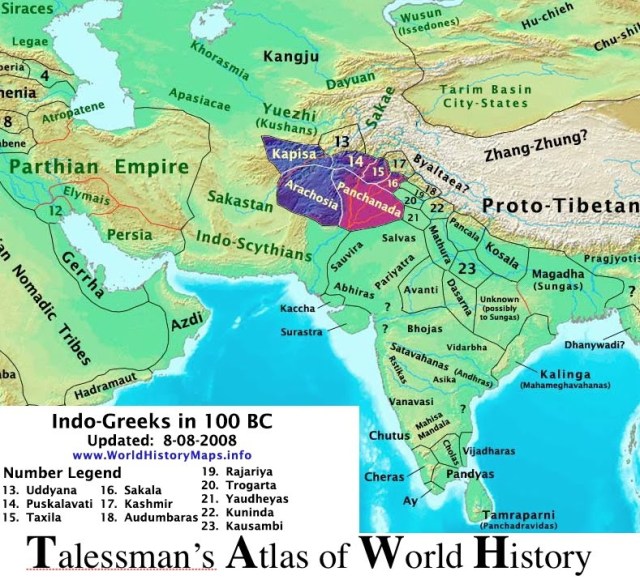
The kingdom of Gandhara in northwestern India, the capital of Taxila (now 15 in Pakistan,) where the collective is Kashmir (No. 17). The ancientKashmir called Kusha (Quy Tu龜玆) is a Buddhist center located on the Silk Road, which is the birthplace of the famous classical translator Cui Ma La Thap (鳩摩羅什 Kumārajīva). Kashmir is now a dispute between India and Pakistan.
The initiator and sponsor of the gathering was King Kanishka of the Kushan Empire (Guiyang 貴霜) known as the dharmapala equivalent to Asoka. The reason for the rally is that the monks and nuns disagree about classics, so they just opened the meeting. The purpose of this episode is to compose in writing the ministries: Kinh, Luat, and Luan, consisting of 30 thousand chants and 9,600,000 words. The king intended to bring 500 monks to the cave in Vuong Xa Thanh, where Maha Ca Lettuce (Maha Kassapa) assembled the scriptures for the first time, but the monks refused and said: "The Great Lord, should not Because there are many pagan people, many very different professors are very complicated that will cause many obstacles for the practice. ” It is for this reason that the new congress is held at Kasmira in the Kushan Empire. But the tradition of Theravàda does not recognize this conference [according to "2500 Years of Buddhism", p.42]. This congress is chaired by Vasumitra (The Righteous 世 友, translated by the Three Virtue 婆 须 蜜) with the help of Parsva (Rape 脅 尊者, and the transcription is 波 栗 濕 縛 Ba Flip Low. because of the name of the fake Religion because Mr. Parsva never lies even when he sleeps, so the rib-rape 脅 - never touches the mat). This episode marks the flourishing of Mahayana Buddhism (Mahayana) from then on. After the gathering, King Kanishka ordered to recite the entire Sutra, Vinaya and Abhidharma on the copper leaves, preserved in a fixed place, not to bring it out. However, these relics are now lost, only the A Ti Dat Ma Dai Dai Ba Ba Sa Luan ( The reason for the name of the fake Religion because Mr. Parsva never lies even when he sleeps, so the rib-rape 脅 - never touches the mat). This episode marks the flourishing of Mahayana Buddhism (Mahayana) from then on. After the gathering, King Kanishka ordered to recite the entire Sutra, Vinaya and Abhidharma on the copper leaves, preserved in a fixed place, not to bring it out. However, these relics are now lost, only the A Ti Dat Ma Dai Dai Ba Ba Sa Luan ( The reason for the name of the fake Religion because Mr. Parsva never lies even when he sleeps, so the rib-rape 脅 - never touches the mat). This episode marks the flourishing of Mahayana Buddhism (Mahayana) from then on. After the gathering, King Kanishka ordered to recite the entire Sutra, Vinaya and Abhidharma on the copper leaves, preserved in a fixed place, not to bring it out. However, these relics are now lost, only the A Ti Dat Ma Dai Dai Ba Ba Sa Luan (Abhidharma Mahavibhasa sastra ) that the Great Master Xuanzang translated into Chinese, including two hundred volumes.
By the first century AD, Buddhism had a new important development, which was the spread of the Dharma to the east, to China, mostly the Mahayana, opening a new chapter of Buddhism. END=NAM MO SAKYAMUNI BUDDHA.( 3 TIMES ).VIETNAMESE BUDDHIST NUN=THICH CHAN TANH.GOLDEN AMITABHA MONASTERY=AUSTRALIA,SYDNEY.13/3/2019.


No comments:
Post a Comment