A DISTRICT ACHIEVEMENT STRATEGY In the Qin dynasty, the three sorcerers of Tzu Ma La Cross.VIETNAMESE TRANSLATE ENGLISH BY=THICH CHAN TANH.

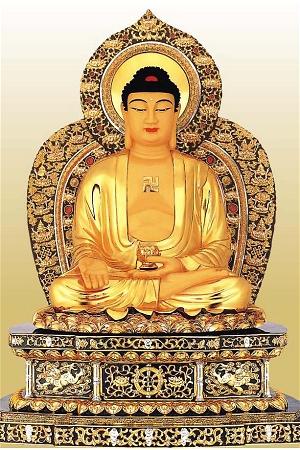
The Amitabha Sutra belongs to the Minor, the daily recitation of the Sangha and Buddhists of the Pure Land in China, Japan and Vietnam. And the Great Amitabha Sutra is a life-long experience, with 48 vows of Bhikkhu monks and nuns. Amitabha Sutra belongs to the period of Buddhist Development, which is often called the Mahayana Sutra. But in my opinion, both economic systems: Primitive (Nikāya-Agama) and Development both download the two contents of the Mahayana and Mahayana. Therefore, the School A Ham means that the lawlessness means ultimate law. A Ham is also a common name for the Buddha's sutras, so in the French Commentary, the organ of the Tibetan organ said: A Ham is the common name of both the Mahayana and Mahayana scriptures. Four sets of A Function mostly present about the Mahayana teachings, Nirvana Sutra is the A-Functional Method, which mostly refers to Mahayana teachings; The only thing we need to keep in mind is:
1. The Buddha was written down in writing without the Buddha's time in his life, but regardless of which sutras belong to any, all are recounted by disciples of the Buddha after his death. The Buddhist scriptures are gathered as early as after the Buddha's passing of a few months, and at the latest, the Buddha passed away 500 years later.
2. Regarding the narrative of the Buddhist scriptures, there are two directions: One is the collective publicity, the other is the first one. The first direction has a history to test, and the second is not a test.
3. The Buddha used both forms of execution (1) and letter parts. The ten major sutras that are still circulating are the letters But according to the nature, this type of letter is divided into two: There are types of compilation at the same time completed, some types have to go through many years of completion.
4. First Buddhist scriptures do not have writing but only rely on reciting, the script after the Buddha's death for a few hundred years. Where Buddhism goes, it depends on the language of the country. Therefore, it can be said that Buddhist scriptures are all translated texts.
Amitabha Sutra (Sukhāvatī - vyūha) is an essential version of the Great Amitayus (the Sukhāvatī - vyūha), and this is one of the three suttas (Vo tho tho, Quan endless life, Di Di). Da) about Pure Land (Pure Land sect). The scriptures that we are studying here are translated by Cù Ma La Thập, Dieu Tần (383-416) from Sanskrit to Chinese in 402, at Thảo Đường Pagoda, and he is a translator the idea of the sutra; not like other translators translated by Sanskrit texts into Chinese texts, such as Mr. Xuanzang. The translation of the Chinese character of Cù Ma La Thập has been used as a daily litany for the periods of the Pure Land, and is considered to be the version used for the commentaries of Amitabha, as well as being translated. many other languages. The shaman of Ma Ma La Thap, a native of Thien Truc (India),
The volume of the Innocuous Life (Amitayur - dhyāna Sutra) tells us the Pure Land teachings taught by Shakyamuni Buddha. The reason is the prince A Xa The in the city of Vuong Xa, rebellion against his father, Qin Ba Sa La and forcing his father to imprison him to starve him to die. But the king asked Vi Vi Hy queen (A Xa The's mother) to wash and clean every day and then mix the flour with honey and put it on her and put it in prison for the king of Qin Ba Sa La to use. Upon discovering this incident, Asozi prince forced his mother into a place. Queen Vi De Hy was deeply distressed, so she secretly sent soldiers to ask the Buddha to show her a country where there were no sufferings like this world. The Blessed One immediately showed Ms. Vi De Hy about the Pure Land of Amitabha Buddha. That is the condition for the Buddha to teach Vi Vi Hy in particular, and we generally talk about the concept of Amitabha Buddha,
In the life of Tan in China, Hue Vien based on the Buddha's teachings in the sutras, initiated the Pure Land at Mount Luu in Zhejiang Province.
Seven major sutras about the Pure Land are:
1. Quantitative Purity of Equal Sense (two books).
2. Dai Di Di Da Kinh (two books).
3. Vo Tho Tho (Two books).
4. Serve Immeasurable Life (a book).
5.A Da Da Kinh (one book).
6. Disseminate Pure Land Buddhist Life Longevity (one book).
7.Vu Am Thanh Vuong Da La Ni (one book).
This Amitabha Sutra presents about the doctrine of felling, the Mahayana Bodhisattva, is the merit of merit that cannot be thought of and is thought by all the Buddhas. This sutra uses very profound words, to convey content very profoundly, without the questioning, but by the Buddha Shakyamuni who speaks himself, in order to disclose the practice of reciting the Buddha's name, or reciting the Buddha's name, immediately bringing the mind out of all thoughts. Realizing this idea, Venerable Thich Tri Quang (2) said: "Reciting Buddha's name is not to call Buddha. Most people mistakenly call the name Buddha to recite Buddha's name. Reciting Buddha's name is completely different from calling Buddha's name. During the day we read Nam-Amitabha Buddha and call Buddha's name to rebirth, it cannot be reborn. "
The Dharma concept of the name of Amitabha is the dharma of directness only in the mind that is practiced, not in the medium of means, in order to help the practitioner attain one-pointed mind. Amitabha Buddha's pure land is metaphor for the awareness that everyone has. Because only for sensory awareness of innocence, so-called endless life, immeasurable optical, or legal organs. In order to recognize the purpose and principle of this sutra, we in turn understand the true meaning of each passage through the texts. Hopefully, the practitioner "Being forgiven by the words" elaborately captures the secret photographer, to relive with "Self-nature is Amitabha, my mind is Pure Land", open to overcome samsara. END=NAM MO SAKYAMUNI BUDDHA.( 3 TIMES ).VIETNAMESE BUDDHIST NUN=THICH CHAN TANH.GOLDEN AMITABHA MONASTERY=AUSTRALIA,SYDNEY.11/5/2019.


No comments:
Post a Comment