PH-4: The Buddha's last teaching.VIETNAMESE TRANSLATE ENGLISH BY=VIETNAMESE BUDDHIST NUN=THICH CHAN TANH.
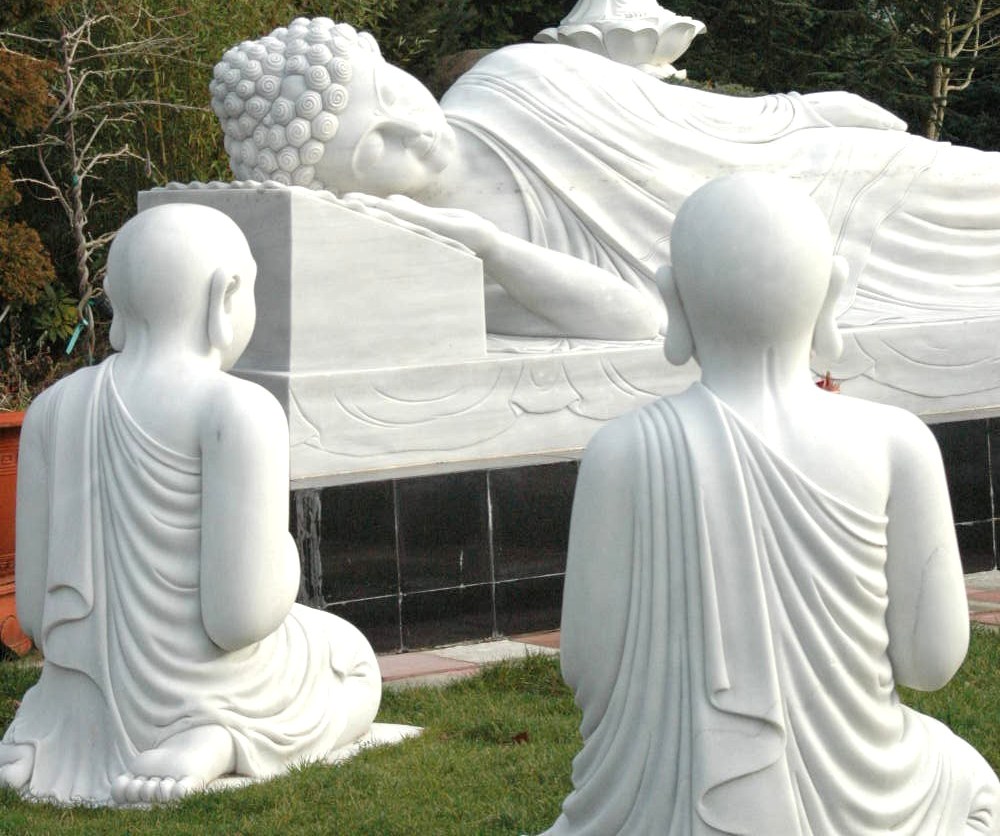
Final instructions of the Buddha
“In order to keep true to my teaching, you should respect each other and do not argue. Don't be like water and oil pushing each other, but like water and milk completely mixed together ... "
.
Life is inherently impermanent
Born and passed away is obvious
Our mind is in peace
Normally Dao, what to worry about?
A thought of remembering the Buddha
Quang Minh shone, Lien Hoa returned.
.
The Buddha assures us that this world is just impermanence, false and unreal. Life and death only in the breath, everything that is born and then will have to cease, fast or slow depends on predestined conditions. Nothing can be done, neither can be changed nor prevented, that is cause and effect is the eternal and obvious law of this universe.
So whether it is endless or endless, you should always be sure, rest assured that everything that happens is normal, is obvious, should not worry, should not be depressed. Those are useless !. Let's love and cherish the present moments more, practice diligently, leave the evil and actively do good deeds, keep the Buddha's memory in mind forever, no matter how everything around. Then the radiant light of the Three Jewels will always exist in front of your eyes, the golden lotus blooms under your heels, leading you to escape from charm to enlightenment. There is no moment when the Buddhas and Bodhisattvas don't look at you with open compassion !!!May all people and all beings always be happy, happy, suffering, free from fear and fear, all will always receive the blessings of the Three Jewels, and then become Buddhists. _ (♥) _
Nam Mo Sa Teacher Master Shakyamuni Buddha _ (♥) _
Nam Mo Tieu Tai Dien Tho Depending on the Mind Manually Praying Medicine Master Luu Ly Quang Vuong Buddha _ (♥) _
Nam Mo To Lead Master A Mi Da Buddha _ (♥) _
Male model Of Mixed Lower Birth Maitreya Religion Buddhist _ (♥) _
South faint heat Buddhas of the three Ten Methods About
Namo Universal Compassion Relief of suffering Lifesaver Avalokitesvara Bodhisattva _ (♥ ) _
Namo Dai Tri Manjushri Bodhisattva _ (♥) _
Namo Dai Hanh Pho Hien Bodhisattva _ (♥) _
Namo mahasthamaprapta Bodhisattva _ (♥) _
Namo Vow Stratum Bo Slapping _ (♥) _
Namo Nhat Quang Variable Projection Bodhisattva _ (♥) _
Namo Moon Light Processing Projection Bodhisattva _ (♥) _
Namo Necessarily Divine Bodhisattva, unicorn, Thanh Van, Dharmapala Three life Ten Phuong _ (♥) _Peace prayer day good night
the night of peace are six time
All times are peaceful
Duy household of compassion please _ (♥) _.
PROTECT THE FRENCH
1. Most researchers Buddhist scriptures have recognized that texts Pham Von g (Brahmajâla Sutta) is one of the important Buddhist texts in most of the entire system of Buddhist literature, regardless sect or lineage. Indeed, the Pham Vong sutta - translated into English by Western translators is The Perfect Net, The Perfection Grid - is a complete, systematic, scientifically presented complete summary of all fundamental points of Indian thought during the time of the Buddha. Venerable Thich Minh Chau's Vietnamese translation, within only 13,000 words, recounts all the key opinions of the preachers of that time about matters that always made people wonder about the universe, about human, phenomenal, intrinsic ... All these points are not beyond the policies such as common view or opinion, boundless or boundless, human or inhuman, random or decisive ... Not only Ancient Indian thought, which to this day, 26 centuries has passed, almost the same problems still make people struggling with questions and answers not out of the content of the Pham. Hammock; in which, the ancient explanations were classified by the Buddha as wrong view. It can be seen that the 2011 Nobel Prize in Physics awarded for works to determine the universe is continuing to expand, also shows the confusion of human thought about the problems that the Buddha has solved since the century. Thursday before the Western calendar. To say this is not in praise of the Phà * h Hammock , but to see that the Pham Vong sutra is one of the sutras that cannot be ignored when discussing Buddhist matters. As for the protection of Dharma, the important thing is not in the main content of the Pham Vong , but in the context in which the Buddha declared the content of Pham Vong.The things that are reported at the beginning of the text are related to the attitude of the Buddha to the praise and criticism towards the Buddha, for his teachings, and towards the Sangha he built.
2. Sutras of the Martial Arts School that when the Buddha and about 500 monks were walking on the road from Rajagaha to Nalanda, there were two teachers and students of a Brahmin walking on the same path. Along the way, the Brahmin took all the words to destroy the blasphemy of the Buddha, destroy the blasphemy of the Buddha's teachings, and abolish the Sangha built by the Buddha. Answering his teacher, the disciple of that Brahmin also sought every word to praise the Buddha, his teachings, and his Sangha. Since they share the same path with bhikkhus, their attitude and story cannot pass through the eyes and ears of the bhikkhus. Night fell, the Buddha and the monks to rest at a palace of the king; the other two Brahmins and teachers also came to rest there. At the resting place, the two teachers and students continued their conversation, with the same attitude as on the road. When the night was just over, the bhikkhus awoke early, arriving in the hall discuss with each other about the attitude of two teachers and students Brahmin. Perhaps there were those who were thrilled by the praises and also those who were angry at the words of blasphemy. While the monks were still discussing, the Buddha also came in the hall. After asking to know the content of the discussion of monks, the Buddha taught,
“Hey, the Male-stilts, if someone destroys Me, or destroys the Dharma, you should not have so born indignation, anger, depression. Hey, monks, if someone destroys Me, destroys the Dharma or destroys the Sangha, and if you give birth to indignation, anger, and sadness, such times will be harmful to you ”. . “… When someone defames Me, blasphemes, or defiles the Sangha, you must clearly state that the points that are not true are not true: 'Like this, this point is not true; like this, this point is not correct; This is not between us; This does not happen between us' ”1 and“ Hey, monks, if someone praises Me, praises the Dharma, or praises the Sangha, your time should not be happy, happy, your mind should not like animal. Hey, monks, if someone praises me, praises the Dharma or praises the Sangha, but if you rejoice, rejoice, and enjoy the day, it will be harmful to you. Hey, monks, if someone praises Me, praises the Dharma or praises the Sangha, in your time, please acknowledge that what is true is true: 'Like this, this point is true, like that hey, this point is exactly, this is between us, this happened between us'”1.
Next, the Buddha explained clearly what enabled ordinary people to praise the Buddha thus; and to clarify the preeminent things in the teachings of the master, the Buddha summed up the wrong views of all contemporary gender thought, which is expressed in the main content of the Pham Vong sutta .
3 In recent years, Buddhism has increasingly received the respect of society and especially of the contemporary political system. Most recently, during the Great Celebration of the 30th anniversary of the establishment of the Vietnam Buddhist Church held in Soc Son on November 7, 2011, the representative of the Government solemnly paid homage to the image of Buddha and sincerely commemorating His Holiness's name to the appreciation and respect not only of those present at the ceremony but also of all the lucky viewers who watched it fully on the live television screen. This shows that Buddhist ideology is increasingly consolidating its foothold in modern Vietnamese society after a long period of misunderstanding. That may be the result of efforts to demonstrate the Buddha's teachings that Vietnamese Buddhists have persistently made for decades. That could be of course, too. because Buddhist thought is an inseparable element in the traditional cultural ideology of the nation; Therefore, when Vietnamese society moves towards peace and peace, it is necessary to promote and disseminate Buddhist thought because Buddhist thought is peaceful thought, Buddhist attitude is tolerance , the Buddhist point of view is the human point of view, the "necessarily idealistic" view that the mind here is clearly the mind of sentient beings and sentient beings in the state most suitable for the construction of a peaceful society is. human. However, focus on the teachings of the Buddha in the sutras Therefore, when Vietnamese society moves towards peace and peace, the promotion and dissemination of Buddhist thought is necessary because Buddhist thought is peaceful thought, Buddhist attitude is tolerant attitude. , the Buddhist point of view is the human point of view, the "necessarily idealistic" view that the mind here is clearly the mind of sentient beings and sentient beings in the state most suitable for the construction of a peaceful society is. human. However, focus on the teachings of the Buddha in the sutras Therefore, when Vietnamese society moves towards peace and peace, the promotion and dissemination of Buddhist thought is necessary because Buddhist thought is peaceful thought, Buddhist attitude is tolerant attitude. , the Buddhist point of view is the human point of view, the "necessarily idealistic" view that the mind here is clearly the mind of sentient beings and sentient beings in the state most suitable for the construction of a peaceful society is. human. However, focus on the teachings of the Buddha in the sutras Pham Vong , with that respectful attitude, Vietnamese Buddhists should not be happy, happy, or excited; but more and more feel the need to live up to the teachings of the Master, so that Buddhist thought can really have a more positive impact on society, from small to big. Perhaps the most appropriate attitude of Vietnamese Buddhists is that, seeing Buddhism is appreciated by society, and more and more respectful of society.
4 But also in the last few years, there have been some phenomena that are considered to be of the denunciation or satirical of Buddhism; there are also phenomena that mobilize the masses of Buddhists to abandon their religion to find spiritual support in other religious or belief traditions. There are also comments on these phenomena, either from Buddhists or from Buddhist dignitaries. There are peaceful opinions but there is no shortage of angry words. Somewhere there have been criticisms of certain sects seeking to encourage Vietnamese Buddhists to convert. When some groups of people use Buddhist images in advertising or marketing, there are also quite severe criticisms; for example, the use of Maitreya Buddha image on beer labels by a certain alcohol business,
5
Buddhism, which is respected by society, is just one element of the entire ethnic community. In every society, there are always truly civilized people, who know how to cherish values different from those they pursue, and who treat those who have opinions different from them with tolerance; but there is also no shortage of narrow-minded people, lacking a cultural background, and unable to integrate into the diverse spirit of a multi-ethnic community. These people may resent the fact that Buddhism is of interest to society, perhaps due to lack of understanding, perhaps due to a high sense of humor, may be motivated by a short-sighted cannot be unaware that what we do is show a semi-proficiency in civilization, can only know ourselves and our organizations but not know other people and associations of other people ... have behaved or attitudes that are not subtle, even really malicious. However, not so that Buddhists need to express their anger, just as Buddha said in the sutras Brahma Net Sutra, "... n If someone defame me, defame or defame Increase France, you do not have so being pleased indignant, angry, sulk your mind " . Instead, the right attitude of the Buddhist is perhaps to further strengthen his patience and tolerance, and at the same time whether he is truly worthy of the respect of society. , if not, must try to be worthy of that respect; After that, then, those who have not properly respected Buddhism must think again, but that is not what Buddhists have to care about.
6 In a certain sense, it is true that Vietnamese Buddhists desperately need to look at themselves. There are assertions that when Buddhism is promoted in a certain society, Buddhist benevolent ideas will affect that society, making people in that society live together more in harmony and purity. the customs of that place was more developed Many Vietnamese Buddhists are still proud that Buddhism has come to this people for the past two thousand years and throughout that time have always accompanied them. In recent decades, the movement to build pagoda and bell statue has been carried out all over; the number of Buddhist scriptures and tapes to be released is more than ever; domestic and foreign Buddhist pilgrimages to worship are organized in scale; ceremonies, Expensive processions were carried out with the participation of tens of thousands to hundreds of thousands. However, has the Vietnamese society become more peaceful, have developed pure and fine customs, and are culturally protected and developed? People still see many monks and nuns promoting superstitious activities such as burning votive horses, watching hexagrams, divination, doing bronze work, and praying for souls. Not to mention the Buddhist content in the pamphlets and discs distributed without the editing of the real authority on Buddhism, raised questions about the wisdom of Buddhism. In society, painful stories about filial piety, about insensitivity, about ruthless attitude, about human cruelty, the depraved phenomenon of not only young people but also adults and officials ... apparently not lacking. has developed pure fine customs, protected and developed culturally? People still see many monks and nuns promoting superstitious activities such as burning votive horses, watching hexagrams, divination, making bronze, and praying for souls. Not to mention the Buddhist content in the pamphlets and discs distributed without the editing of the real authority on Buddhism, raised questions about the wisdom of Buddhism. In society, painful stories about filial piety, about insensitivity, about ruthless attitude, about human cruelty, the depraved phenomenon of not only young people but also adults and officials ... apparently not lacking. has developed pure fine customs, protected and developed culturally? People still see many monks and nuns promoting superstitious activities such as burning votive horses, watching hexagrams, divination, making bronze, and praying for souls. Not to mention the Buddhist content in the pamphlets and discs distributed without the editing of the real authority on Buddhism, raised questions about the wisdom of Buddhism. In society, painful stories about filial piety, about insensitivity, about ruthless attitude, about the cruelty of people, the depraved phenomenon of not only young people but also adults and officials ... apparently not lacking. have been culturally protected and developed? People still see many monks and nuns promoting superstitious activities such as burning votive horses, watching hexagrams, divination, making bronze, and praying. Not to mention the Buddhist content in the pamphlets and discs distributed without the editing of the real authority on Buddhism, raised questions about the wisdom of Buddhism. In society, painful stories about filial piety, about insensitivity, about ruthless attitude, about human cruelty, the depraved phenomenon of not only young people but also adults and officials ... apparently not lacking. have been culturally protected and developed? People still see many monks and nuns promoting superstitious activities such as burning votive horses, watching hexagrams, divination, making bronze, and praying for souls. Not to mention the Buddhist content in the pamphlets and discs distributed without the editing of the real authority on Buddhism, raised questions about the wisdom of Buddhism. In society, painful stories about filial piety, about insensitivity, about ruthless attitude, about the cruelty of people, the depraved phenomenon of not only young people but also adults and officials ... apparently not lacking. There are questions about the wisdom of Buddhism. In society, painful stories about filial piety, about insensitivity, about ruthless attitude, about the cruelty of people, the depraved phenomenon of not only young people but also adults and officials ... apparently not lacking. There are questions about the wisdom of Buddhism. In society, painful stories about filial piety, about insensitivity, about ruthless attitude, about the cruelty of people, the depraved phenomenon of not only young people but also adults and officials ... apparently not lacking.
7 The Buddha's teachings are extremely large and have eighty-four thousand doors to enter. However, at the stature of the lay Buddhist, it is not easy to keep all the five precepts and practice the ten virtues every day; And not everyone dares to claim that they are not ashamed of standing in front of the statue of the Buddha. But a Buddhist believer will not, therefore, give up his bodhicitta; For he knows that he is fully capable of making a little correction every day, with perseverance and perseverance there will also be a time when he enters the Holy Order. The daily self-regulation of all one's actions, speech, and speech is the most active protection of the Dharma of the lay Buddhists; rather than defending the Dharma by criticizing those who lack goodwill, satirizing Buddhism; or seek to cope with suggestions from other religions to convert. In the essay book What Makes You Not a Buddhist? by Dzongsar Jamyang Khyentse2 there is a very remarkable saying, "... as a Buddhist you have no duty or obligation to convert the rest of the world to Buddhism". Indeed, the Buddha's teachings need no one to protect, because all the basic theories of Buddhism are not Buddha's creations but are the eternal laws of eternity discovered by the Buddha. His rigorous and confidential inquiry. Those are truths that are always available in heaven and earth that no one can rob or erase but need to protect. What needs to protect is the mind of a Buddha, who persistently practices the Buddha's teachings to bring peace to himself and those around him in the spirit of respect for the values of others .
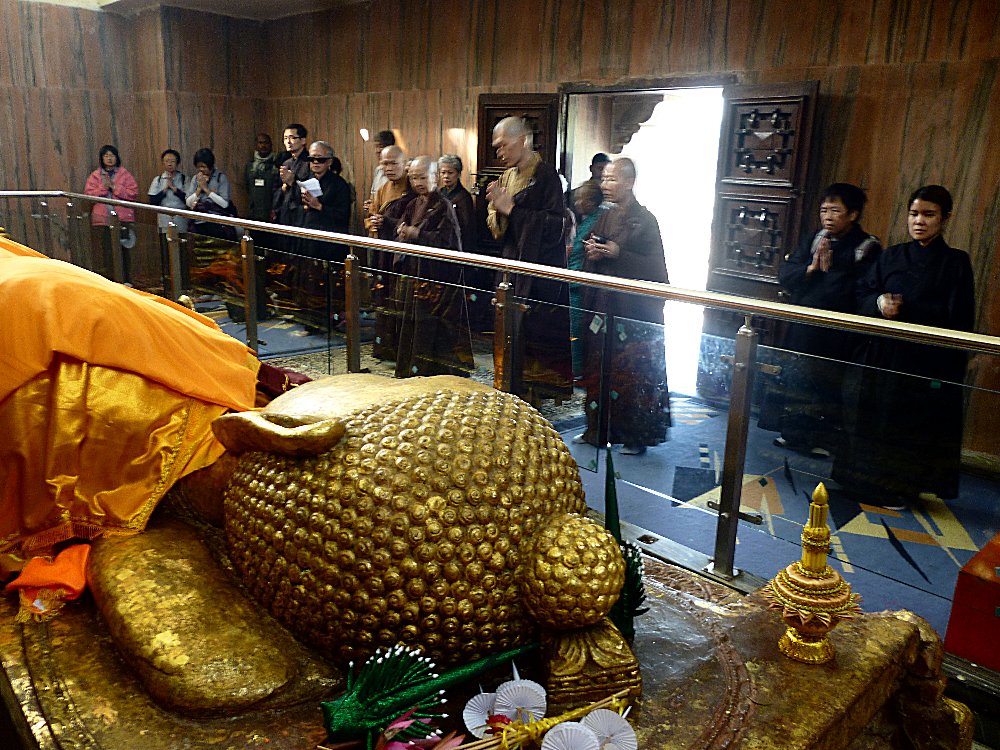
During the Buddhist enlightenment season, the faithful Buddhist must remember more and more the Buddha's instructions before the Guru entered Nirvana that, "Hey, monks, what are the dhammas that I enlighten and teach, you must be smart to learn, validate, practice and spread the bliss to endure, forever, for their happiness. birth, for the welfare of beings, for the love for life, for benefit, for happiness, for the welfare of God and for mankind? It is the Four Foundations of Mindfulness, the Four Chiefs of Justice, the Four Deities, the Five Bases, the Five Forces, the Seven Bodhi Part, the Eight Saints section. The monks, these dhammas are enlightened and taught by Me, that you must cleverly learn, validate, practice and spread in order to commit eternal, eternal happiness, for the happiness of sentient beings. , for the love of life, for the benefit, for the happiness, for the welfare of God and for the human race ” 3. That is the protection of the Dharma. 4 = END=NAM MO AMITABHA BUDDHA.( 3 TIMES ).GOLDEN PRAYED AMITABHA MONASTERY=VIETNAMESE BUDDHIST NUN=THICH CHAN TANH.AUSTRALIA,SYDNEY.11/10/2020.


No comments:
Post a Comment