PH-2: Four light things.VIETNAMESE TRANSLATE ENGLISH BY=VIETNAMESE BUDDHIST NUN=THICH CHAN TANH.
14 The Buddha's Teaching
♥ The greatest wealth of human life is health and wisdom.
♥ The greatest sacrifice of one's life is tolerance.
♥ The biggest debt of a person's life is affection.
♥ The biggest failure of a person's life is the Great Pride.
♥ Life's greatest ignorance is a lie.
♥ The biggest compassion in one's life is jealousy.
♥ The biggest mistake of a person's life is losing himself.
♥ The greatest sin of a person's life is filial piety.
♥ The greatest trauma of a person's life is low self-esteem.
♥ The most admirable thing in a person's life is to rise after falling.
♥ The greatest weakness of a person's life is ignorance.
♥ The biggest ruin in a person's life is despair.
♥ Life's greatest enemy is yourself.
♥ The greatest happiness in a person's life is to make blessings.
The Buddha taught :
"Being a man of 20 is difficult"
- Bell is hardly poor
- Wealth is difficult to study religion
- It is difficult to die and decide to die
- Seeing Buddhist scriptures is difficult
- It was difficult to be born in the time of Buddha
- Color rings, ring sex is difficult
- Seeing good without needing is difficult
- Ie humiliation was not difficult
- Having a power not to rely on is difficult
- Getting careless is difficult
- Extensive study and deep research is difficult
- Eliminating ego is difficult
- Not contemptuous of the uneducated is difficult
- Practicing equal mind is difficult
- Not talking right and left is difficult
- Meeting good knowledge is difficult
- Seeing the nature of the Dao is difficult
- It is difficult depending on the personalization of people
- Seeing a motionless mind is difficult
- Poor knowing the means is difficult
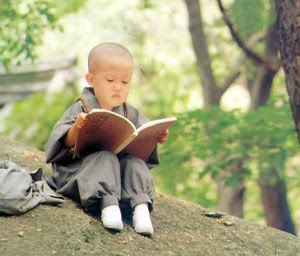
Four kinds of light
In the Buddhist Sangha, the Buddha mentioned 4 light things as follows:
- Sunlight
- Moonlight
- Firelight
- Light of wisdom.
And the Buddha concluded: Of the four lights, only the light of Wisdom is supreme.
Reading through the above 4 things, we remember the story of Sister Bodhidharma (when he was still the Prince, the third son of King Huong Chi) through the test of Bao Chau To Bat Nha Da La (27th Patriarch) India) has similarities.
Bat Nha Da La Patriarch brought Minh Chau member to ask three of Vuong Tu:
- These pearls are round and bright, are there any bright ones?
The first and second Vi Vuong Tu replied:
- This pearl is equal to the seven most precious things in the world, and there is no comparable treasure.
The third Vi Vuong Tu (ie Bodhidharma) replied:
- This is the world's most precious not enough, comparing among the precious things, only the "Dharma Treasure" is first.
And the light of this pearl is the light in the world, not bright enough yet, in all the light only "Wisdom" is first.
Again, the shining effect of this pearl is that in the world, not the largest enough, of the scraps, only "Mind of Mind" is first.
This pearl although it has the "lucid and enlightened" nature, but it cannot know by itself, but must rely on "Illuminating Wisdom" to know that this pearl is precious.
Through the two above views, we notice that the Buddha and the Patriarch's will are no different, just that "Wisdom" does first.
THE FOUR WAYS OF KNOWLEDGE.
I want to share a traditional teaching that how to practice good judgment. This lecture is to help us believe in our feelings and avoid getting lost. The four reminders here apply both to the Dharma as well as to aspects of our daily lives. I believe that a lot of modern society's problems can be solved if people follow these simple advice.
I call this teaching "The Four Paths of Wisdom". The wise will know who and what they can rely on. From there they can avoid many of the traps of confused thoughts.
Four simple maxims:
1. Rely on teachings, not teachers
2. Rely on meaning, not words
3. Rely on depth, not surface
4. Rely on intellect, not concept.
End of life
There are three passages to repeat:
1- The Buddha passed away in a sublime manner surrounded by many monks and nuns. The Buddha has entered into samadhi deeply and breathed his last.
2- Venerable Sàriputta (Xa-benefit-waving) knew before the date of death, hastily returned to the homeland with a number of close disciples. Sàriputta chooses a very solemn scene to accommodate the old mother and the death. This is the room in which he was born in the past. Although before closing Sàriputta's eyes, he was sick, but this Holy Sangha transcended nirvana, even the gods visited at the last minute.
3- Venerable A-nan (Ananda) enjoy life up to one hundred and twenty years old to leave eternity. He is probably the longest living person among the Qing-Literature disciples. Since Ananda was a very good monk in his meditation on fire as the subject, before his death, Ananda suddenly had the thought that: "I will not let anyone busy cremate the mortal body. this custom! ”. Then Ananda entered meditation on the topic of fire and passed away. His body spontaneously burned and turned into cremation.
Before those three meaningful Nirvana entries, everyone thought that the Holy Sangha Mahà Moggallàna (the Venerable Moggallana) would magically pass away, especially this Holy Sangha is the superior of all kinds of gods. information.
But Mahà Moggallàna ended his life in a very pitiful, very moving (if not terrifying) way. And only those kind-hearted Saints who were round enough like him could pass away with such a dire death.
Mahà Moggallàna passed away half a month after the Venerable Sariputta. That means on the new moon day (the 1st) after the Kattika month (between October and November). At that time, in the autumn, the yellow leaves fell full of seeers to send him farewell to the "sea of suffering".
Night Buddha entered Nirvana is the full moon night of the month Vesakha (to May 5 solar calendar) that is half a year after two great disciples passed away. Buddha was eighty years old, while both Sàriputta and Mahà Moggallàna died in the 84th year of the last life.
The power of Karma, a natural force, cannot be mastered by anyone nor a divine power to change it.
For an Omniscient, the power of "unjust karma" is ineffective in the last life, but is fully fruitful in a life before the last. The special case of a "Bodhisattva practicing diligently", if he attains Right Enlightenment before his last life and then passes away, will the power of unjust karma never keep up and become ineffective It is not without!
After Mahà Moggallàna and Sàriputta passed away, the Buddha repeatedly reminded these two great disciples before the Sangha community as two "treasures" were lost.
The sentence that the Buddha often praised the two great disciples was "a pair of miraculous goodness, perfect excellence and perfect grace!".
But the most miraculous thing to say is that the Buddha watched the two "most precious disciples in the world" leave with a liberating attitude. The attitude that only a Thien Nhon Su can attain!
Therefore, we as Buddhists read the history and the passing of these two Saints what do we learn? Do we need to rely on us? We are our "only island". Don't look for another "strength"! The truth that we learn from Buddha is the eternal lamp on that "island". If the lights of the world often illuminate many directions, the lights of truth also illuminate the four roots of defilements: that is defilement in the body (rupa), defilements in feeling (feeling), disturbing in mind ) and defilements in the (Practice). Those who identify defilements in the four foundations of BODY, BODY, and Dhamma are called those who have correctly understood the Buddha's teachings, already know who they are "who", and only get reincarnated by what (by The five aggregates: Sac, Tho, Thought, Formation, and Consciousness), he or she will definitely enter the path of liberation!
In other words, a practitioner of the Buddha, in addition to trying to keep the morality of a pure, need to continuously practice the mindfulness practice in righteous meditation (Abiding and Contemplation) so that the Buddhist lives in " knowing oneself ”(Satipathana) and with a free mind.
If the Eightfold Path (Atthangika Magga) is the path we must take, Morality (Sìla) is the "activity" we must perform, Meditation (Samādhi) is the "food" we must eat, then the Four Mindfulness origin (Catu Satipathàna) is the "lamp" we have to light to overcome the sea of suffering and death. 2 =END=NAM MO AMITABHA BUDDHA.( 3 TIMES ).GOLDEN PRAYED AMITABHA MONASTERY=VIETNAMESE BUDDHIST NUN=THICH CHAN TANH.AUSTRALIA,SYDNEY.11/10/2020.


No comments:
Post a Comment