Bacterial pneumonia is an acute inflammation and consolidation (exudate fills alveoli) of lung tissue caused by bacteria.
Pathology
Classification
Pneumonias may be classified according to etiology, host reaction or gross anatomic distribution of the inflammation.
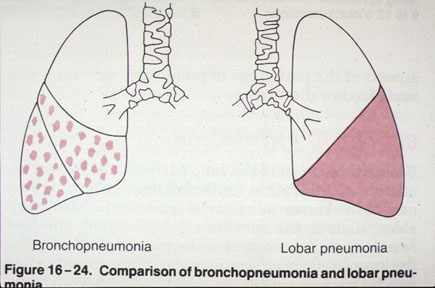
- Bronchopneumonia: Characterized by patchy foci of consolidation (pus in many alveoli and adjacent air passages) scattered in one or more lobes of one or both lungs. Compared to lobar pneumonia, which involves 1 or more lobes, bronchopneumonia is patchy, involving only small bronchioles and adjacent alveoli
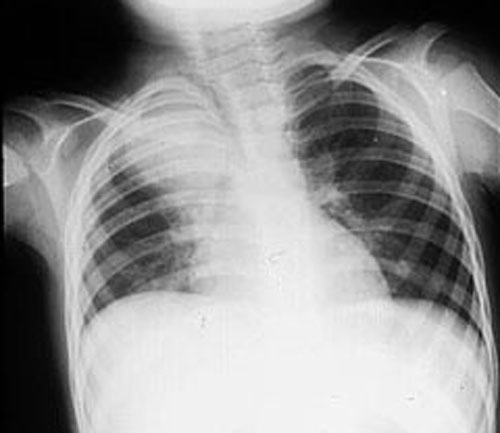
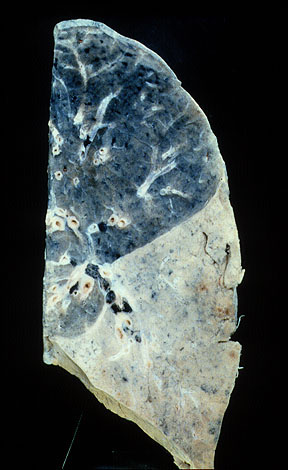
- Lobar pneumonia: Characterized by an acute inflammation of the entire lobe or lung. Histologically, tissue changes are classified into four stages: congestion, red hepatization, gray hepatization and resolution.
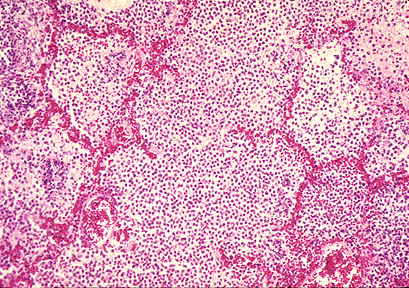
Micro: All bacterial pneumonias are characterized by presence of neutrophils in air spaces and small bronchioles
Etiology/Pathogenesis
Varied and many. Culture and sensitivity results, extent of involvement and host resistance are much more important than histologic changes .
Etiology of infectious pneumonia
- Community acquired
- Strep Pneumoniae
- Legionella
- Viral infections
- Mycoplasma
- Hospital acquired
- Gram negative organisms
- Staph pneumonia
- Immunodeficient host : Opportunistic infections
- CMV
- Pneumocystis carinii
Acute onset of fever, cough, chills, pleuritic pain and shortness of breath.
Intensity varies with the etiological agent.
Unique synptoms depending on the infectious agent Eg
- Ear ache (Mycoplasma)
- Photophobia (Vitral infectin)
- Shaking chills (bacterial infection)
Hypoxia secondary V/Q mismatch.
The possible outcomes of pneumonia?
- Resolution
- Organization
- Abscess formation
- Empyema
- Bacteremia
- Death.END=GOLDEN AMITABHA MONASTERY=VIETNAMESE BUDDHIST NUN=THICH CHAN TANH.AUSTRALIA,SYDNEY.16/4/2020.

No comments:
Post a Comment