
Meditation, or also known as the Patriarch of Meditation, originates from the Buddha with an example of "Seal them up" in the place where the Buddha's teaching was handed down with a golden lip mark to prove the compassionate mind - Tri Hue - Equality and Liberation of Buddha-momentum, for the achievement of the main practice of the Buddha, is a milestone marking the transmission of the Buddha Dharma in the world. Since then, has been born a step-wise-mind-mind-nature, the mind is mindful to continue to be nostalgic for Buddhas, eternal endlessly.
With the willingness to help practitioners meditate with practical benefits for their elaboration, now share the experience of practicing Visiting Zen Master by themselves to the masses. Regarding the doctrine, you can find the book of the Most Venerable Thich Duy Luc.
1. Select the first sentence
There are many first lines to meditate, such as: " When there is no heaven and earth, what are we?"", Or" Who is reciting Buddha's name? "..., the practitioner goes on to choose a question that is appropriate and then use it. However, according to practitioners, it is most important to choose the first line of dialogue to initiate suspicion, because it has a great influence on the progress of elaboration. Why?Because our mind is beginningless, we seek, understand and record. In life there is a sentence: "Study, learn more, study forever". If you do not have the desire to learn and learn, they will lag behind with friends, colleagues and themselves before the trends and advances of science and technology, civilization of society. Also learning, old (if not yet known) also learn. Broader, good things also learn (moral, moral), bad things (bad) also learn (learn reckless, practice infection) ... But life is like everything so with secular people, the mind does not stop accumulating, collect, review, reflect ... This mind (mind of understanding the world) will greatly hinder meditation, which waded up the karma to practice life in order to reach the Supreme Master, Buddha Nature. Therefore, with the first lines of questioning, if the mind, in a vague sense, can use ordinary knowledge to answer it, it is not advisable to choose, because it is difficult to develop suspicion (due to the long-standing concentration of mind, so often Search for answers to questions). For example:
- When asking "Who is reciting Buddha's name?", According to the gas practice, he immediately replies: "I" (but no one else). But the answer itself, though hidden in the mind, is also very difficult to generate suspicion.
- When asking, " When there is no heaven and earth, what are we?" “, I really do n't know (suspicion) and can't answer this question. Therefore, suspicion is very easy to initiate.
Therefore, practitioners should consider selecting the first sentence so that it is easy to initiate suspicion (ie, "do not know") before exerting effort.
2. Practice
When starting the first sentence, by " not knowing " (unable to answer), the mind arises in doubt . Try to keep the mind in doubt (the "unknown" place) but continue to raise the first sentence, keeping it " interrogating - suspicious " continuously and without interruption. Practicing the secret like that will cut down the roots of all the intellectuals of Ta-grandma in the world, from then on, Wisdom Buddha gradually opens, Tanh Buddha shows money.

For example, the mind starts to start "When there is no heaven and earth, what are we?"Don't know, ”continued the audience.“ When there is no heaven and earth, what are we?Don't know, "" When there is no heaven and earth, what are we? Don't know, "" When there is no heaven and earth, what are we?Do not know "... Practitioners just like that, the audience continued, asking questions and suspiciously so that they were free and uninterrupted, there was no gap between them.
When using new tools, depending on each person, the mind starts suspiciously or slowly. It is here that the benefits of choosing the first verse help practitioners to be "suspicious" as explained above. Practitioners are easily discouraged by the difficulty of staying in doubt; sometimes a lot of interlocutory words cannot make the first dialog; or birth of the mind or where the practice is being maintained; or boredom, not wanting to use the mind, being lazy; or sometimes overuse, making the body and mind difficult to regulate ... In addition, there are some manifestations in the body such as the feeling of gas rising in the hair, face of itchy itch in the pores ... All all due to the long-standing practice of being born when using labor; however, thanks to meditation, one can easily realize that those karmic manifestations on his mind and body at the time of elaboration. To overcome this problem, we should only focus our attention on the dialogue, just asked while suspiciously constantly; Besides, "do not know ”to the surrounding environment, feeling ... where the body as well as the thoughts, scenes ... arise in the mind. Leave it alone, come and go by yourself.
When meticulously accustomed to time, the mind is very easy to give birth to.Sometimes just starting a few words in the first sentence is a mind immediately born.Sometimes reciting the audience - the suspect (the first audience - the suspect) continues to accelerate, the mind swirling like a tornado naturally, without any intention. At times like that, practitioners just let nature use it, don't think, fear.Sometimes there is only a recitation of the audience - doubtful, but like that, every word in the first verse arises very difficult. In this situation, practitioners try to start up one word at a time rather than let go, from one word to another in the line, and at the same time suspect. Just use it, don't think. Note that each change is different from the usual expression (the audience is faster or slower than normal), which contains many meditations, one should not worry and worry ... but just pay attention to each one chanting audience - suspected to be the best.
When meticulously really mature, it has not yet started the dialogue, the mind is immediately suspicious . Even the usual suspicion in every word arises in the line.Body sometimes feels like a statue, still. By the time the suspicion became secret , the practitioner almost completely " did not know " all the developments in the body and mind and the world around.
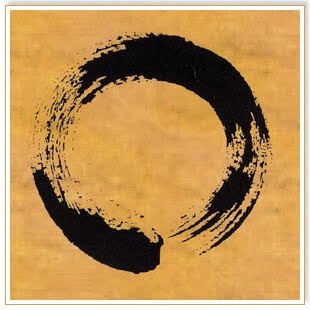
Continuing to use the task over time, the first sentence gradually disappears word by word until it is completely lost . This time, you want to start the dialogue started up but can not, the practitioner reach a state of no-mind (as Nembutsu eighty ), is the Buddha nature . At that time, meditation that "did not know" I meditated, no-self - no dharma, called meditation!However, Vo Niem also has many deep layers, so it is recommended that practitioners do not let go of suspicion. Although it is impossible to start the first dialogue, please stay in the place where the suspicion is, like that.
3. Things to note
- Practitioners must purify the mind before meditating. If the mind is much greed, anger, ignorance, ignorance, wrong view, etc., when it is used, hope that the concept of mindfulness arises as a waterfall, it is very difficult to overcome the mind.Moreover, the ghost scene appeared to lead the birth of the preferred mind, due to ignorance of the heavy faction should receive "fake" as "chon", to receive the enemy as a father, and to receive the wrong idea to realize that "attain the dharma", is Saints suddenly beaten ... Soon afterwards, he will be chased into Ma, if he does not have the grace to meet the steps of the monk, then he will lose his life in the Magic God. Therefore, do not think that everyone can meditate, if you like it, just meditate and mistake and benefit from harm. Clearly, to be mindful - pure karma is the essential prerequisite for enlightened meditation.

- To purify the mind - pure karma, one must practice reciting Buddha's name. In other words, the practitioner must elaborate on the Buddha's concept first, until the mind of peace and peace in mind, for the mindfulness of mind in more or less able to subdue itself, the practitioner may decide on his or her mind: or the whole life only specializes in reciting Buddha's name; or turn your mind to meditation; or combining meditation and reciting Buddha's name. There is an opinion that Co-Duc advised only one of the disciplines, which is true for the majority of present-day practitioners, but is not covered by the non-living beings, the difference in karma. People with heavy karma, should only recite Buddha's name to "purify" the mind. The person who has a predestined relationship with the Buddha Dharma with many lifetimes, a mind of boredom and birth and death, who wants to reach the Tanh Tanh, should meditate to direct the mind-mind. The upper-ranking person can combine meditation and recite the Buddha's name. Even, people with compassionate mind are immeasurable, all beings in the ten-fold, combine with the mind - almond - prayers Buddhas throughout 10 directions, they also combine all three Zen - Pure - Secret in every elaborate time.However, one should note that "self-interest" in initiating the will to elaborate in any of the above directions, not intentionally due to the desire, to favor ... to be ordinary.

- Participate in meditating meditatively in doubt, with all the mind not accepting. “Invincible, incompetent, omnipresent"Is the guideline for meditation. Doubtful helps sweep away all karma and common knowledge in the world. Therefore, ants - texts - senses - tri are obstacles, the mind that practitioners often cling to, especially monks. Knowledge of Dharma is as much as an obstacle to enlightened cultivation."Dharma is still letting go, what is wrong with Dharma" is this meaning. There is a position when the commentary immediately brought the school to say the sport is not great, but when elaborately discussing the practice, it cannot be said. There is a long-time mastery, but a heavy measure of faith, assuming that meditation is the best, while another method is only for the lowly, and in the end, the one who defames the Dharma is guilty. It is because of the condescending, often carrying his or her devotion to compare with the teaching of the predecessor to see where he / the practitioner comes, if not, then it is unclear that I have not arrived (?). They do not know that due to the nature of the nature, the force of power is different, so even if we practice the same method, there are still different manifestations, no one resembles anyone. There is accepting ego, thinking that I have cultivated for a long time is more elaborate than others (?), But falls down, looking down on the posterity (see the example of the Sixth Patriarch Hui Nang).Again, you have been possessed by the mind because of the desire to pray, the attachment should be led ... These are the "meditations" that Zen practitioners should avoid. Just wearing a suspicious mat, with everything "not knowing" is the best. disregard for the post-graduate (see mirror of the Patriarch Hui Nang). Again, you have been possessed by the mind because of the desire to pray, the attachment should be led ... These are the "meditations" that Zen practitioners should avoid. Just wearing a suspicious mat, with everything "not knowing" is the best. disregard for the post-graduate (see mirror of the Patriarch Hui Nang). Again, you have been possessed by the mind because of the desire to pray, the attachment should be led ... These are the "meditations" that Zen practitioners should avoid. Just wearing a suspicious mat, with everything "not knowing" is the best.
*** SUMMARY
That is all that the practitioner himself experienced when he joined the Zen Master, now self-taught Dharma practice, sharing experiences, hoping for the benefit of the meditation of the Mass. Basically, the Dharma has already been known, then cultivate, don't get caught up, attachments to self - dharma. "Take" to the moment when you do not know that you are "taking part" then surely there is the day of the Siddhartha achievement, pointing directly to Chon mind - Buddha's Tanh Tanh.
When there is no Heaven and Earth, what are we? Don't know ... END=NAM MO SAKYAMUNI BUDDHA.( 3 TIMES ).VIETNAMESE TRANSLATE ENGLISH BY=THICH CHAN TANH.VIETNAMESE BUDDHIST NUN=GOLDEN AMITABHA MONASTERY=AUSTRALIA,SYDNEY.11/1/2019.


No comments:
Post a Comment