Origin and meaning of Mid-Autumn Festival.

The Mid-Autumn Festival takes place on the 15th of August in Lunar Calendar and has been around for thousands of years, this is the brightest and brightest moon, this is also the time when the Asians harvest the crop and start. The festivals that are typical of the festival are full moon. Asian food is the most conspicuous of this festival season, which is the Moon Cake, with many different flavors and is often enjoyed with tea, usually concentrated tea.
Events related to the Mid-Autumn Festival or the full moon festival in August:
S u 1st area Mid-Autumn Festival
Hậu Nghệ is an immortal, while Chang Nga is a beautiful fairy who lived in the Heavenly Heaven and served for the Royal Mother. Both of you are husband and wife. The beauty of Changsha and the immortality of Hou Yi have made some other gods jealous, and they have slandered a heavenly offense for Hou Yi in the face of King Yao. Since then, Chang'e and Houyi were expelled from the palace and had to live in civilians. Since then, the life of doing hunting, making the guy became a famous gunner in the folk.
Now, there are 10 suns at the same time, one sun each day, and one day at a time. However, disaster struck, one day all 10 suns appeared in the same day and burned most of the living on the ground. Before the situation "thousands of pounds hanging hair," King Yao sent Hou Yi shot down nine sun only one again. Hậu Nghệ has completed the mission of excellence. In return, King Yao gave him an old school pills and told him, "Temporarily, do not drink this, or start praying and fasting for a year afterwards." Hou Yi, he brought the pill home and hid it in the rui on the roof and self-rehearsing spirit. About half a year, King Yao invited him to business "play". Hang Nga at home suddenly noticed a glittering object on the roof and discovered the pill, then, know that herbal medicine, she took the pill right just as Hou Yi arrived and immediately He knew what had happened. But it was too late, Hang Zhi began to fly to heaven.
With a crossbow in hand, Hậu Nghệ chasing Hang Nga. But getting to the middle of the road, the Wind has prevented him from wearing that beautiful fairy flying to the moon. Upon arriving, Chang suddenly became unable to breathe and the pill suddenly came out. Since then, Hang Nga forever on the moon can not return. Legend has it that she has called the rabbits on the moon to make the same pill so she can return to her husband day and night to remember, but all are useless.
Meanwhile, in the world, the memory and regret of days and nights Nhua Nghe. Finally, he built a castle in the sun and named it "Yang", while Chang built a similar castle named "Yin". Every year, on the full moon day in August, two people are happy union members. That's why the moon is always so bright and bright on this day, like the joy, the joy of meeting people.
This is documented in the popular Chinese legend of the Western Han Dynasty (206 BC - 24 AD).
S u area 2nd Mid-Autumn Festival
Hậu Nghệ was a mortal and a very good gunner, he shot down nine suns to save mankind, but then he became a Chinese king, but then he became tyrannical and executed The law is rigorous with the people.
One day, Houyi steals an eternal tablet of a goddess. However, wife Hou Yi, drink it because she did not want her husband to forever become a tyrannical tyrant to the people resentment. And after taking the pill, Chang went flying to heaven.Because of his love for Hang Zai, Houyi did not shoot the moon as he had done with the previous nine suns.
One day, Houyi steals an eternal tablet of a goddess. However, wife Hou Yi, drink it because she did not want her husband to forever become a tyrannical tyrant to the people resentment. And after taking the pill, Chang went flying to heaven.Because of his love for Hang Zai, Houyi did not shoot the moon as he had done with the previous nine suns.
S u Moon Festival area played 3
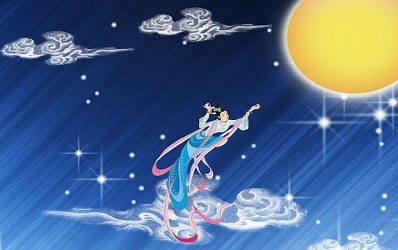
Another legend has it that: Hang Nga and Hou Yi are immortal gods living in the sky. One day, the 10th son of the Jade Emperor has divided into ten suns that cause tragedy for mankind. Before that situation, Hậu Nghệ, with his arrows fired down nine suns but because of sentiment, has forgotten to die the 10th of the son of the Jade Emperor. Of course, the Jade Emperor does not accept and is very upset. He punished Hou Yi and Chang Nga by forcing them to live a mortal life.
After the earthly life, regret the immortal life has passed, Houyi has gone home to find medicine can be old age. Finally, he found the Western Mother, she gave Hou Yi Arts, but said that each person should only drink half a pill to get life forever.
Hou took the pill home and left it in a bottle. He warned Chang'e not to open the bottle to see what was in there and go hunting for several months. Like Pandora in Greek mythology. Curiosity made Chang Jian open the jar and found the pill, of course she drank all the tablets without knowing that each person should only drink half a pill. The consequences are disastrous, Chang's flying to the moon can not be saved. Since then, both of them have had to live apart.
Historical aspect, Mid-Autumn Festival is supposed to be the anniversary of the Ming against the Yuan in the early 14th century. At that time, the Ming army was rebelling against the Nguyen dynasty, so gathering in public places was forbidden. So the insurgents could not be contacted. A general of the Ming army at the time noticed that the Mongols did not eat Moon Cake, so he opened a bakery and in each bakery was a small piece of paper saying, "Kill all the Mongols Stock on August 15th. That night, the Ming army destroyed the Yuan and seized power. And then the establishment of the Ming Dynasty (1368 - 1644), under the emperor Chu Yuanzhong. Since then, Moon Cake has not only been valued in terms of its culture but also its Chinese national pride.
Because of these reasons, Moon Festival has become an integral part of Chinese culture so many Chinese today name their daughter Yue with the wish that their daughter would be beautiful, Bright and full like the moon.
The moon cake diet during the Mid-Autumn Festival dates back to the Northern Song Dynasty in China over 1,000 years ago.
On the night of August 15 of the lunar calendar every year, when the full moon shines, the feast of the moon begins. On the altar there are fruits, moon cake is also called "union members", because on this occasion, the whole family have the opportunity to reunite to eat cake and enjoy the moonlight collection in clear and elected The warmth of the night to every home.
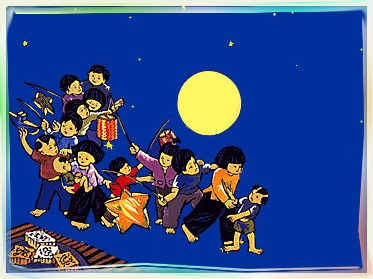
Mid-Autumn Festival, the children procession lights, lion dance. In North called lion dance, in Nam called lion dance. Lan is also called unicorn. United is the name of the male, and the name of the female. Lan is the second largest animal in the four sacred: dragon, Unicorn, tortoise, phoenix. Lion is a mythical creature, stag body, horseshoe tail, broad mouth, large nose, has a horn in the middle of the forehead, hair on the back of five colors, yellow hair under the belly. Tradition is a gentle animal, only good people can see it.
At first glance, the head is like a lion's head. Therefore, people call lion dance lion dance.
In some localities, they have traditionally received lights during the Mid-Autumn Festival. Square light bulbs, about 80cm high, 50 cm wide each. Four sides are paper Transparent paper as the glossy paper today. The top and bottom are richly colored. Inside there is a circular canopy. When the lights are on, the fire burns, the paper rolls around. Lamp pulling troops also known as military lights because the army constantly pulling away, running away from one end to the other.Only when the lamp is off the candle, the lamp goes off, the canopy does not rotate. The lamp has four faces, the image is on any face.
Children love to eat moon cakes, lion dances and light candles. Since then, the Mid-Autumn Festival has become the Tet holiday for thousands of years.
After the earthly life, regret the immortal life has passed, Houyi has gone home to find medicine can be old age. Finally, he found the Western Mother, she gave Hou Yi Arts, but said that each person should only drink half a pill to get life forever.
Hou took the pill home and left it in a bottle. He warned Chang'e not to open the bottle to see what was in there and go hunting for several months. Like Pandora in Greek mythology. Curiosity made Chang Jian open the jar and found the pill, of course she drank all the tablets without knowing that each person should only drink half a pill. The consequences are disastrous, Chang's flying to the moon can not be saved. Since then, both of them have had to live apart.
Historical aspect, Mid-Autumn Festival is supposed to be the anniversary of the Ming against the Yuan in the early 14th century. At that time, the Ming army was rebelling against the Nguyen dynasty, so gathering in public places was forbidden. So the insurgents could not be contacted. A general of the Ming army at the time noticed that the Mongols did not eat Moon Cake, so he opened a bakery and in each bakery was a small piece of paper saying, "Kill all the Mongols Stock on August 15th. That night, the Ming army destroyed the Yuan and seized power. And then the establishment of the Ming Dynasty (1368 - 1644), under the emperor Chu Yuanzhong. Since then, Moon Cake has not only been valued in terms of its culture but also its Chinese national pride.
Because of these reasons, Moon Festival has become an integral part of Chinese culture so many Chinese today name their daughter Yue with the wish that their daughter would be beautiful, Bright and full like the moon.
The moon cake diet during the Mid-Autumn Festival dates back to the Northern Song Dynasty in China over 1,000 years ago.
On the night of August 15 of the lunar calendar every year, when the full moon shines, the feast of the moon begins. On the altar there are fruits, moon cake is also called "union members", because on this occasion, the whole family have the opportunity to reunite to eat cake and enjoy the moonlight collection in clear and elected The warmth of the night to every home.
Mid-Autumn Festival, the children procession lights, lion dance. In North called lion dance, in Nam called lion dance. Lan is also called unicorn. United is the name of the male, and the name of the female. Lan is the second largest animal in the four sacred: dragon, Unicorn, tortoise, phoenix. Lion is a mythical creature, stag body, horseshoe tail, broad mouth, large nose, has a horn in the middle of the forehead, hair on the back of five colors, yellow hair under the belly. Tradition is a gentle animal, only good people can see it.
At first glance, the head is like a lion's head. Therefore, people call lion dance lion dance.
In some localities, they have traditionally received lights during the Mid-Autumn Festival. Square light bulbs, about 80cm high, 50 cm wide each. Four sides are paper Transparent paper as the glossy paper today. The top and bottom are richly colored. Inside there is a circular canopy. When the lights are on, the fire burns, the paper rolls around. Lamp pulling troops also known as military lights because the army constantly pulling away, running away from one end to the other.Only when the lamp is off the candle, the lamp goes off, the canopy does not rotate. The lamp has four faces, the image is on any face.
Children love to eat moon cakes, lion dances and light candles. Since then, the Mid-Autumn Festival has become the Tet holiday for thousands of years.
S u Moon Festival area secondary 4
Vietnamese people eat the Mid-Autumn Festival on the full moon day of the eighth lunar month because I adapted the customs of the Chinese. The ancient story that King Duong Hoang (713-741 Tay) roamed Ngu Uyen gardens on the eighth lunar month of the eighth lunar month. On the moonlit night, the moon is very round and clear. It's really beautiful and cool air. The king is enjoying the beautiful scene, meeting with the Taoist La Cong Vien also known as Diep Phap Thien.The Taoist can take the king to the moon. There, more beautiful scenery. The king happily enjoy the scene and melodious with the sound of magic light and the fairies in the beautiful color of fresh dancing and singing. In that great moment the king forgot the sun in the morning. The monk must remind, the king came out but his heart was still in his heart.
Going to the royal palace, the King also had trouble making the scene so that he had to make a puddle of music, and on the full moon night in August ordered the people to hold a candle-lit procession and celebrate the king's feast. Duong Qui Phi drinking wine under the moon watching the dancers singing to celebrate his magic duel. Since then, the organization of lanterns and parties on the full moon day in August has become a custom of the people.
It is also said that the Hang ceremony on the full moon day of the eighth lunar month is attributed to the birthday of King Minh Hoang. Since the full moon day of August is the birthday of Emperor Jiayang, the Tang court ordered the people around the country to hang lights and celebrate the feast. Since then, the hanging lamp on the full moon day in August became a custom.
It is said that a general named Liu Xiu in the Han Dynasty, from 206 BC to 23 CE, during the miserable military demand God help soldiers have food to wait for troops reinforced. After praying God, soldiers found taro and grapefruit to eat.Thanks to that, Luu Tu later pacified the nation and became the king, the late Quang Vo of the Han Dynasty. The day on which Liu was inspired was the full moon day of August. From then on, the king commanded the moon in August to celebrate the heaven and earth and enjoy the moon with taro and grapefruit. This solemnly festive festival is called Mid-Autumn Festival. This custom has been passed to Vietnam and has been modified by Vietnamese people to conform with Vietnamese customs and customs.
According to archeologists, the Mid-Autumn Festival in Vietnam dates from ancient times and was printed on the Ngoc Lu bronze drum. According to the pagoda Doi in 1121, from the Ly Dynasty, the Mid-Autumn Festival was officially organized in the Thang Long citadel with boat racing, water puppetry and lanterns. During the Lê - Trịnh period, the Mid - Autumn Festival was held extremely luxurious in the Lord. Studies on the origin of the Mid-Autumn Festival, according to P. Giran (in Magiet Religion, Paris, 1912), have long since been recognized in Asia as the couple and the Sun. They perceive the Moon only once in a month (at the end of the moon). Then, from the light of her husband, she fulfilled the moon and gradually received the light - become the moon, full moon, and then go to a new cycle. Thus, the moon is negative, only for women and married life. On the full moon day of August, the most beautiful moon, the most splendid, so people celebrate the festival to celebrate the moon festival. According to the book "Thai Binh full dance": "Lac Viet people in the fall of August, the association, boys and girls, love each other, married each other. Thus, autumn is the season of marriage.
Vietnam is an agricultural country, so when the sowing is done in August, the weather is calm, the time for "all things to relax", people open the festival, singing happy Mid-Autumn Festival.
The Chinese and Vietnamese make mooncakes to worship, eat, give gifts to relatives, and treat guests. The next common point is that the Chinese and Vietnamese are holding lanterns in the moonlit night. END=NAM MO SAKYAMUNI BUDDHA.( 3 TIMES ).VIETNAMESE TRANSLATE ENGLISH BY=THICH CHAN TANH.THE MIND OF ENLIGHTENMENT.VIETNAMESE BUDDHIST NUN=GOLDEN LOTUS MONASTERY=AUSTRALIA,SYDNEY.10/9/2018.
Going to the royal palace, the King also had trouble making the scene so that he had to make a puddle of music, and on the full moon night in August ordered the people to hold a candle-lit procession and celebrate the king's feast. Duong Qui Phi drinking wine under the moon watching the dancers singing to celebrate his magic duel. Since then, the organization of lanterns and parties on the full moon day in August has become a custom of the people.
It is also said that the Hang ceremony on the full moon day of the eighth lunar month is attributed to the birthday of King Minh Hoang. Since the full moon day of August is the birthday of Emperor Jiayang, the Tang court ordered the people around the country to hang lights and celebrate the feast. Since then, the hanging lamp on the full moon day in August became a custom.
It is said that a general named Liu Xiu in the Han Dynasty, from 206 BC to 23 CE, during the miserable military demand God help soldiers have food to wait for troops reinforced. After praying God, soldiers found taro and grapefruit to eat.Thanks to that, Luu Tu later pacified the nation and became the king, the late Quang Vo of the Han Dynasty. The day on which Liu was inspired was the full moon day of August. From then on, the king commanded the moon in August to celebrate the heaven and earth and enjoy the moon with taro and grapefruit. This solemnly festive festival is called Mid-Autumn Festival. This custom has been passed to Vietnam and has been modified by Vietnamese people to conform with Vietnamese customs and customs.
According to archeologists, the Mid-Autumn Festival in Vietnam dates from ancient times and was printed on the Ngoc Lu bronze drum. According to the pagoda Doi in 1121, from the Ly Dynasty, the Mid-Autumn Festival was officially organized in the Thang Long citadel with boat racing, water puppetry and lanterns. During the Lê - Trịnh period, the Mid - Autumn Festival was held extremely luxurious in the Lord. Studies on the origin of the Mid-Autumn Festival, according to P. Giran (in Magiet Religion, Paris, 1912), have long since been recognized in Asia as the couple and the Sun. They perceive the Moon only once in a month (at the end of the moon). Then, from the light of her husband, she fulfilled the moon and gradually received the light - become the moon, full moon, and then go to a new cycle. Thus, the moon is negative, only for women and married life. On the full moon day of August, the most beautiful moon, the most splendid, so people celebrate the festival to celebrate the moon festival. According to the book "Thai Binh full dance": "Lac Viet people in the fall of August, the association, boys and girls, love each other, married each other. Thus, autumn is the season of marriage.
Vietnam is an agricultural country, so when the sowing is done in August, the weather is calm, the time for "all things to relax", people open the festival, singing happy Mid-Autumn Festival.
The Chinese and Vietnamese make mooncakes to worship, eat, give gifts to relatives, and treat guests. The next common point is that the Chinese and Vietnamese are holding lanterns in the moonlit night. END=NAM MO SAKYAMUNI BUDDHA.( 3 TIMES ).VIETNAMESE TRANSLATE ENGLISH BY=THICH CHAN TANH.THE MIND OF ENLIGHTENMENT.VIETNAMESE BUDDHIST NUN=GOLDEN LOTUS MONASTERY=AUSTRALIA,SYDNEY.10/9/2018.

No comments:
Post a Comment