NOTE TO VIETNAMESE FOREIGN DIRECTORS
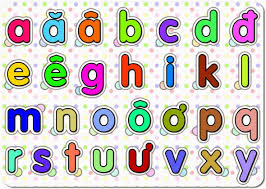
When we start learning a language, we must start with the alphabet. The Vietnamese alphabet contains 29 letters. Vietnamese does not have w and z, j, as in English.
- The vowel system: Vietnamese has nine single vowels: a, e, ê, i, o, ô, u, ơ, ư; 3 vowels: i, uo, ui and two short vowels: ã,
- consonant system:
* single consonant: 17: b, c, d, d, g, h, k, l, m, n, p, q, r, s, t, v, x
* double consonant: gh, kh, nh, ph, th, tr, nh, ng
Vietnamese alphabet reading: This is the first step to introduce to Vietnamese learners, as well as when we learn any language. What is the purpose: Let the reader know how to pronounce the letters, for example when they see the letters "a", open the "a", combined with the consonant in the first. Just remember to pronounce the consonant and the vowel is able to read the exact Vietnamese words without knowing the meaning. But note: learners do not need too much to remember the "names" of letters such as "blur, blur, blur, ..." (this is the same as in other languages). And also note that for teachers to unify a reading alphabet, the best reading in the popular reading is considered standard now (a, shore, flags instead of a, calf, ...).
When learning the Vietnamese alphabet, students should rewrite to learn how to write the Latin letters, especially for students using the symbolic system such as Chinese or non-Latin (Japanese, Korean, Thai). ...)
 Vietnamese is a linguistic language so the syllables (or voices) are pronounced separately. So there will be a syllable such as books, notebooks ... but there are many words are composed on two syllables: happy, happy ... Therefore, foreigners learning Vietnamese want to pronounce well first need to pronounce good syllables, each syllable group. For example, thank you for pronouncing "feel" and "grace". For foreigners to speak slowly, clear each syllable and then speak quickly. This shows that pronunciation is very important in Vietnamese because if one word is wrong, the Vietnamese do not understand while if they speak Vietnamese grammatical is still understandable.
While learning Vietnamese, the hardest foreigners are the tone. Vietnamese is one of the most melodious languages in the world (6 tones) including: horizontal bar, bronze, fall, ask, sharp, heavy. When you pronounce wrong tone will lead to different meanings like table # sell # you ...
For learning Vietnamese tone and tone recognition, draw a diagram so students can visualize with their accent, their accent, their accent, their tone high or low, long or short, straight or broken. ... And this is the key to good Vietnamese pronunciation and speak Vietnamese as Vietnamese. Therefore, teachers often need to train the students throughout the course, not just in the first session. Teachers should speak slowly and use their hands to mark up, down, horizontal ... to remind students to go back and try to say the correct accent. This practice should be combined with the writing practice (for example, enter the tune into the words in the paragraph or read the students to write simple sentences and sentences for the students to write properly.) Then they remember the correct marks, meaning they will have a sense of the correct tone. And this is a very important principle to hear and speak Vietnamese well. ( Although this type of exercise is very boring and dull, it is important to do a little, every day, but often importantly )
On spelling: Actually, for foreign students, they do not need to spell like Vietnamese students: For example, Huyen is a scholar. They can not remember that complex rule, nor do they do it. Therefore, teachers only need to introduce them a Vietnamese syllable is always composed by sound and rhyme. (Rhyme = vowel + consonant) is sufficient. Which is also not necessary. Learning to spell this has a pronunciation table to practice very well.
3. Listening skills
For Level A, begin by listening to the speaker, as much as possible. Teachers must constantly ask questions about the patterns they have learned in the context of their lives (as closely as possible to the student's situation, as they will want to talk more and learn more). will remember longer). After lesson 7, it is possible for students to familiarize themselves with simple audio, which may be at the beginning of recording the voice of that teacher or another teacher.
End of level A is heard with ordinary people must be basic. Then the teacher advanced with harder listening, listening to the song, listening to the dialogue at Level B. Level C needed to hear long audio and listen to the radio. During the listening practice, it is necessary to combine speaking and pronunciation as these are the necessary supportive skills. If students are studying to take the exam, they need to practice 3 types of listening: listening - filling in, listening - choosing the right / wrong, listening - choose the best answer. But if students learn to communicate, to attend the seminar, that is, actually listen to much practice with the form of listening - understand (listen - choose the answer). Teachers must understand the level of the student well enough to have appropriate listening, otherwise students will be bored because they find it difficult.
 Listening to audio: Listen to the teacher's audio files and listen to them over and over again (because of poor quality CDs), listen to the song (if the student likes it). And especially as much communication as possible, with more and more people training the ability to listen and reflect the language. Therefore, the more you learn Vietnamese at higher levels, the more you talk, talk, talk and talk. Of course, talking must be to learn, so the teacher needs to stop the student to correct the pronunciation, correct it, and students have to take notes to note the words and phrases. Memorize. In my experience, a person who loves to talk, likes to communicate is more likely to learn a foreign language than a person who likes to learn grammar and learn in books.
End of level A is heard with ordinary people must be basic. Then the teacher advanced with harder listening, listening to the song, listening to the dialogue at Level B. Level C needed to hear long audio and listen to the radio. During the listening practice, it is necessary to combine speaking and pronunciation as these are the necessary supportive skills. If students are studying to take the exam, they need to practice 3 types of listening: listening - filling in, listening - choosing the right / wrong, listening - choose the best answer. But if students learn to communicate, to attend the seminar, that is, actually listen to much practice with the form of listening - understand (listen - choose the answer). Teachers must understand the level of the student well enough to have appropriate listening, otherwise students will be bored because they find it difficult.
Listening to audio: Listen to the teacher's audio files and listen to them over and over again (because of poor quality CDs), listen to the song (if the student likes it). And especially as much communication as possible, with more and more people training the ability to listen and reflect the language. Therefore, the more you learn Vietnamese at higher levels, the more you talk, talk, talk and talk. Of course, talking must be to learn, so the teacher needs to stop the student to correct the pronunciation, correct it, and students have to take notes to note the words and phrases. Memorize. In my experience, a person who loves to talk, likes to communicate is more likely to learn a foreign language than a person who likes to learn grammar and learn in books.
4. Speaking skills
To speak Vietnamese well, students need to have basic vocabulary and basic grammar. That is the end of level A they can say everything in the simple sentence.
 Level B, if learned in a book, is difficult to improve, because grammar is too much and too much, so it is better to talk on topics that have more vocabulary and teachers have to skillfully insert New patterns that students do not know and explain to them.
Level B, if learned in a book, is difficult to improve, because grammar is too much and too much, so it is better to talk on topics that have more vocabulary and teachers have to skillfully insert New patterns that students do not know and explain to them.
Level C uses many slang, common words and natural talking. When learning Vietnamese, students should not study too much grammar, meaning that they should not do too many exercises. Vietnamese language teachers for foreigners need to explain the grammar to the students and practice when students use that grammar, not doing too much homework. As in my experience, students who learn grammar lessons can hear well but reflect very slowly because they always try to remember and speak the correct grammar. They are afraid of being wrong. Therefore the principle when practicing speaking to students is that the teacher should always encourage them: DO NOT SAY SAI. TO SAY.

No comments:
Post a Comment