Dhamma is the lamp, the refuge.
 "Behold, Ananda, who is after me, is the lamp of my self, refraining myself, refraining from anything else, using the Dharma as a lamp, using the dharma as a refuge, Refraining from any other means, these, Ananda, are the supreme in my Bhikkhu, if they are eager to learn. "
 (The Buddha's teachings - School of the Ministry of the first set 585, Mahaparinibbana)
Once, when the Buddha was ill in Belu and before the anxiety of Ananda (page III, page 101), and other times, before the message of Sariputta (Farewell) was fate and before the The Ananda (1708), the Buddha declared this teachings, as well as the instructions to summarize all his methods of spiritual cultivation, and also a word A teacher knows that he is dying, so there are messages and encouragement to his disciples what the disciples need to practice, after the Teacher passed away:
 "Therefore, Ananda, be yourself a lamp for yourself (atta-dipa viharatha), please yourself (attàsaranà) do not like anything else. Use the dharma as a lamp, using the dharma Take refuge, do not rely on something else.
Hey Ananda, in life, the bhikkhu habits on the body, zeal, mindfulness awareness, retribution in life. The residence on the feeling ... stay on the mind on the mind, stay on the French legal, heart, mindfulness, mindfulness consultant in life.
In this Ananda, bhikkhu himself is the lamp for himself, he is self-reliant, he is not like anything else, using the dharma as a lamp, using the dharma as a refuge, not a refuge. something else.
Behold, Ananda, who, now or after I extinction, is himself a lamp to himself, self-reliance on his own, not something else, using the dharma as a lamp, using the dharma Take refuge in a different way, these, Ananda, are the highest in my Believer, if they are eager to learn. "
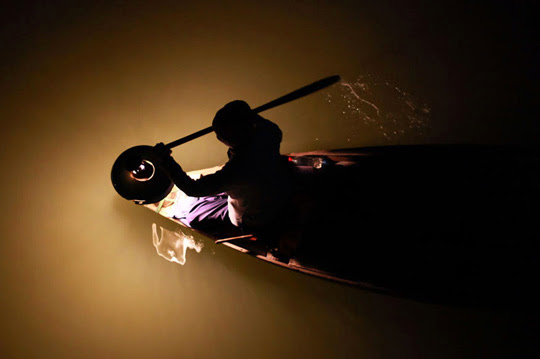
Embrace the lamp of wisdom Here the word Dipa means both the lamp, meaning the island should be able to translate: The self-torch light up, or Self-built island for yourself. Make yourself a lamp for yourself.
In this particularly important and important teaching, the Buddha emphasizes two points. Make yourself a lamp for yourself, be yourself, do not be like someone else. Take the Dharma as a lamp, take the dharma as a refuge, do not rely on anything else.
The main two points of view can be considered a reflection of honest life find religion, religious practice, witness of Bhagavan based on personal experience of him and also packed full all the teachings he taught for 45 the year of his sermon of birth to pass to the disciples.
In fact, we see clearly, in more than six years of directing, practicing and evangelizing, the Blessed One himself made personal efforts, self-reliant seeking and directing with two exotic teachers of the time Alara Kalama and Uddaka Rapaputta, self-help ascetic, self-help meditation, and self-help to develop wisdom and eventually attained enlightenment under the tree of buddhahood Righteous Enlightenment.
He is not a spiritual force, not an embodiment of a divine being, not a reincarnation of a supreme being. He is only one person, with the strength of human strength and intellect, has found his own path and find the direction of success, has personally practiced and practiced effective, self-evangelized and evangelized. The fullness of our life, as we have seen in his life, if we put aside the later additions to deify his life.
He sought self and study and express himself as follows:
"It is not only Alara Kalama who has faith in me, I have faith, not only Alara Kalama, but also diligence. I also have the intention. Not only Alara Kalama has wisdom, I also have wisdom.
Then we must try to prove that Alara Kalama , after self-tuition, self-realization, self-declared. Then bhikkhus, soon, I self-knowledge, self-attainment, quickly attain it, I stay "(I, 164b).
Later, ascetic, he also himself ascetic as he himself described:
"For I have eaten too little, my limbs have become like grass, or burned with dry plants, because I have eaten too little, my table became like a camel's toenail. My spine is like a chain, because I eat too little, my slender ribs like a broken pile of broken stilts, because I eat too little, my pupils are glittering. deep in the eye hole, like the glistening water deep in a deep well ... "(I, 80).
The Buddha after ascetic practice has no results. He resolutely renounces asceticism and begins to meditate on himself, meditation, second meditation, third jhana, fourth jhana, intellectual development, nirvana, wisdom, wisdom , know as real suffering, know as real or pirated, escape from sex, illegal, pirated ignorance.
With such self-liberation, arise the knowledge: "The birth is complete, the deed was done, the deed should have done, no longer return this state" (I I, 248). Thus, with self-experience, self-renunciation ascetic, meditation practice, intellectual development, the Buddha results the Chief Justice.
For teachers who have relied on self-reliance to cultivate, study and direct, in the 45 years of the Buddha's birth, his main teaching to the disciples is self-reliance. Make yourself a lamp for yourself, do not rely on anything else. Use the dharma as a lamp, use the dharma as a refuge, do not rely on anything else.
First of all, the Buddha affirmed that "pleasures" and "desires" are not beneficial, not only on the path of Dharma practice but also on worldly aspirations.
Sutra, Volume IV, page 313 states:
"If there are ten people doing good deeds, then a great multitude of people pray for their hands, hoping that they will be born of good deeds, good deeds. It would be like hell to throw a rock into the lake, and then a large crowd of people would pray and pray that the stone would be raised. It is useless because the rock, with its weight, can not float, can not float to the shore, as the plea of the masses.
On the contrary, one renounces ten good deeds, doing the ten good deeds, if there is a large crowd to pray, plead, hand in hand, pray that he will be born in hell, land, It is not accomplished.
He is born beast, good world, human realm. If a person drowns a jar of oil in a lake and breaks the oil, that oil will emerge on the water.
Although there was a large crowd to pray, pleading, hand, demand that the oil sank to the bottom of the water. The request is of no consequence, the oil is still floating on the water. So, there is pleading, there is no begging what the benefits.
The IIIA, page 123, further confirms the futility of prayers and prayers. A bhikkhu who does not pay attention to the practice, initiates the desire to be free from contradictions, or does not have attachment, that desire is not satisfied.
As a hen has eight, ten or twelve chicken eggs, it hatches improperly, hatches improperly, improperly nursed, the time for the chicken to rise up the wish that the chicks with its legs, with its nails, with its mouth, breaking its eggshells and releasing it safely, the hen was not satisfied. Why? Because the hen does not sit properly, does not properly hatch, does not properly nourish.
On the contrary, a bhikkhu living in the practice of cultivation, even if not aspiring: "May my mind be liberated from smuggling or grasping," but that mind is still free. cling. Why? To say that he is practicing. What are the practices? There are four meditation practice, there are four practitioners need to practice, there are four practitioners as well as the practice, there are five years training, there are five training force, there are seven practitioners, eight practices.
Like hens, there are eight, ten or twelve eggs. She hugs in the right way, she hugs properly. Even if the chicken does not spring up to wish, its chicks, with their legs, with their nails, with their beaks, break the eggshell and escape safely, the chicks also break the eggshell. and escape safely. Thus, there is no wish or aspiration. The main thing is to take correct action, the right way to bring results.
Another sutra (p. 303) emphasizes the uselessness of the beggar. If the action is not good enough, can not achieve the results. This is not justified in the sense that this is the wrong knowledge, wrong thinking, evil language, evil business, evil, evil, evil thoughts, evil. Why? Because this is not the way to get results.
Then the Buddha looked for the oil, after pouring sand into the barrel, continue to sprinkle sand oil for oil, although he had the desire to find oil is also not satisfied. Why? Because this is not a method of finding oil. The Buddha used another example, more meaningful, to be a milk seeker, to a cow, to take the horn of a cow that milked, whether it was a wish or not, it was not get milk
On the contrary, if there is a monk or Brahman, there is right view, right thinking, right speech, right action, right livelihood, right effort, right mindfulness, right mind, The virtue will achieve fruit. Why? Because this is the method of gaining fruit. For example, a person looking for oil, after leaving the oil to the barrel, continue to sprinkle the oil and then oil the oil.
Whether he wishes or does not wish, he will get oil. Why? Know how to make oil. Just like the milk goer, the cow, the milk from the newborn baby, the time whether desire or not wish also find milk.
For the same thing in life, not because of prayers, but because of the desire to achieve. Being a person, we often wish to be able to find five things that are difficult to find in life such as: longevity, rich colors, peacefulness, good rumors, and birth heaven. In the Pleasure Sutra (IIB, p. 74), the Buddha states that these five pleasures are not due to human pleasures, nor to human aspirations, but because of human pleasures, In this life there is someone who withered for aught, when only the request was the satisfaction.
The Buddha said very clearly: Want to have the life network can not beg for life or praise life network to be the cause of life. The saintly disciple who wants to have life must practice the path leading to life, leading to rúpa, bringing peace, leading to good rumors, leading to birth, he was able to achieve Five things that you wish in life.
In the definition of kamma and the role of the Buddha's kamma, it is very clear that Karma means action, the verb Karoti means to do, to act on the body, the word and the mind, but to act. It must be acted in the center of mind, ie a voluntary action to do, decide themselves to do, no one instigated, not sent by anyone.
Since it was an act of self-consciousness, we decided to do it ourselves, so the Buddha identified us as the master of kamma (kammassako). We are the kamma-kamma, In our actions, we ourselves bear the results of our actions. The Dhammapada clearly states:
"Evil self made, self-born, I create, Crush fool, Like diamond jewelery." (Dhammapada 161)
Another clearer statement:
"Self, evil do, Self-pollution, Self-evil do not do, Self-net work, Pure, not self, No one pure net". (Dhammapada 165)
"His critics themselves, by themselves scrutinized his brethren self protection, Mindfulness permanent peace". (French 379)

In a very famous sutta , the Kalamasutta Sutra (I, 213-216), the Buddha advised his followers to believe in him, not to believe in anyone else, believing in the ability to judge good and evil. I do not believe in any other method:
"You Kalama, do not believe in the legend, do not believe because tradition, do not believe in hearing people say, do not believe in the scriptures, do not believe in human reason, do not believe Believe in human reason, do not believe after thinking about the facts, conditions, without prejudice bias, prejudice, not believe because it is appropriate with the ability, do not believe because the subject is not my teacher.
But this Kalama, when you yourself know as follows: 'These dhamma are akusala, these dhammas are guilty, these dhammas are criticized, these dharma if done and accepted, miserable suffering. Now Kalama, let go of them ... ... But this Kalama, when you yourself know as follows: 'These dhammas are good. These are not sinful. These dharmas, praised by the wise. If this practice and acceptance, resulting in happy happiness, this time the Kalama, attain and stay '... ".
When aware of their ability to distinguish good and evil, the Buddha taught should be alone, not just another person, as the following verse stated:
"The wanderer is not entitled, No y only one, not made love, no work of hate. Therefore, in sorrow than, in avarice stingy, as the water on the leaves, not sticky to pollute" . (The Bible, v. 811)
"Who does not look for a tree For the birth of the child, Can be lustful, For the clinging He is not just No one to lead, He is right, Travel in the world. (Book of Verses 364)
But the Buddha is careful. Even though he was liberated and enlightened over him, he still saw that he needed to point to a curse or Brahman:
"So let's pay homage, reverence and live only on a subject or Brahman, with the purpose of making full aggregates ... aggregate aggregates ... wisdom aggregate ... liberation aggregates are not filled Enough ... but I do not see a place in the world of gods, evil and Brahma, between the masses of Venetian and Brahmins, gods and humans, no other Venus or brahmanas. , with precepts, with concentration, with wisdom and with more liberation than I can reverently pay homage and live only. Enlightenment, pay homage, pay homage and live only the Fa ".
Thus the Buddha with a modest mind, want to find a subject or Brahman to rely on just where the Dharma. That is why the Buddha taught the bhikkhus "Be ye yourself the light of your own (attà-dìpavviatha), let yourself be of one's self (attā-sarāna), and not be like anything else.
Using the Dharma as a refuge, do not rely on anything else. "This attitude of the Buddha explains why the Buddha advised that Ananda should not be melancholy after the Buddha's passing, because the disciples of the Buddha The Buddha always has the Dharma as the only medicine, the Dharma as a refuge.
In the third, 51, the Buddha identified the advice once again for his disciples to take the dharma as an island, taking the dharma as a refuge: "Live, make your own island, bhikkhus, take refuge with oneself, refraining from one another, take the dhamma, take the dhamma, take refuge in others. "
In the Gopaka Moggallana, Middle III, p. 111, we will see the disciples of the Buddha after he passed away, acting as he taught. Brahman Gopaka Moggallana asked Ananda: "There is a bhikkhu who has been ordained by Gotama: 'This man, after I will die, will be your refuge and you will be This indicator? '".
Ananda replied: "Brahman does not have a bhikkhu who is blessed by the Blessed One, the Author, the Author, the Arahant, the Chief of the Right Enlightenment. , will be your refuge, 'and we will show you this. "
"Ananda, there is a bhikkhu whom they have agreed upon and a great number of presbyterate ordained people who, after the passing of the Blessed One, will be our refuge, and Will we show this? "
Ananda replied: "There is no bhikkhu, Brahman, they are raised by agreement and are ordered by the majority of bhikkhu monks: 'This man, after the passing of the Blessed One, will be our refuge, 'and we will show you this. "
"And so (you) have no shelter." Ananda, that's why you can get along. "
"Brahmin, we do not have no shelter, Brahmin, we have a shelter, and France is our refuge."
Taking the Dharma as a refuge, it is also the Buddha's teachings.END=NAM MO SAKYAMUNI BUDDHA.( 3 TIMES ).VIETNAMESE TRANSLATE ENGLISH BY=THICH CHAN TANH.THE MIND OF ENLIGHTENMENT.VIETNAMESE BUDDHIST NUN=GOLDEN LOTUS MONASTERY=AUSTRALIA,SYDNEY.4/2/2018.

No comments:
Post a Comment